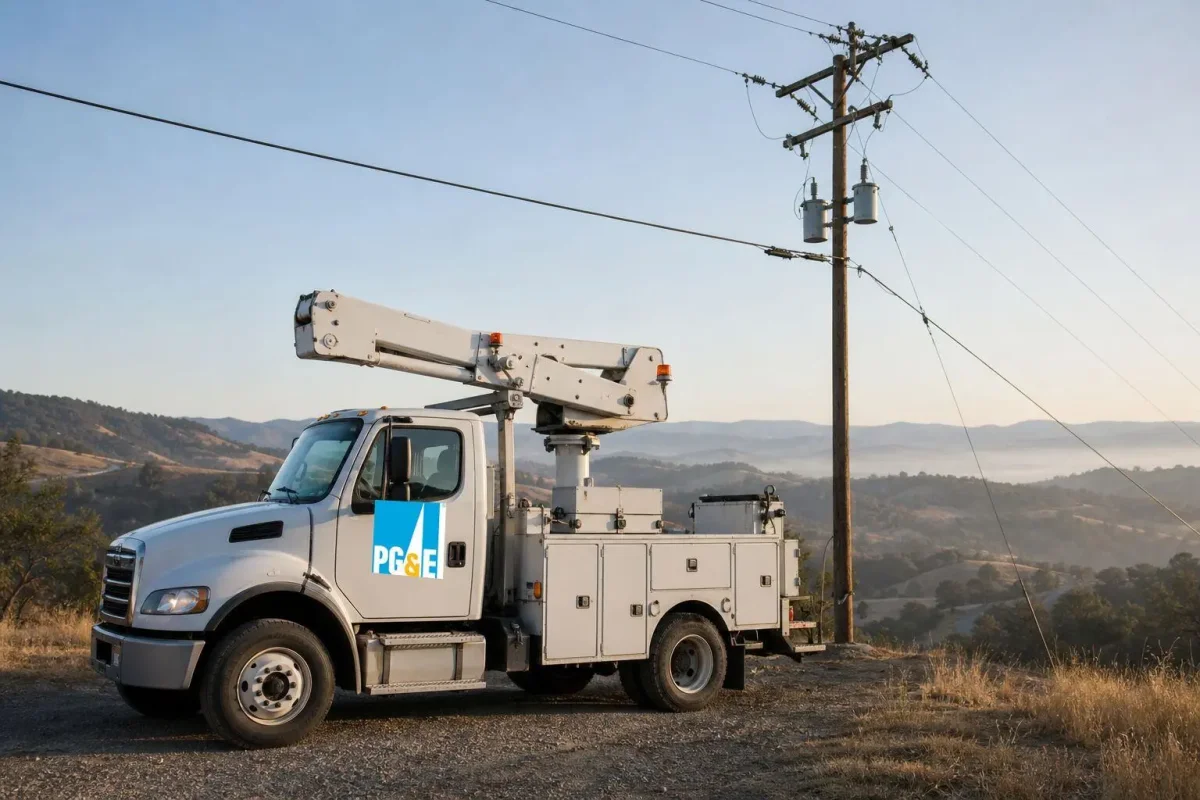
PG&E Corporation (NYSE: PCG) saw its shares climb nearly 6% on Tuesday, September 2, 2026, as the market digested the collapse of a key California wildfire liability reform bill. The utility closed the session at $14.06, up 5.95%, with trading volume surging to 144.5 million shares—more than four times the stock's 20-day average. This rebound, however, only partially offsets a steep decline from earlier in the week, leaving the stock 21.7% below its August 27 closing price of $17.95.
The recent volatility stems from the failure of Senate Bill 492, which would have provided utilities with additional protection against wildfire-related liabilities. The bill did not come to a vote in the California Assembly, and Assembly Speaker Robert Rivas stated that it did not deliver “meaningful reform,” according to CalMatters. As a result, insurers' recovery rights remain intact, and there is no cap on survivor compensation, leaving PG&E exposed to potentially massive claims.
Investors have responded by applying a significant discount to PG&E's earnings. On Tuesday, the stock closed at 8.5 times the midpoint of the company's 2026 core EPS guidance of $1.64 to $1.66. This compares with a multiple of 10.9 times just last Thursday, before the legislative setback. The compression in the earnings multiple reflects the market's reassessment of policy risk rather than a routine utility valuation adjustment.
The broader California utility sector also saw gains on Tuesday, as the failed bill relieved some immediate pressure. Edison International (NYSE: EIX) surged 8.93%, while Sempra (NYSE: SRE) added 3.13%. The Utilities Select Sector SPDR Fund (NYSEARCA: XLU) rose 0.78%, indicating that the relief was concentrated among California-based utilities.
Despite the share price decline, PG&E's underlying operating results have been steady. The company reported second-quarter core EPS of $0.40, up from $0.31 a year earlier, and GAAP net income attributable to common shareholders rose to $733 million from $521 million, according to its SEC filing. Management has maintained its 2026 core EPS guidance of $1.64 to $1.66, signaling confidence in its operational performance.
The financing channel is a key transmission mechanism for wildfire risk. Through June, PG&E completed $4.4 billion in utility debt financings. A perceived increase in liability could lead both debt and equity investors to demand higher returns, raising the company's cost of capital. This is a critical concern for a company that relies heavily on capital markets to fund its infrastructure investments.
PG&E continues to invest in physical risk mitigation measures. During the second quarter, the company completed 37 miles of underground power lines, and its monitoring system has prevented 28 potential ignitions since January 2025. These efforts are part of a broader strategy to reduce the likelihood and impact of wildfires, but they cannot eliminate the risk entirely.
California law holds utilities liable for damages regardless of negligence, a doctrine that has historically made wildfire risk a significant overhang on utility stocks. The state's wildfire fund, established in 2019 with $21 billion, received an additional $18 billion last year, according to the Associated Press. However, the failure of SB 492 means that fund may not be sufficient to cover future claims, leaving PG&E exposed.
Looking ahead, Tuesday's rally does not preclude future claims or further declines. The discount could widen if a major new fire occurs, if regulators take tougher actions, or if reform efforts stall. Lawmakers have scheduled hearings for the fall, which could provide another avenue for broader reform. Investors are watching closely to see whether the $14 level holds, with the next policy event being the fall legislative hearings.
As the market opens on Wednesday, traders will be focused on whether the rebound has legs or if the stock remains under pressure. The heavy trading volume suggests that some investors see value at current levels, but the ongoing uncertainty around wildfire liability means the risk premium is likely to persist. For now, PG&E's valuation remains capped at 8.5 times earnings, a stark reminder of the challenges facing the utility in a state prone to wildfires.