LONDON, June 27, 2026 — Oil markets suffered a steep weekly decline, with Brent crude closing at $71.99 a barrel on Friday, down 4.34% on the session and 10.86% for the week. West Texas Intermediate (WTI) settled at $69.23, losing 3.74% on Friday and 9.62% over the week.
Data from the Commodity Futures Trading Commission (CFTC) for the week ended June 23 showed that money managers reduced their net long position in NYMEX WTI physical futures by 13,356 contracts to 82,872. The breakdown revealed 209,683 long positions and 126,811 short positions, indicating a shift away from bullish bets despite tightening fundamentals.
The decline came even as U.S. market signals pointed to persistent tightness. Stockpiles at Cushing, Oklahoma, the delivery point for WTI, dropped to roughly 19 million barrels, the lowest since 2014 and below the 20-million-barrel threshold traders consider normal. "Fundamentally we should be higher," said Carl Larry, sales manager at Enverus. Meanwhile, the U.S. diesel crack spread touched a three-week high of $62.84 a barrel on Thursday, reflecting strong demand for distillates.
However, the crude narrative has shifted focus from Cushing to the Strait of Hormuz, where shipping traffic is slowly recovering after months of disruption. Kpler tracked four tankers carrying 6 million barrels passing through the strait on Thursday, with additional shipments totaling 10.8 million barrels on Wednesday. While this marks an improvement, daily traffic remains a fraction of the 125 tankers seen before the Feb. 28 conflict. "The rebound points to adaptability of Mideast Gulf export systems, but it's not a clean return," Kpler noted.
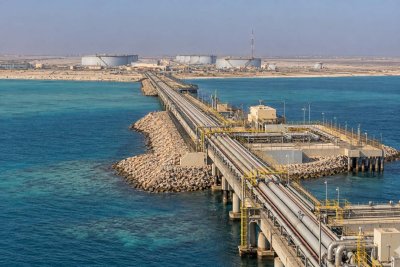
Saudi Aramco (TADAWUL:2222) resumed crude shipments from Ras Tanura on Friday after a nearly four-month halt, with two Very Large Crude Carriers (VLCCs) loading about 2 million barrels each. "There is a growing sense that oil will keep flowing through Hormuz," said Phil Flynn of Price Futures Group. However, risks persist. The U.S. military conducted strikes on Iran on Friday following a drone attack on a cargo ship in the strait, and Iran retaliated on Saturday. Bahrain also reported an Iranian drone attack.
OPEC+ is set to increase output targets by 188,000 barrels per day in July, with Iraq’s quota rising to 4.378 million bpd. However, Iraq’s current output remains constrained due to the Hormuz disruption. Separately, China plans to boost its state refiner fuel export quota to 800,000 metric tons in July, up from about 600,000 tons in June, potentially weighing on Asian refined product markets.
The divergence between crude and product markets is a key theme. While WTI has fallen about 22% in June, ultra-low sulfur diesel (ULSD) has dropped just over 9%. "Tightness was concentrated in products rather than crude," said Rory Johnston of Commodity Context. U.S. distillate stocks stood at 106 million barrels as of June 19, about 12 million barrels below the five-year average, keeping refining margins elevated.
Traders are now watching for the next Energy Information Administration (EIA) report on July 1, which will provide weekly data for the period following the June 19 release. Key focus will be on Cushing inventories and whether distillate supplies remain significantly below normal. The interplay between geopolitical risks, OPEC+ supply increases, and demand signals from China will continue to shape oil price direction in the coming weeks.