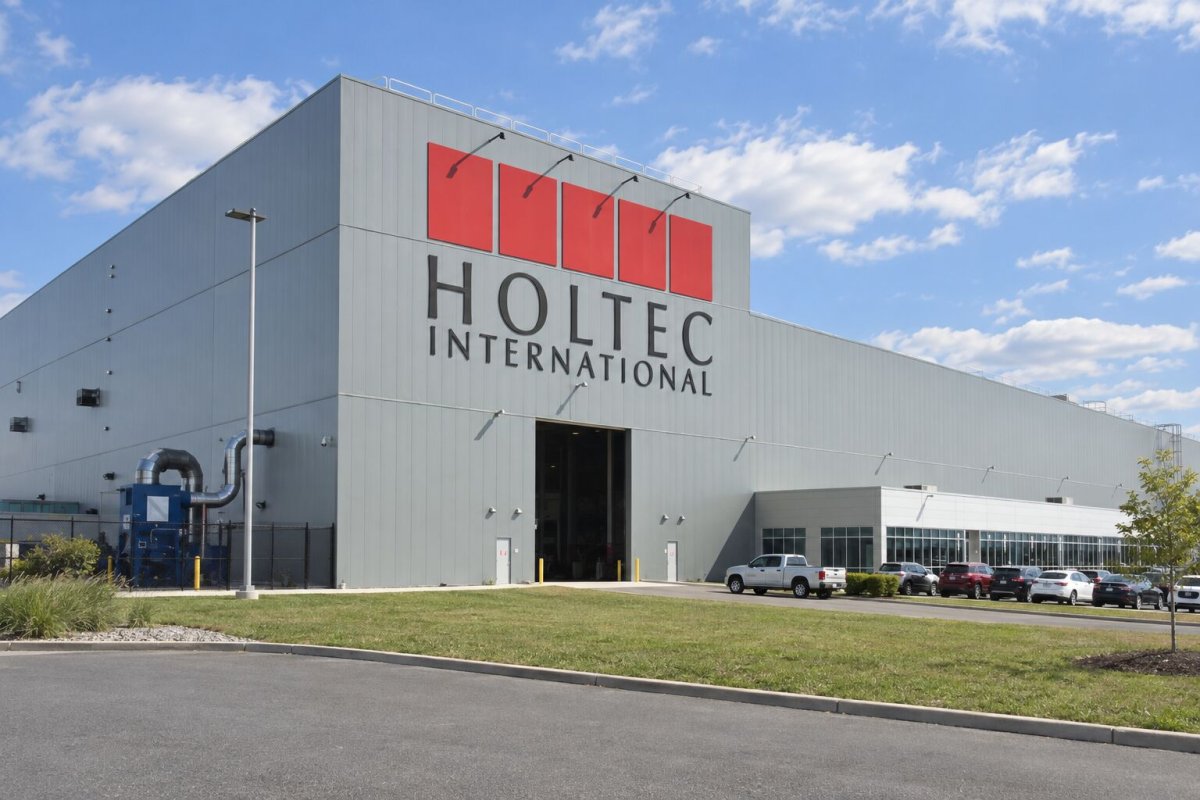
Holtec Nuclear has filed for an initial public offering that could value the company at up to $10.2 billion, but the most striking figure for potential investors is the 1% voting power allocated to the new Class A shares. The nuclear technology firm plans to sell 50 million shares at $15 to $18 each, raising between $750 million and $900 million before expenses. The company has applied to list on Nasdaq and Nasdaq Texas under the ticker symbol HNUC, according to its September 8 amended prospectus.
The proposed valuation is ambitious, especially when compared to the company's current financials. On a fully exchanged basis, Holtec expects 566.7 million Class A shares outstanding post-offering, resulting in a valuation range of $8.5 billion to $10.2 billion. The public shares represent approximately 8.8% of that total. At the $16.50 midpoint, net proceeds are estimated at $775.2 million, which the company plans to use for SMR-300 licensing, deployment, manufacturing capacity, and other energy and defense initiatives.
Valuation Versus Fundamentals
The pricing is rich against existing business metrics. Holtec's prospectus shows pro forma 2025 revenue of $893.4 million and net income of $217.0 million. This puts the valuation at roughly 9.5 to 11.4 times revenue and 39 to 47 times net income. These are simple equity-value comparisons, not enterprise-value multiples, but they highlight the high expectations embedded in the price.
Recent financial performance is mixed. Revenue declined 5.8% to $269.9 million in the first half of 2026, while net income rose 47.9% to $205.6 million. However, the filing cautions that first-half EBITDA margin was inflated by non-operating gains and investment income, alongside accounting effects from the Palisades restart. Investors should not view this earnings jump as a sustainable run-rate.
Backlog: Large but Slow to Convert
Holtec reports approximately $20.8 billion in remaining long-term contract value across its nuclear products, decommissioning business, and Palisades. Yet only about $574.5 million is expected to be recognized in the next 12 months. The rest spans years or even decades. While long-duration contracts can provide cash flow stability, they also expose investors to execution risks, regulatory delays, and the possibility that backlog may be adjusted or canceled.
The upside case rests on Holtec converting its market leadership into a broader nuclear platform. The company serves over 150 commercial reactors, holds more than 90% of the U.S. wet spent-fuel-storage market, and about 75% of the domestic dry-storage market for operating plants. It owns Palisades and is developing two SMR-300 units there, pending licensing and funding approvals.
Governance and Structural Concerns
The governance structure is a major red flag. Class A shares carry one vote each, while Class B shares carry ten votes. Founder-affiliated Holtec Holdings is expected to control 99% of voting power for director elections and about 91.2% of total common stock after the IPO. Public investors will have an economic stake but virtually no influence over board decisions or strategic transactions.
Additional costs include pro forma tangible book value of $3.73 per share, implying immediate dilution of $12.77 at the midpoint. Holtec Nuclear also expects to pay legacy beneficiaries 85% of certain realized cash tax savings under a tax receivable agreement. Furthermore, Holtec International must make $555 million in aggregate distributions to two insider-affiliated holders before discretionary distributions can reach other shareholders.
What Would Make the IPO Work
The key question is whether Holtec can convert its long-dated contracts and SMR ambitions into recurring public-company cash flow fast enough to justify a double-digit sales multiple. A pricing outcome near $15 would provide more room for delays than an $18 deal. After listing, investors should watch the pace and margin of backlog conversion, Palisades operating milestones, federal SMR support terms, and SMR-300 licensing progress.
Holtec brings real assets and a broader operating history than many speculative nuclear listings. The IPO range recognizes that strength, but it also prices in a substantial portion of future success while giving new shareholders just 1% of the vote.
