Amazon (NASDAQ: AMZN) shares slipped 0.3% on Tuesday, trading at $257.84, even as Qualcomm (NASDAQ: QCOM) rallied 3.6% to $174.87 following the announcement of their AI-infrastructure collaboration. The divergent market reaction reflects the deal's asymmetric significance: it's a strategic win for Qualcomm's diversification beyond smartphones, but for Amazon, it's just another option in its vast AWS expansion toolkit.
What the Billion Figure Actually Means
Qualcomm's September 8 SEC filing reveals that Amazon received a warrant to purchase up to 25 million Qualcomm shares at an exercise price of $161.26. The warrant expires in September 2036 and can be exercised on a cashless basis. Vesting is tied to commercial agreements, binding purchase orders, and actual purchases of Qualcomm's server chips, systems, and manufacturing services. The filing mentions a maximum of $60 billion in qualifying payments, but it does not specify a fixed purchase obligation or a timeline to reach that threshold.
Warrant Value: Smaller Than Headlines
At the time of issuance, only 3.75 million shares vested based on initial purchase commitments—just 15% of the total. Using Qualcomm's delayed price of $174.87, each vested warrant has an intrinsic value of approximately $13.61, making the total intrinsic value of vested warrants roughly $51 million. If all 25 million warrants were vested and exercised, their intrinsic value would be about $340 million. The frequently cited $4 billion figure is simply 25 million shares multiplied by the strike price, but it's neither Amazon's current gain nor a guaranteed future cash payment due to the cashless exercise provision.
AWS Growth vs. Capital Intensity
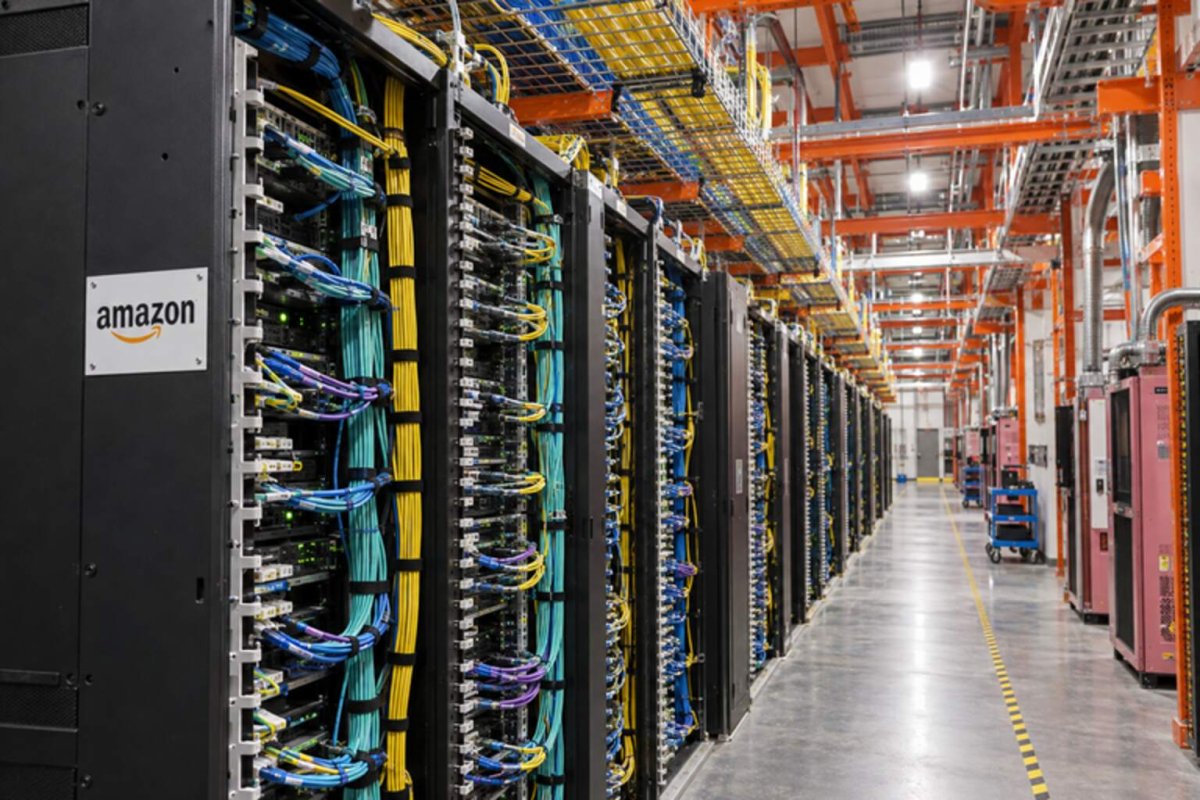
The strategic rationale behind the deal is clear. Qualcomm plans to develop custom silicon for AI inference and optical connectivity within data centers, and it will also use AWS infrastructure for its own chip-design workloads. AWS continues to deliver robust growth, with second-quarter revenue up 37% year-over-year to $42.2 billion and operating income of $16.6 billion, representing over 60% of Amazon's consolidated operating profit.
However, the capital intensity of AWS's expansion is staggering. Amazon generated $161.4 billion in trailing-twelve-month operating cash flow, but free cash flow was negative $7.6 billion. This implies net property and equipment purchases of $169 billion over the period, up $66.1 billion from the prior year, primarily driven by AI investments.
What Investors Should Watch
The bullish case is that Amazon is diversifying its silicon suppliers, potentially improving power efficiency and networking performance. The warrant aligns Amazon's interests with Qualcomm's upside if purchases scale. But the bearish counterpoint is that no warrant can fix poor deployment economics. The filing lacks details on shipment volumes, pricing, or expected margin benefits.
Investors should monitor three key metrics: the size of Amazon's binding commitments, evidence that Qualcomm's chips are used in production AWS workloads, and a turn in free cash flow as the current capacity wave generates revenue. Until then, Tuesday's announcement is a potentially useful procurement option—not a $60 billion obligation, nor a $4 billion windfall.