Quantinuum, the quantum computing company backed by Honeywell International Inc., is targeting a valuation of up to $12.7 billion in its upcoming U.S. initial public offering. The Broomfield, Colorado-based firm plans to raise as much as $1.05 billion by offering approximately 21.05 million shares priced between $45 and $50 each.
The IPO arrives at a pivotal moment, as investors increasingly flock to companies involved in strategic technologies such as artificial intelligence infrastructure, defense, and quantum computing. The U.S. government has also begun directing funds toward these areas. Last week, the Commerce Department announced letters of intent for $2.013 billion in federal incentives across nine quantum computing firms and foundry projects.
Quantinuum is set to receive $100 million from the Commerce Department to address bottlenecks in fault-tolerant trapped-ion quantum computers—hardware designed to detect and correct errors in real time. In exchange, the department will take a minority, non-controlling equity stake in the company.
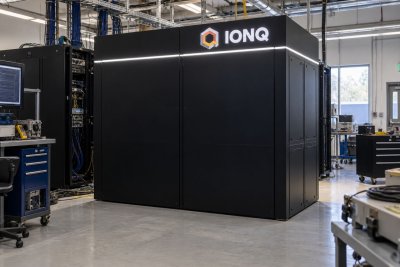
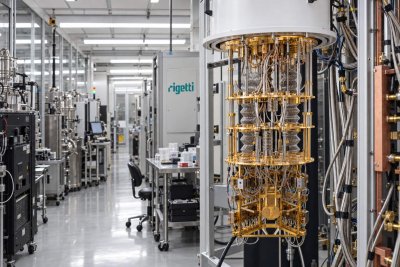
The IPO will provide public markets with a clearer benchmark for the quantum computing sector, which has largely relied on special-purpose acquisition companies for listings. While IonQ Inc., Rigetti Computing Inc., and D-Wave Quantum Inc. already trade publicly, Quantinuum would be the first quantum firm to pursue a traditional IPO, as noted by Reuters Breakingviews.
Honeywell is expected to retain a substantial stake post-IPO, holding approximately 49.1% of combined voting rights and continuing as a customer and partner. Quantinuum was formed in 2021 through the spin-off of Honeywell's quantum division and its merger with Cambridge Quantum.
Financially, Quantinuum remains in its early stages. For 2025, the company reported net revenue of $30.9 million and a net loss of $192.6 million, compared to $23.0 million in revenue and a $144.1 million loss in 2024. In the first quarter of 2026, revenue dropped to $5.2 million from $19.1 million a year earlier, while the net loss widened to $136.6 million from $30.5 million.
CEO Rajeeb Hazra told investors in the prospectus that Quantinuum has built a full-stack quantum computing platform and aims to deliver the first commercial-scale, fully fault-tolerant quantum computer before the end of the decade. This goal is central to the company's pitch but implies that significant returns lie further in the future.
Quantinuum's quantum systems are based on trapped ions—charged atoms held in place by electromagnetic fields. Competitors use different approaches: IonQ also relies on ion traps, while Rigetti and IBM Corp. use superconducting qubits, and PsiQuantum and Xanadu employ photonic methods.
The company faces challenges beyond technology. It must attract and retain skilled quantum physicists and other specialists, while some competitors have deeper financial resources. Supply chain risks also exist, particularly related to semiconductor production and specialized materials. Honeywell shares rose 2.2% to $232.83 in morning trading, while quantum stocks declined: IonQ fell 3.2%, Rigetti dropped 8.2%, and D-Wave slid 8.0%.
J.P. Morgan and Morgan Stanley are serving as joint lead managers for the offering. Quantinuum plans to list on the Nasdaq under the ticker symbol "QNT." The risks are evident: while public markets may embrace the quantum narrative, Quantinuum continues to burn cash and its technology has yet to achieve widespread commercial adoption. If private customer demand fails to materialize or scaling takes longer than expected, sustaining the valuation could prove challenging once the stock begins trading.