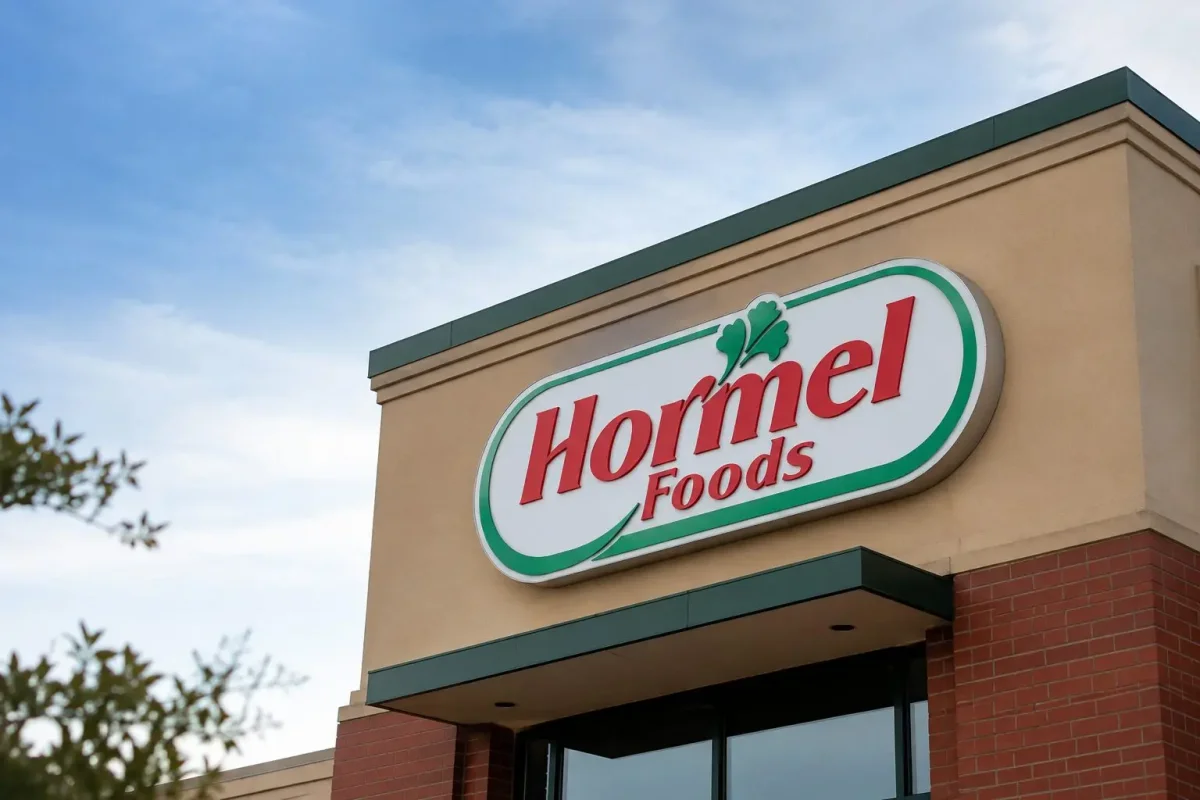
Hormel Foods Corporation (HRL) saw its shares climb sharply in premarket trading on Thursday, following the release of fiscal second-quarter results that exceeded Wall Street expectations. The company, known for iconic brands such as Skippy and Spam, reported robust demand for chicken, turkey, and other protein-heavy products, providing a bright spot in the packaged-food sector.
Key Financial Highlights
For the quarter ended April 26, Hormel posted net sales of $2.97 billion, surpassing the $2.95 billion consensus estimate compiled by LSEG. Adjusted earnings came in at $0.40 per share, beating the analyst forecast of $0.36. Organic net sales—a non-GAAP measure that excludes the impact of the Justin's divestiture—rose 3% year-over-year, signaling underlying operational strength.
Segment Performance and Strategic Shifts
The company's operating segments delivered broad-based gains. Segment profit increased 13% in retail, 11% in foodservice, and 20% internationally. Foodservice sales advanced 6%, while international sales grew 4%. Retail sales were flat, but profitability improved. Interim CEO Jeff Ettinger described the quarter as “excellent,” while President John Ghingo highlighted “broad-based strength” across the business, citing strong performance from Jennie-O ground turkey, Applegate, Herdez, Black Label bacon, premium prepared proteins, and Spam exports.
Hormel also provided updates on its portfolio transformation. The company reaffirmed its fiscal 2026 sales forecast of $12.2 billion to $12.5 billion and its adjusted earnings-per-share outlook of $1.43 to $1.51. However, it lowered its GAAP EPS guidance to $1.28–$1.37 from $1.37–$1.46, reflecting a loss tied to the sale of its whole-bird turkey business. The divestiture, expected to reduce reported net sales by about $50 million in fiscal 2026, is part of a strategic pivot away from volatile commodity-driven operations toward value-added proteins.
Market Context and Risks
The positive results come at a time when packaged-food investors are seeking evidence that branded staples can still grow amid shifting consumer behaviors. Inflation and tariff volatility have encouraged more at-home cooking, while high-protein diets have boosted demand for Hormel’s meat and snack offerings. The protein theme also resonated with larger peer Tyson Foods (TSN), which recently raised its income forecast on stronger chicken sales.
Despite the upbeat quarter, challenges remain. Retail volume declined 2%, and operating margin narrowed to 7.3% from 8.6% a year earlier. Hormel cited logistics inflation as a partial offset to retail gains. The company also flagged commodity costs, demand shifts, trade policy, and tariffs as potential risks that could steer future results away from its outlook.
Investor Focus Ahead
Investors will be closely watching Hormel’s 9 a.m. ET earnings call for insights on pricing strategies, administrative cost reductions, and improvements in turkey manufacturing that could help sustain margin momentum. The premarket reaction suggests optimism, but the sustainability of these gains will depend on the company’s ability to navigate ongoing headwinds.