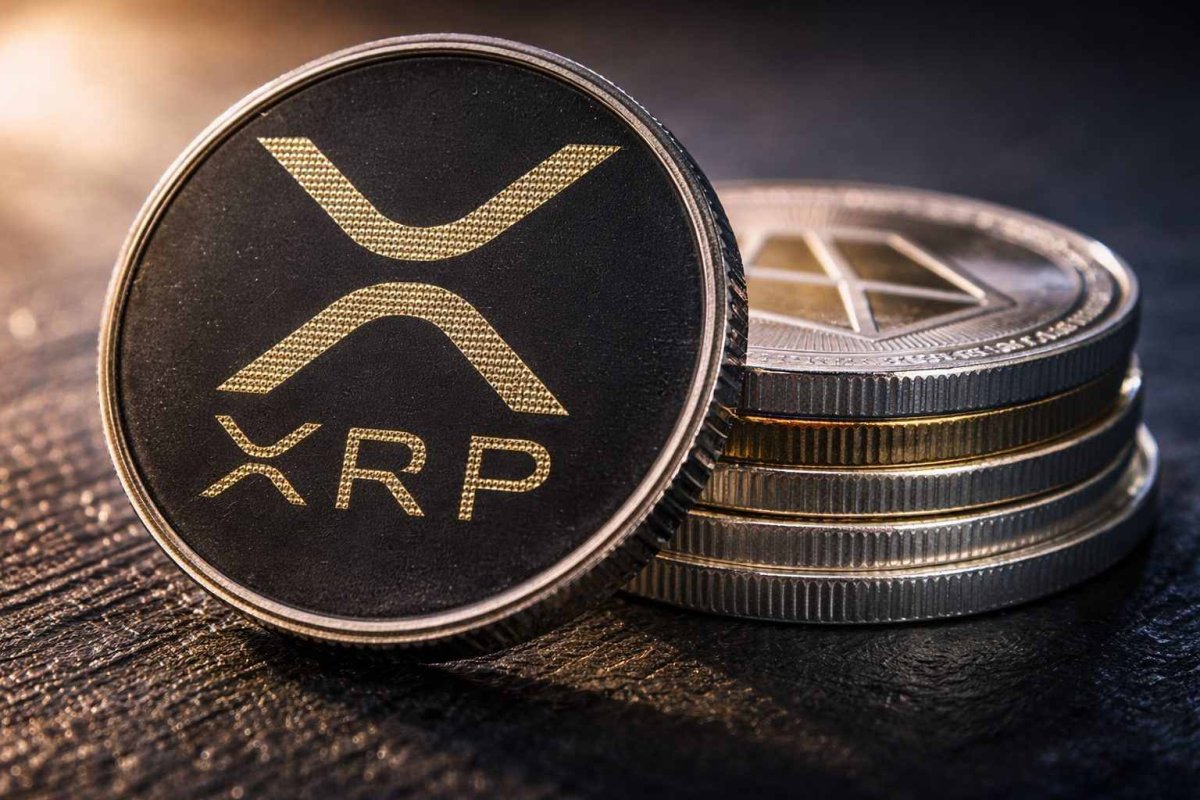
Charles Hoskinson, the founder of the Cardano blockchain, has reiterated a fundamental distinction within the XRP ecosystem, stating that holders of the XRP digital asset possess no legal entitlement to the profits or assets of Ripple, the payments company closely associated with the token. This commentary arrives as Ripple actively expands its suite of enterprise services through strategic acquisitions and product launches, highlighting a persistent debate over value accrual between a company and its related cryptocurrency.
The Separation of Token and Corporate Value
In recent discussions, Hoskinson emphasized that XRP holders "have no legal ownership" of Ripple's business assets. He drew a parallel to stablecoin issuer Tether, noting that while users benefit from a token's utility, they do not participate in the underlying company's financial success. This perspective is reinforced by regulatory filings. For instance, in its application for an XRP exchange-traded fund, asset manager 21Shares explicitly stated that holding XRP confers no claim on Ripple's earnings or any income distributions.
The historical token distribution further underscores this separation. As noted in a Bitwise filing with the U.S. Securities and Exchange Commission, the entire supply of 100 billion XRP was created at inception. Of this, approximately 20 billion were allocated to founders, with nearly 80 billion going to Ripple Labs. Ripple maintains the majority of its XRP holdings in a cryptographically secured escrow, releasing quarterly reports on its sales and escrow activity.
Ripple's Aggressive Expansion Strategy
Ripple's corporate growth trajectory appears decoupled from direct token holder benefit. In April 2025, the company entered into a definitive agreement to acquire prime brokerage firm Hidden Road for $1.25 billion, a move reported by Reuters that would position Ripple uniquely among crypto-native firms offering a global multi-asset prime brokerage platform. Prime brokers like Hidden Road provide critical services for institutional clients, including trade clearing, securities lending, and execution for leveraged trades.
This follows Ripple's earlier $250 million acquisition of Swiss digital asset custody specialist Metaco. Furthermore, the company recently launched new treasury management software, designed to help corporate finance teams manage both traditional fiat currency and digital assets within a unified system. Analysts suggest these acquisitions, particularly of Hidden Road, are intended to bolster the ecosystem for RLUSD, Ripple's dollar-pegged stablecoin, within a market dominated by Tether (USDT) and Circle's USD Coin (USDC).
Cardano's XRP DeFi Plan Moves Forward
Amid this corporate-token discourse, the Cardano development team is actively working to integrate XRP into its decentralized finance (DeFi) stack. This integration would enable users to trade, lend, and borrow XRP directly on the Cardano blockchain. When questioned on social media platform X about the status of XRP DeFi on Cardano, Hoskinson confirmed the project is ongoing, responding simply, "yes." The initiative remains listed as "in development" without a specified launch date.
Such cross-chain functionality typically relies on wrapped asset protocols and interoperability infrastructure. In the case of XRP, technology from custodians like Hex Trust and cross-chain messaging protocols like LayerZero would likely underpin the integration, introducing both opportunity and technical execution risk.
A Crowded Cross-Chain Landscape
Cardano is not alone in seeking to bring XRP liquidity to other networks. The Solana blockchain already hosts wXRP, a wrapped version of the token, confirmed by Ripple's developer arm, RippleX. This implementation also utilizes Hex Trust and LayerZero. Ripple CEO Brad Garlinghouse commented on this trend, stating that growing demand for XRP is "driving liquidity cross-chain," framing it as an expansion of the XRP market rather than a migration away from its native XRP Ledger.
Market Context and Lingering Questions
As of the latest data, XRP trades near $1.43, maintaining its position as the fourth-largest cryptocurrency by total market valuation. The central question Hoskinson's comments provoke remains: as Ripple scales its fee-generating enterprise businesses—spanning payments, custody, prime brokerage, and treasury software—who ultimately captures the created value? The current structure suggests it is Ripple's shareholders and corporate entity, not the distributed community of XRP holders.
This dynamic presents a recurring puzzle for investors in the crypto space, where the alignment between a foundational company's success and the appreciation of its associated digital asset is not always guaranteed. The ongoing development of XRP integrations on platforms like Cardano and Solana may enhance the token's utility and liquidity across the broader DeFi landscape, but according to Hoskinson's analysis, it does not bridge the legal divide separating the token from Ripple's corporate treasury.