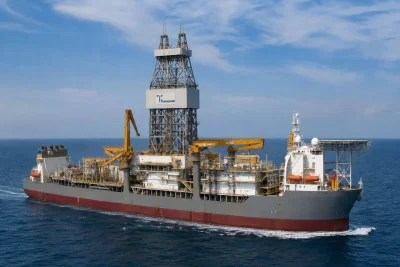
Transocean Ltd. (RIG) shares edged lower on Wednesday, declining approximately 1.2% to close at $6.18, despite a significant rally in crude oil prices that pushed Brent crude near the $100 per barrel mark. The offshore drilling contractor's stock moved against the broader energy sector, as market participants weighed a fresh rig booking in Australia against the larger narrative surrounding the company's pending merger with Valaris and ongoing debt reduction efforts.
Brent crude settled at $97.81, up 1.89%, after renewed hostilities in the Middle East rattled global equity markets and drove oil prices higher. The S&P 500 fell 0.74% on the day, reflecting a broad risk-off sentiment. However, Transocean failed to benefit from the oil price tailwind, with trading volume reaching approximately 36 million shares during the regular New York session.
New Rig Contract in Australia
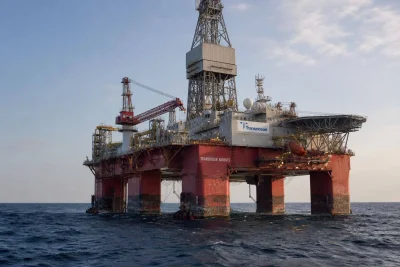
The most recent company-specific development came from Carnarvon Energy, which announced it had secured the Transocean Equinox semi-submersible rig for a drilling campaign in Western Australia's Bedout Sub-basin, slated for 2027. Carnarvon CEO Philip Huizenga described the contract as a “critical step” toward the company’s return to drilling, with expectations of at least one, and possibly two, high-impact wells next year. While the announcement did not disclose the contract value for Transocean, it adds another positive data point for rig demand, particularly for semi-submersible units used in deepwater and harsh environments.
Merger and Debt Reduction Story
Investors remain focused on the larger strategic picture: Transocean’s all-stock acquisition of Valaris, announced in February, valued at $5.8 billion. The combination is expected to create a fleet of 73 offshore drilling rigs. CEO Keelan Adamson has previously stated that Transocean’s debt level “negatively impacts our equity value,” making the merger and subsequent deleveraging a key catalyst for the stock. In the first quarter, Transocean reported contract drilling revenue of $1.08 billion, net income of $71 million, and adjusted EBITDA of $440 million. The company added $1.6 billion in contract backlog at a weighted average dayrate of approximately $410,000.
Peer Performance and Analyst Views
Transocean’s decline was not isolated. Peers also traded lower: Noble Corporation fell about 1.0%, Valaris dropped 0.7%, and Seadrill lost 3.3%, suggesting a sector-wide weakness rather than company-specific issues. Analyst sentiment remains mixed but has improved from earlier in the year. Barclays upgraded Transocean to Overweight on May 7 with an $8 price target, while TD Cowen and Morgan Stanley have targets of $6 and $7, respectively. An Overweight rating indicates the analyst expects the stock to outperform a benchmark or peer group.
Risks and Outlook
Despite the positive contracting environment, risks persist. A retreat in oil prices, delays in offshore spending by customers, or complications with the Valaris merger—including regulatory approvals, integration challenges, or lower-than-expected cost savings—could weigh on the stock. Both Transocean and Valaris have acknowledged that final outcomes may differ from initial expectations. For now, RIG remains caught between improving offshore fundamentals and the need to translate higher dayrates and the merger into stronger cash flow, reduced leverage, and a cleaner valuation multiple.