Howmet Aerospace (HWM) experienced a significant selloff on Tuesday, with shares tumbling 10.7% following GE Aerospace's announcement of its $11.75 billion acquisition of Consolidated Precision Products (CPP). The market reaction was swift and severe, reflecting not just guilt by association but a fundamental shift in the competitive landscape for the aerospace supplier.
GE Aerospace, a major customer of Howmet, plans to acquire CPP from Warburg Pincus and Berkshire Partners. The deal, expected to close in the second half of 2027 pending regulatory approval, will be funded with $7 billion in cash and the remainder through new debt. GE anticipates the acquisition will be accretive to adjusted earnings and free cash flow within the first year post-closing.
CPP, a long-time competitor of Howmet in investment castings, operates over 20 facilities producing investment and precision-sand castings in superalloys, titanium, aluminum, magnesium, and steel. GE has sourced from CPP for more than 15 years and views the acquisition as a strategic move to expand capacity and alleviate bottlenecks across commercial engines, aftermarket, and defense segments.
The overlap between Howmet and CPP was explicitly noted in Howmet's 2025 annual filing, which identified CPP as a competitor. The filing also revealed that GE Aerospace and RTX each accounted for approximately 11% of Howmet's third-party sales in 2025. Howmet had previously cautioned that several large customers operate captive furnaces for airfoil castings, but the GE-CPP deal intensifies these concerns.
While the immediate revenue impact may be limited, investors are now grappling with the possibility that GE will direct more future casting work to its in-house supplier, use internal capacity to negotiate lower prices, or steer next-generation programs toward CPP. Such risks are unlikely to materialize overnight, but they have prompted a reevaluation of Howmet's long-term growth prospects.
The selloff reduced Howmet's market value by approximately $11.2 billion, nearly matching GE's purchase price. At the closing price of $231.53, Howmet's equity value stands at about $93 billion, implying a price-to-earnings multiple of roughly 44 times based on the midpoint of its full-year adjusted earnings guidance of $5.27 per share. This valuation is steep, even after the drop, reflecting the market's prior optimism about aerospace scarcity and pricing power.
Despite the negative sentiment, Howmet's fundamentals remain robust. In the second quarter, the company reported a 24% increase in revenue to $2.547 billion, with adjusted EBITDA up 39% to $817 million and margins expanding to 32.1%. Engine Products revenue surged 32%, and management raised its full-year revenue guidance to $10.05 billion and free-cash-flow guidance to $1.90 billion.
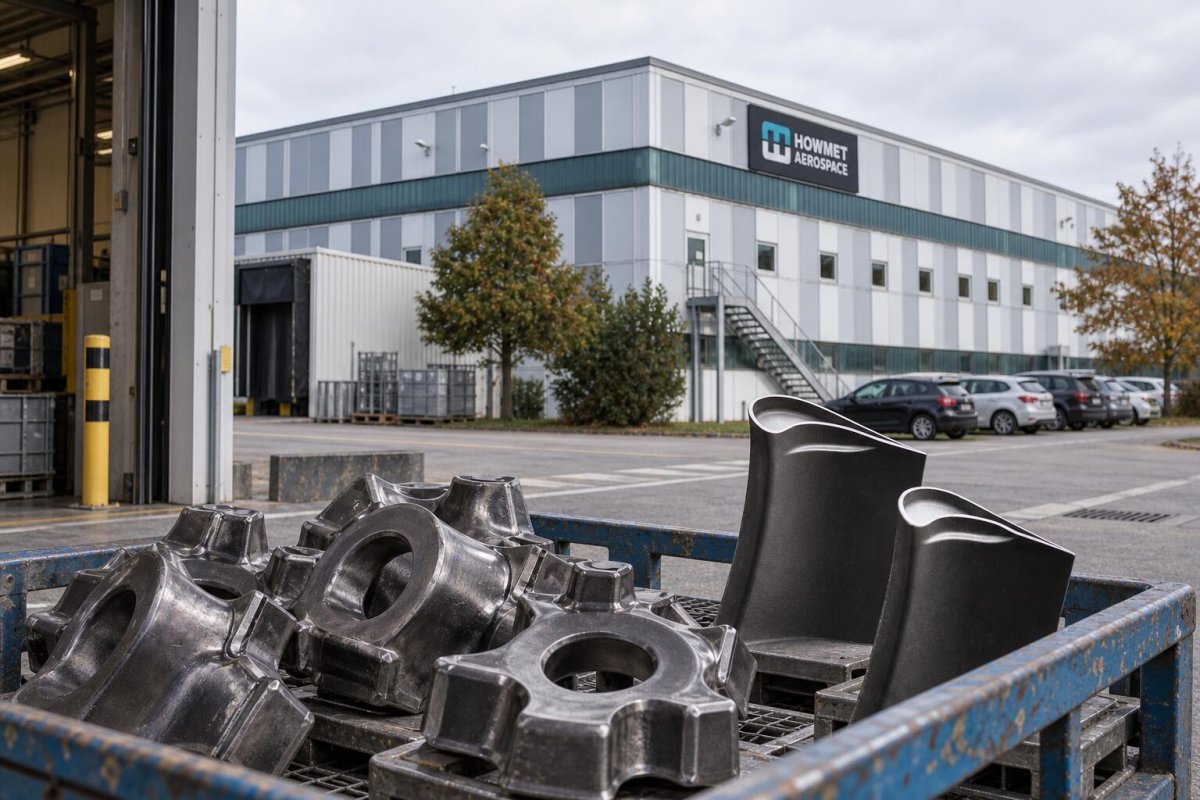
Howmet's product portfolio extends beyond castings, including airfoils, rings, fasteners, engineered structures, and forged wheels, many of which are protected by technical qualifications and long program lifecycles. While the GE-CPP deal introduces a credible competitive threat, Howmet's capabilities remain difficult to replicate quickly.
Investors will look for clarity during CEO John Plant's presentation at the Jefferies Global Industrials Conference on September 9. Key questions include the extent of overlap between Howmet's GE business and CPP, the protection offered by current program agreements, and where Howmet's proprietary technologies remain differentiated. Management's stance on share repurchases, especially at prices below $240, will also be closely watched.
Tuesday's decline is neither a clear bargain signal nor proof that Howmet's growth thesis is broken. The market has correctly identified a structural change in the industry, but whether that change warrants erasing nearly the entire value of GE's acquisition from Howmet's market cap in a single session remains debatable. Contract visibility, not the headline deal value, will ultimately determine Howmet's trajectory.