Hewlett Packard Enterprise (NYSE: HPE) closed Friday at $52.00, essentially unchanged from its pre-earnings level, after a two-day rollercoaster that saw shares swing from a low of $45.70 to a high of $54.88. The round trip is more telling than Friday's 4.5% decline. Investors did not reject HPE's record quarter; rather, they grappled with the margin implications of converting surging AI and networking demand into revenue.
Record Quarter, Margin Guidance Weighs
HPE reported revenue of $12.21 billion, up 34% year-over-year, and adjusted earnings of $1.11 per share, both exceeding analyst expectations. The company posted a 40.4% adjusted gross margin, with its cloud and AI segment generating $9.04 billion in revenue and a 17.0% operating margin. However, management guided that this segment's margin would decline to the mid-teens in the current quarter and settle near 13% in fiscal 2027, as larger AI systems carry higher component costs and pricing pressure intensifies.
During the earnings call, Morgan Stanley analyst Erik Woodring pressed CFO Marie Myers on the margin normalization. Myers attributed the strong Q3 performance to scale, pricing, cost initiatives, and a favorable deal mix, but acknowledged the expected step-down as the product mix shifts toward larger, lower-margin AI transactions.
Demand vs. Supply Constraints
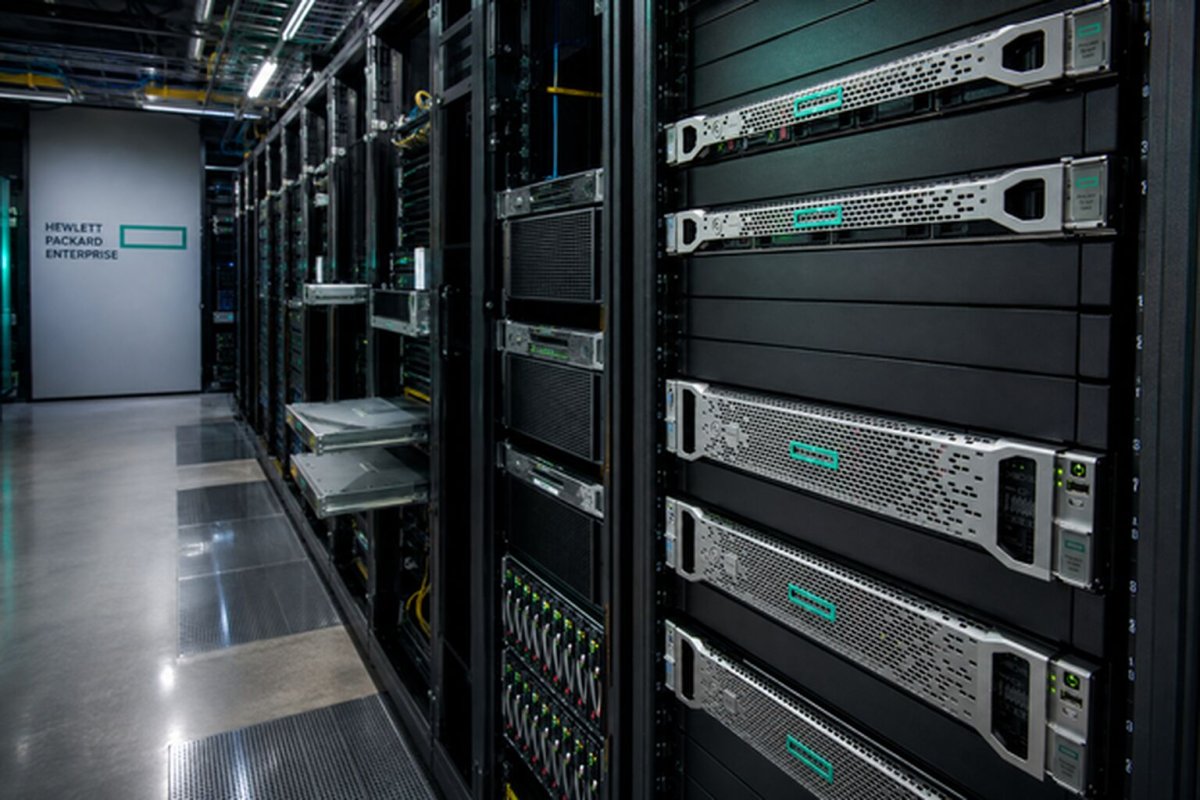
Demand for AI systems remains robust, with orders reaching $2.4 billion, up over 30% sequentially, and revenue from AI systems nearly $1.6 billion. The AI backlog grew 14% to another record. However, CEO Antonio Neri noted that supply constraints continue to hamper the company's ability to meet customer demand, particularly for memory, NAND, and wafer-linked components.
Networking, boosted by the Juniper acquisition, contributed $2.89 billion in revenue with a 22.0% operating margin, and HPE expects that segment to improve to mid-to-high-20s margins in fiscal 2027, providing a cushion against lower AI system profitability. Management says Juniper integration and cost synergies are ahead of schedule, targeting $600 million in annual run-rate savings by fiscal 2028.
Inventory Buildup Raises Cash Concerns
The balance sheet reflects the cost of securing supply: inventory at the end of July stood at $11.82 billion, up from $6.35 billion last October. While this buildup could unlock delayed shipments, it also ties up cash and exposes HPE to risk if orders are postponed or cancelled. Net leverage stands at 1.8x, below management's 2.0x target, and the company generated $958 million in free cash flow in Q3. HPE maintains its fiscal 2026 free cash flow outlook of at least $3.75 billion and fiscal 2027 framework of at least $5 billion, with plans to return at least 75% of Q4 free cash flow to shareholders.
Looking Ahead
Management's fiscal 2027 framework calls for 13% to 17% revenue growth, adjusted EPS of $4.40 to $4.60, and at least $5 billion of free cash flow. However, the near-term risks lie in conversion rather than demand: supply shortages, expensive components, a heavier mix of lower-margin AI systems, and Juniper integration. A slower conversion would leave more capital trapped in inventory.
Friday's $52 close appears less a verdict than a reset. The next proof points will be fourth-quarter shipments, cloud and AI margin performance, and the September 30 networking investor day.