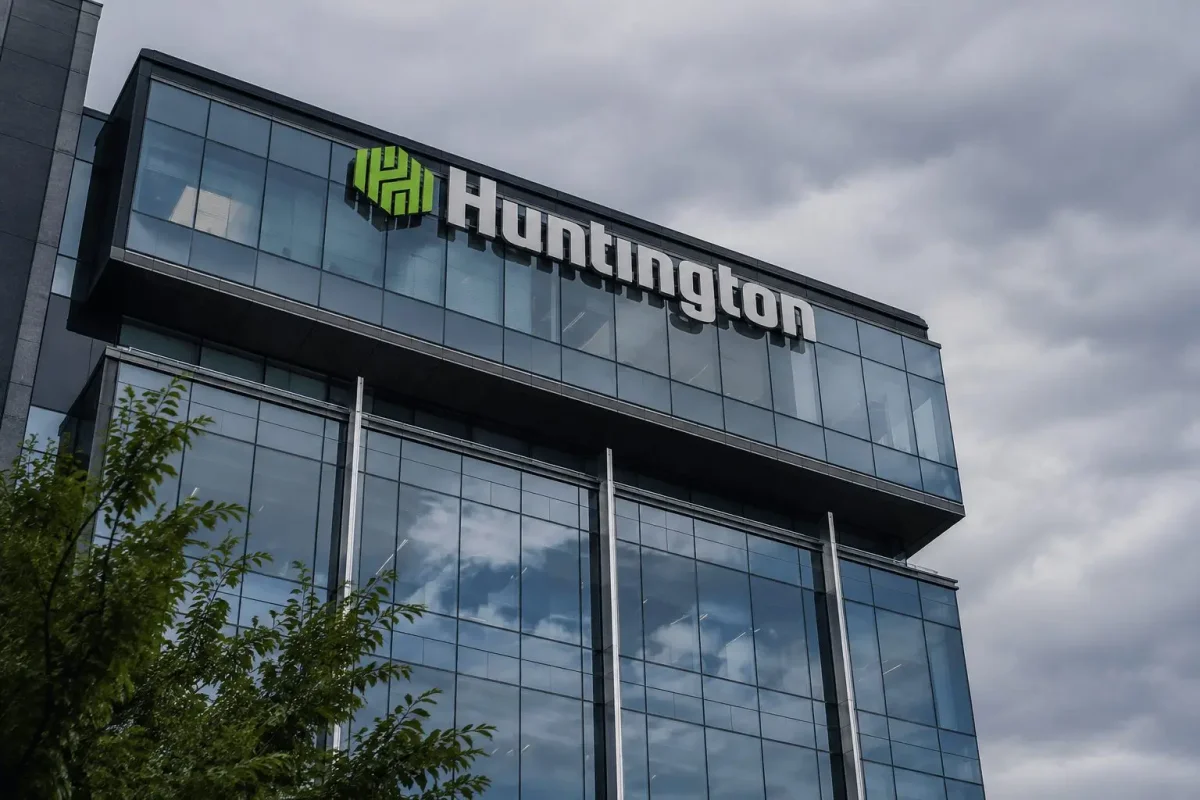
Huntington Bancshares Incorporated (NASDAQ:HBAN) ended Wednesday's regular session at $17.60 per share, a modest 0.2% gain. The stock has advanced 3.3% over the past week, yet it continues to trade at a meaningful discount to its regional banking peers. According to preliminary screening, Huntington's price-to-tangible-book ratio stands at 1.82 times, approximately 14% below the median of a selected peer group.
The valuation gap persists despite a strong second-quarter performance, with adjusted return on tangible common equity (ROTCE) of 17.5%—roughly 275 basis points above the peer median. This suggests the discount is not a reflection of current profitability but rather of concerns around integration and funding costs. Investors are now looking ahead to the fourth quarter, when management expects merger synergies to become fully apparent.
Q2 Metrics Show Strong Momentum
Huntington delivered robust balance-sheet growth in the second quarter. Average loans climbed 42% year-over-year to $189.3 billion, while average deposits rose 37% to $223.4 billion. Net interest income increased 40%, and noninterest income surged 67% to $785 million. Adjusted earnings per share came in at $0.39, up $0.02 from the prior quarter.
Tangible book value per share improved 1% sequentially and 6% year-over-year to $9.65. The CET1 ratio stood at 10.0%, down 20 basis points quarter-over-quarter, reflecting the impact of recent acquisitions. Net charge-offs were 0.25% of average loans, a slight improvement from the prior quarter but up 5 basis points from a year ago.
Acquisitions Drive Growth, But Organic Picture Matters
The substantial increases in loans and deposits were largely fueled by the Cadence and Veritex acquisitions. As a result, organic revenue trends and funding costs may provide a clearer view of underlying performance. Huntington completed the Cadence systems conversion in mid-June, a milestone that management believes will unlock cost savings and revenue synergies.
CEO Steve Steinour has set a firm timeline. "By the fourth quarter, the full earnings power of these partnerships will be clearly evident," he said in a statement. However, not all analysts share this optimism.
Analyst Sentiment Divided
In the wake of the earnings report, several firms adjusted their ratings and price targets. Morgan Stanley downgraded Huntington to Equal Weight from Overweight, citing deposit-pricing pressure as the bank boosts funding ahead of expected loan growth. Bank of America also downgraded the stock to Neutral from Buy. Conversely, Truist raised its price target to $20 from $19, maintaining a Buy rating.
The broader consensus remains positive. According to MarketBeat, Huntington has 15 buy ratings, 7 holds, and 1 sell, with an average price target of $20.11—approximately 14% above Wednesday's close.
Upcoming Catalysts
With no corporate events on the calendar, macro data will likely drive near-term sentiment. Key releases include the July employment report on August 7, consumer prices on August 12, and producer prices on August 13. These reports could influence expectations for deposit rates and bond markets.
Risks remain, including the possibility that higher deposit costs offset loan growth benefits, delaying the anticipated Q4 earnings boost. Integration delays, credit deterioration, or significant rate changes could also pressure tangible book value.
For now, the valuation gap presents an opportunity for a rerating. Huntington must demonstrate that its expanded scale from acquisitions translates into sustainable profitability while maintaining capital strength—a challenge that remains the central focus for investors.