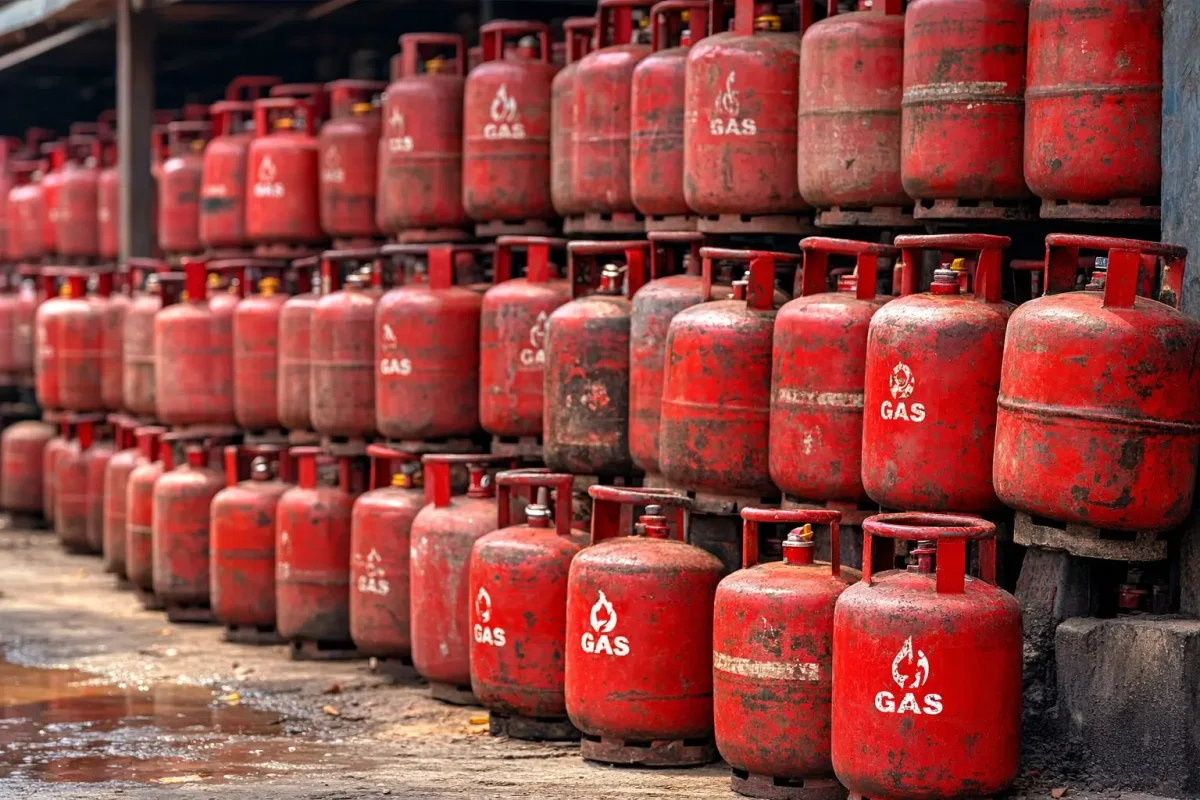
NEW DELHI, March 12, 2026 — The Indian government has activated emergency protocols to address a severe liquefied petroleum gas (LPG) shortage, reallocating supplies from commercial entities to households after escalating conflict in the Gulf region severely disrupted shipping lanes. The move comes as restaurants, hostels, and factory canteens across the nation have been forced to slash hot meal offerings due to crippling fuel shortages.
Oil Minister Hardeep Singh Puri confirmed that New Delhi has exercised special powers to prioritize domestic LPG cylinders, pulling from commercial allocations to maintain household coverage. The government is now scrambling to organize emergency shipments from the United States, Norway, Canada, and Russia to bridge the supply gap. India's heavy reliance on imported energy has left it acutely vulnerable; last year, the nation imported approximately 60% of its LPG and nearly 90% of its crude oil. The Strait of Hormuz, a critical chokepoint for Gulf energy exports, remains a focal point of risk.
Economic Ripples and Inflation Concerns
Economists are sounding alarms over the broader economic impact. The State Bank of India has warned that if global oil prices persist around $100 per barrel for a year, the nation's economic growth could decelerate to 6.6%, while inflation might accelerate to 4.1%. This transforms a kitchen-fuel crisis into a potential drag on the entire economy. While officials have moved to diversify crude oil sources—with 70% of imports now sourced outside the Hormuz region—LPG diversification had lagged, with Gulf nations still supplying about 60% of India's needs prior to this week's emergency actions.
To provide immediate relief, the environment ministry has directed state pollution control boards to permit restaurants and hotels to temporarily use biomass, kerosene, and coal for cooking over the next month. Minister Puri has sought to reassure the public, stating that household LPG deliveries remain steady and that "widespread anxiety" rather than an actual physical shortage is driving panic. Nevertheless, the government has imposed stricter controls on commercial LPG to prevent hoarding and black-market activity.
Consumer and Commercial Fallout
The crisis is rapidly altering daily life. In New Delhi, a popular roadside eatery has switched to serving only rice and lentils. The canteen at the Delhi High Court has halted cooked dishes, offering only sandwiches. In Bengaluru, paying guest hostels are reportedly down to just four or five days of gas reserves, according to Arunkumar DT of the Bengaluru PG Owners Welfare Association.
Households are not waiting idly. A massive consumer shift is underway, with induction stove models selling out rapidly on major e-commerce platforms like Amazon India, Flipkart, Blinkit, and Zepto. Amazon reported sales for induction cooktops surging more than 30-fold. TTK Prestige CEO Venkatesh Vijayaraghavan noted a "threefold surge" in demand, prompting the company to ramp up production to full capacity. Online listings for brands like Butterfly, Havells, and Bajaj Electricals quickly showed as unavailable.
The food service industry is also adapting. Major chains like Wow Momo and California Burrito are evaluating induction stoves as a contingency. However, the ripple effects extend further. Karan Taurani, Senior Vice-President at Elara Capital, warned that tight fuel supplies "could reduce restaurant operating capacity" and potentially jeopardize around 28% of food-delivery sales by value if shortages persist. Platforms such as Zomato and Swiggy could bear the brunt, while pizza, burger, and fried-snack chains that primarily use electric equipment might capture shifting demand.
Glimmers of Relief and Persistent Uncertainty
A slight easing of pressure emerged on Thursday as a Saudi oil tanker docked in Mumbai—the first Middle Eastern crude shipment to reach India since the war began in late February. An Indian government official also indicated that Iran will permit Indian-flagged tankers to pass through the Strait of Hormuz. However, an Iranian source subsequently denied any formal safe-passage agreement, underscoring the fragile and uncertain nature of the situation.
Government officials continue to insist that household LPG supplies are secure and that deliveries of petrol, diesel, and liquefied natural gas remain unaffected. The critical test, however, will come if the Gulf shipping disruption extends for weeks rather than days. A prolonged crunch would place immense strain on commercial kitchens, small factories, and delivery services, all competing for the same dwindling fuel reserves, potentially leading to far more severe operational constraints across the economy.