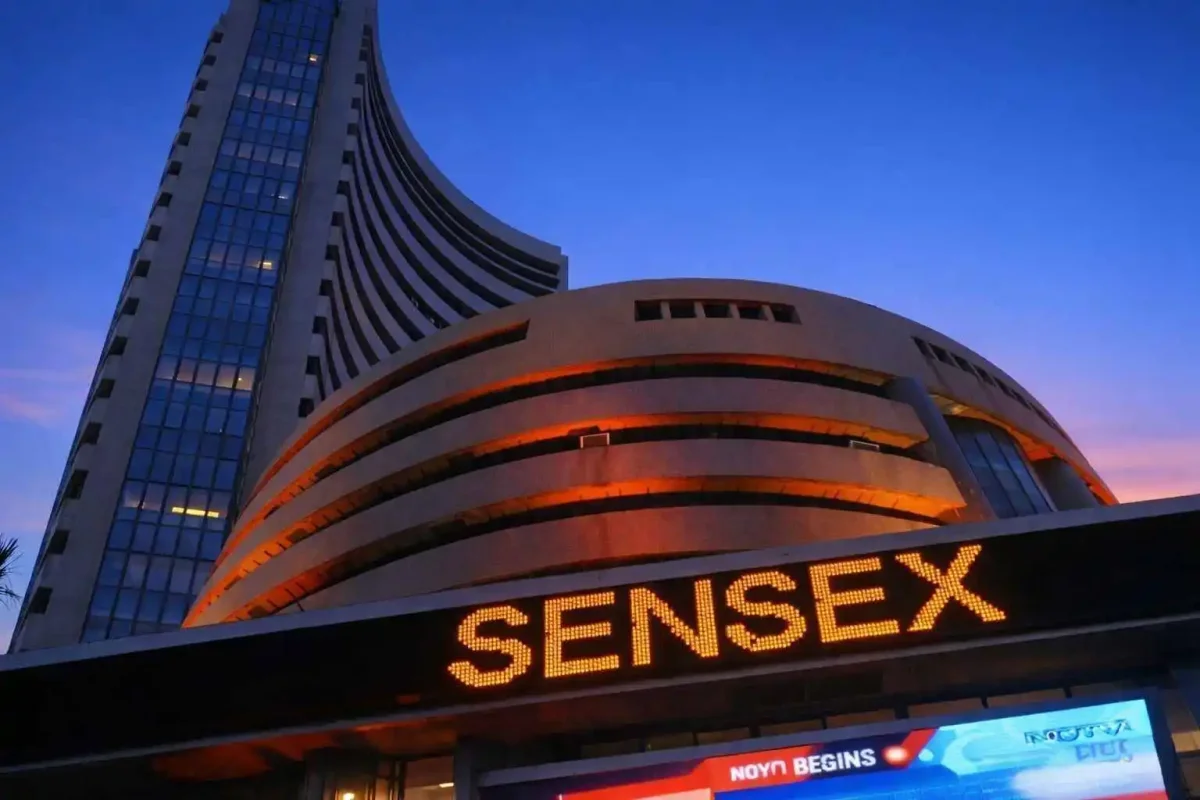
Indian equity markets experienced a severe downturn on Monday, with major indices falling sharply amid a confluence of external pressures. The benchmark BSE Sensex declined by 1,958.04 points, or 2.63%, to settle at 72,574.92 by midday trading. The broader Nifty 50 index fell 2.72% to 22,484.85, marking its lowest level since April 9, 2025.
Oil and Currency Pressures Intensify
The market decline occurred against a challenging macroeconomic backdrop. Brent crude oil prices hovered near $112 to $113 per barrel, maintaining pressure on India's import-dependent economy. Simultaneously, the Indian rupee depreciated to a historic low of 93.94 against the US dollar. Benchmark 10-year government bond yields climbed to 6.796%, reaching their highest point in over a year. This combination of high energy costs and currency weakness created what analysts described as a classic financial squeeze for the economy.
Foreign Capital Flight and Market Correction
Selling pressure has pushed both the Sensex and Nifty into correction territory, with each index down at least 10% from recent peaks. Foreign portfolio investors have been significant sellers, withdrawing approximately $9.57 billion from Indian equities during March. Since geopolitical tensions escalated last month, stocks listed on the National Stock Exchange have collectively lost roughly $365 billion in market capitalization.
"Renewed geopolitical tensions and the resulting volatility in crude oil prices will continue to act as key external drivers for the market," stated Ajit Mishra, Senior Vice President of Research at Religare Broking. Market volatility, as measured by India's volatility index, surged to 26.1, a level not observed since early June 2024. All 16 major sectoral indices traded in negative territory during the session.
Broader Asian Weakness and Sectoral Damage
India's decline mirrored broader weakness across Asian markets, though with varying intensity. Japan's Nikkei index fell 3.5%, South Korea's primary index tumbled 5.8%, and China's CSI300 slipped 2.4%. Persistent risks associated with energy infrastructure in the Gulf region kept regional investors cautious.
Losses were widespread within the Indian market. HDFC Bank, which carries significant weight in the benchmark indices, declined 2.5%. This followed a 7.4% drop over two previous sessions after the unexpected departure of its part-time chairman. State Bank of India shares sank 3.6% following a tax demand of 63.37 billion rupees. The metals sub-index was particularly hard-hit, falling 4%.
Broader Market Participation and Small-Cap Weakness
The selloff extended beyond large-cap stocks. By midday, only 521 stocks advanced while 3,265 declined, indicating broad-based negative sentiment. The Nifty Smallcap 100 index dropped 3.82%, and the Nifty Midcap 100 index slid 3.45%, reflecting pronounced risk aversion among investors.
Oil Price Trajectory Remains Key Uncertainty
The future direction of oil prices represents a critical variable for market outlook. Shane Oliver of AMP highlighted the risk that ongoing conflict could persist for "many weeks," potentially driving crude prices as high as $150 per barrel. Conversely, Anurag Mittal of UTI Asset Management Company noted that a genuine inflation scare would only materialize if oil sustains levels well above $100 for two to three consecutive months.
Potential Support and Investor Positioning
Some technical support emerged last week when the Sensex gained 0.44% on Friday, suggesting bargain-hunting after a prolonged decline. VK Vijayakumar of Geojit Investments observed that substantial foreign outflows have rendered financial stocks "attractive and investable" for domestic investors.
Market participants are closely monitoring upcoming flash purchasing managers' index data, scheduled for release on Tuesday, for early indications of how the energy price shock is transmitting through the broader economy. According to a Goldman Sachs prime brokerage note, hedge funds sold emerging Asian equities last week at the fastest pace since April 2025, with concentrated selling in Taiwan, South Korea, and India.