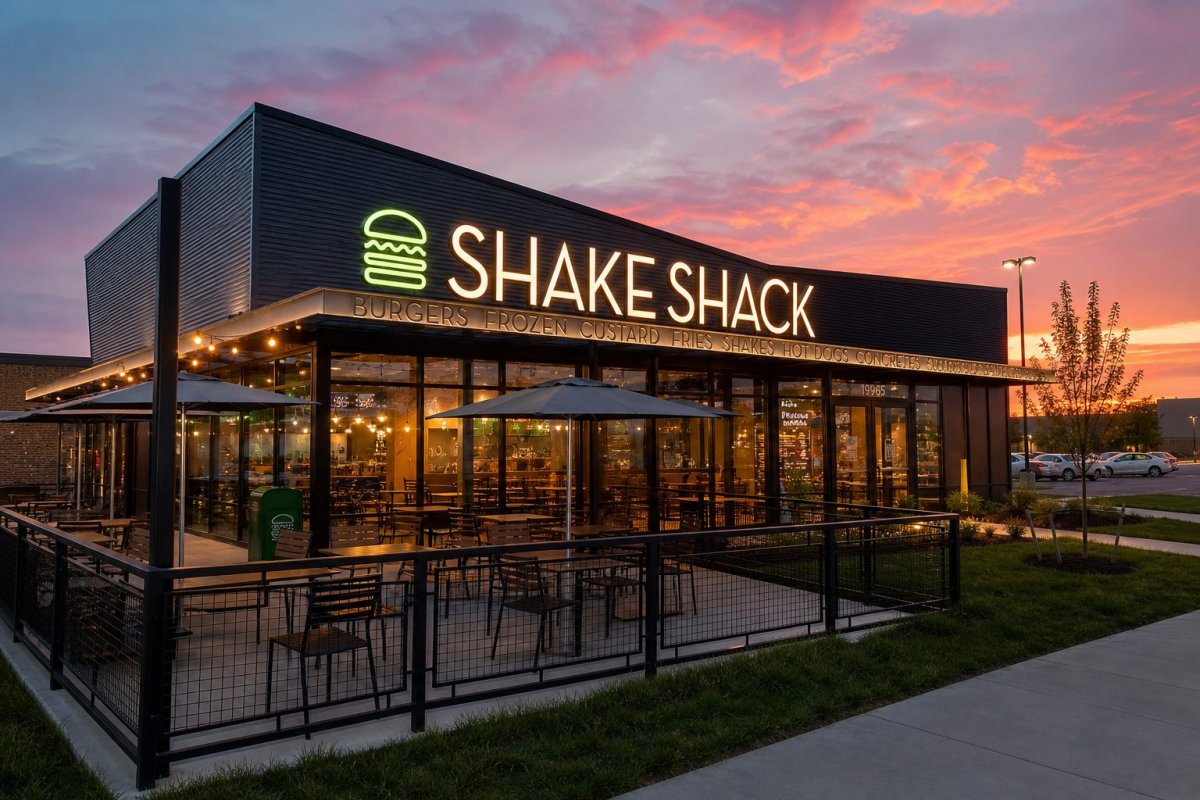
Shake Shack (SHAK) experienced a sharp decline in its stock price on Thursday, falling approximately 28% to $69.53 after the company disclosed a quarterly loss and revenue that fell short of Wall Street expectations. The stock touched an intraday low of $67.21, reflecting investor disappointment with the earnings report and broader concerns about the restaurant industry's outlook.
Earnings Miss and Revenue Shortfall
For the first quarter, Shake Shack reported revenue of $366.7 million, a 14.3% increase year-over-year but below the analyst consensus of $371.9 million, according to LSEG data. The company posted a net loss of $0.3 million, or 1 cent per share, reversing from net income of $4.5 million, or 11 cents per share, in the same period last year. Adjusted earnings per share were flat, missing the expected 12 cents.
Same-Shack sales, a key metric for restaurant chains, rose 4.6% for locations open at least 24 months, with traffic increasing 1.4%. However, margins came under severe pressure as operating income swung to a loss of $2.6 million from a profit of $2.8 million in the prior year. Adjusted EBITDA dropped 9.3% to $37.0 million.
Cost Pressures and Strategic Moves
The company highlighted a significant rise in beef costs, which jumped by a low-double-digit percentage compared to a year ago, partially mitigated by procurement strategies and cost controls. General and administrative expenses surged to $53.6 million, representing 14.6% of revenue, up 190 basis points from last year, driven by increased marketing, technology investments, and hiring for growth initiatives. Pre-opening costs reached $6.9 million as Shake Shack launched 17 new company-operated stores during the quarter.
CEO Rob Lynch attributed a 2.4 percentage point decline in comparable sales to adverse weather conditions but maintained that underlying sales and traffic momentum remained robust. The company also announced the appointment of Michelle Hook as its new chief financial officer, effective from Portillo's, where she served as finance chief since December 2020. Hook's compensation package includes a $625,000 base salary, a target bonus of equal value, a $300,000 signing bonus, and $1.2 million in restricted stock units.
Outlook and Development Plans
Shake Shack raised its 2026 development target to 60-65 new company-operated openings, up from the previous forecast of 55-60, while maintaining its guidance for 40-45 licensed locations. For the second quarter, management projects revenue in the range of $424 million to $428 million, with same-Shack sales growth of 3% to 5%. The company's outlook incorporates expectations of weaker consumer spending and inflation but does not account for potential impacts from tariffs.
Geopolitical tensions, particularly the Middle East conflict, have disrupted some licensed locations, leading to closures or reduced hours. Executives warned that the conflict's effect on near-term performance is likely to persist. The company also cited risks such as supply chain disruptions, higher labor costs, and the challenge of driving sales growth at existing stores.
Industry Context and Analyst Commentary
Investors are increasingly focused on restaurant chains as consumers tighten spending amid rising costs. Reuters noted that McDonald's, Domino's, and Papa John's all reported softer sales growth in the latest quarter, while Chipotle flagged higher beef costs as a headwind. Michael Gunther, senior vice president at Consumer Edge, told Reuters that broader signs of consumer strain are evident across the industry, with investors closely monitoring how Shake Shack manages its beef cost exposure.