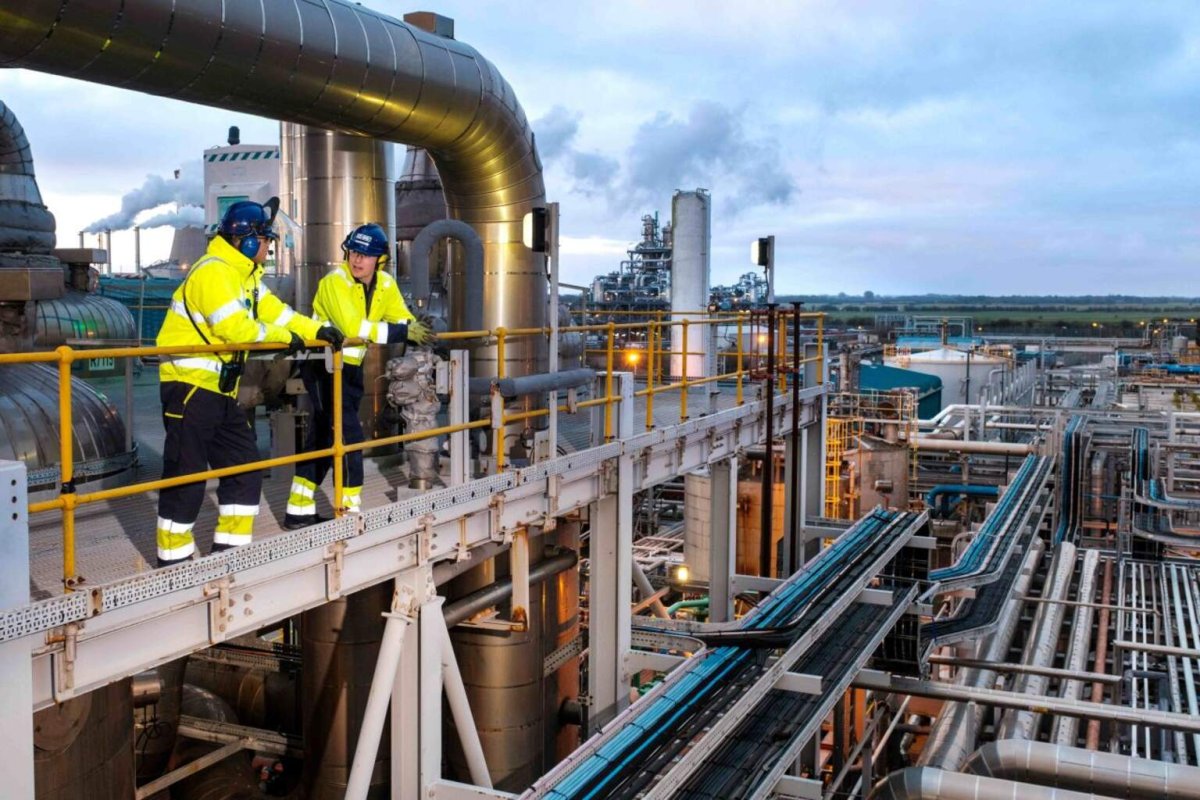
INEOS has announced it will mothball all three of its acetyls production facilities in Hull, England, describing them as Europe's last remaining world-scale acetyls units. Two of the plants have already halted operations, and the third is scheduled to go offline within days. The privately held company pointed to a severe energy cost disadvantage, claiming European gas prices are twelve times higher than those in the United States.
The Hull complex, with a combined nameplate capacity of 850,000 tonnes per year, produces acetic acid (500 kt/year), acetic anhydride (150 kt/year), and ethyl acetate (200 kt/year). These chemicals are essential inputs for medicines, coatings, food preservatives, clothing, and construction materials. With the plants shuttered, European buyers will increasingly rely on imports to meet demand.
INEOS did not specify which products were halted first, a detail that could affect near-term contract pricing. Chairman Jim Ratcliffe said the plants "just cannot compete." The company also noted that replacement material from China carries eight times the carbon footprint of Hull's output.
The announced closure triggered immediate movement in shares of listed acetyls producers. During Tuesday's New York session, Celanese Corporation (NYSE:CE) rose 2.66% to $48.48 by 10:36 EDT, while Eastman Chemical Company (NYSE:EMN) gained 1.61% to $66.94. The read-through suggests investors see reduced European supply as a potential positive for remaining global producers.
While INEOS cited a 12x gas cost multiple, independent data confirm a severe but slightly less extreme gap. UK prompt gas ended last week near 200 pence per therm, and Dutch front-month gas traded around €78.80 per megawatt-hour on Tuesday. The company did not disclose the contract periods or hubs behind its comparison.
The shutdown comes despite a strong second quarter for INEOS Quattro's acetyls segment, which saw EBITDA jump 52% to €73 million as Asian prices spiked and US exports improved. Group EBITDA rose 78.5% to €407 million. However, with net debt of €5.637 billion and leverage at 6.4 times EBITDA, the company faces limited patience for loss-making European capacity. Still, €2.12 billion in cash and undrawn facilities provides some restart flexibility.
Analysts were already divided on the listed peers. KeyBanc rates Celanese a Buy with a $57 target, implying 17.6% upside, while RBC Capital has a Hold rating and $45 target, suggesting 7.2% downside. For Eastman, RBC has a Hold with a $74 target (10.5% upside), and UBS rates it a Buy with a $92 target (37.4% upside). These targets predate the Hull closure.
The key counterargument is that mothballing preserves restart options, while high gas costs could also destroy European demand. Imports may cap any scarcity premium. Risks include a gas-price retreat or public support that could reopen Hull before rivals capture durable volume, reversing today's favorable peer read-through. The third unit is due offline within days, and investors will watch whether European acetyls prices rise before the shutdown completes.