Intel (NASDAQ:INTC) announced plans to raise $15 billion through a common stock offering, with an underwriters' option for an additional $2.25 billion. The move, disclosed late Monday, is designed to capitalize on a sharp rally in the company's shares to finance its capital-intensive manufacturing expansion. The base offering represents roughly 75% of Intel's projected $20 billion capital expenditure for 2026.
Based on Monday's closing price of $97.52, the base deal would add approximately 154 million shares, translating to a 3.1% increase in the outstanding share count from the 4.995 billion shares recorded in January. Including the full option, the dilution could reach 3.5%, with total gross proceeds of $17.25 billion. The final dilution will depend on the offer price set at the time of the sale.
The timing is strategic. Intel's stock has nearly tripled in 2026, outperforming peers like Advanced Micro Devices (NASDAQ:AMD) and Nvidia (NASDAQ:NVDA), as well as the Philadelphia Semiconductor Index, which has climbed almost 75% year-to-date. The company's decision to issue equity now, rather than earlier, allows it to raise substantial capital with relatively less dilution, given the elevated share price.
Analysts have boosted their third-quarter forecasts for Intel's Data Center and AI revenue by $2.5 billion to $6.6 billion, reflecting heightened demand for AI agent server processors. This demand surge prompted Intel to increase its 2026 capital spending outlook from $18 billion to $20 billion in July, as the company struggles to keep up with capacity needs.
Russ Mould, investment director at AJ Bell, commented that it "makes perfect sense for Intel to raise money, especially after a five-fold increase in the stock price since last August." The offering marks a strategic reversal from Intel's previous capital allocation strategy, which saw $82 billion spent on share repurchases during the 2010s. The current base sale recoups just 18% of that figure.
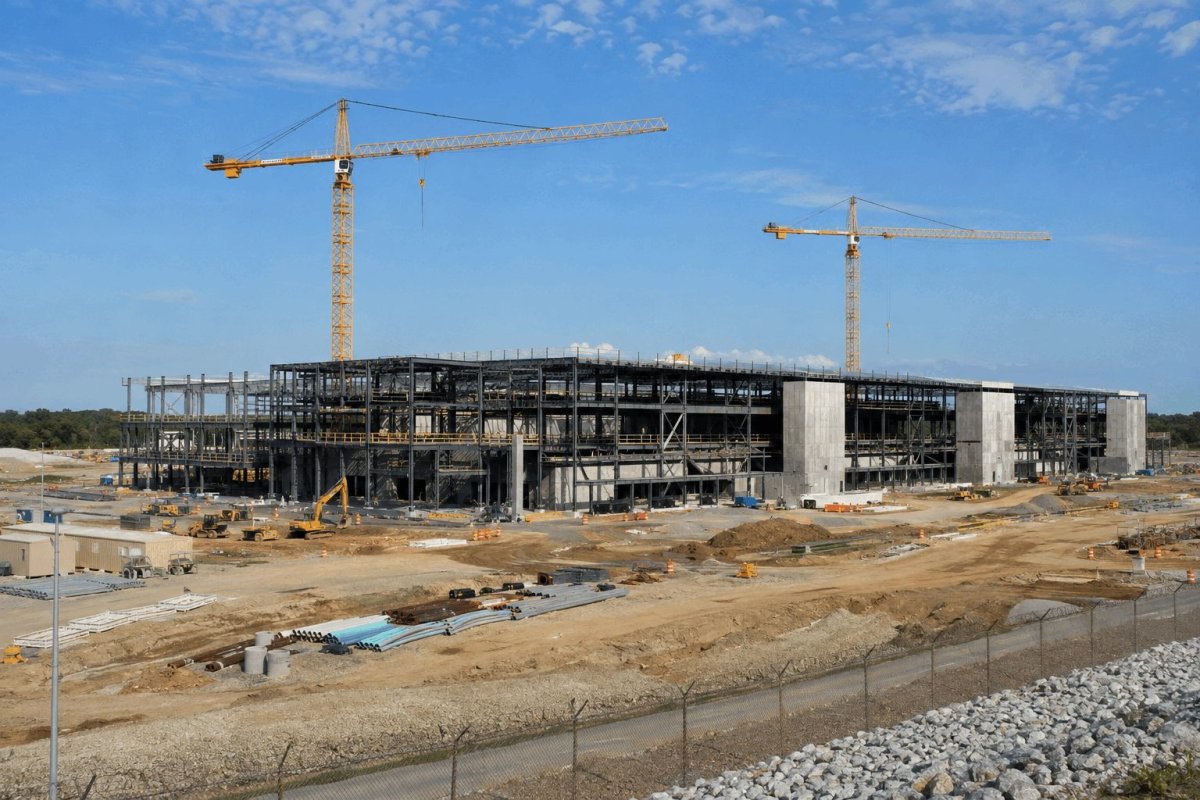
The proceeds will help fund Intel's ambitious foundry plans, including a €5 billion investment in Ireland, equivalent to $5.77 billion. However, the capital alone does not solve Intel's foundry challenges. The company must achieve consistent manufacturing yields, secure reliable external customers, and compete on cost with Taiwan Semiconductor Manufacturing (NYSE:TSM), which remains the dominant contract chipmaker.
Intel aims to begin mass production using its 14A process in 2028, a timeline that follows earlier warnings that the node could be canceled without a significant external customer. The next two years will be critical in determining whether the investment translates into marketable capacity.
The offering is Intel's largest equity raise in recent memory, nearly matching the $15.9 billion secured through three significant equity deals in 2025, including a SoftBank share offering, an Nvidia offering, and a U.S. government transaction. The new deal is more market-sensitive, with JPMorgan Chase (NYSE:JPM), Goldman Sachs (NYSE:GS), Morgan Stanley (NYSE:MS), and Citigroup (NYSE:C) acting as joint bookrunners. The distribution among these banks will signal the balance between long-only investors and short-term trading interest.
Risks remain. The final offer price could lead to greater dilution if set below the current market price. Foundry losses, production yield issues, or slower customer onboarding could erode the benefits. Moreover, a pullback in AI spending could reduce CPU demand and pressure Intel's valuation. The next catalysts will be the offer pricing and the definitive share count, with a strong demand and modest discount supporting the bull case, while a deep discount could suggest the market is less willing to fund Intel's manufacturing costs.