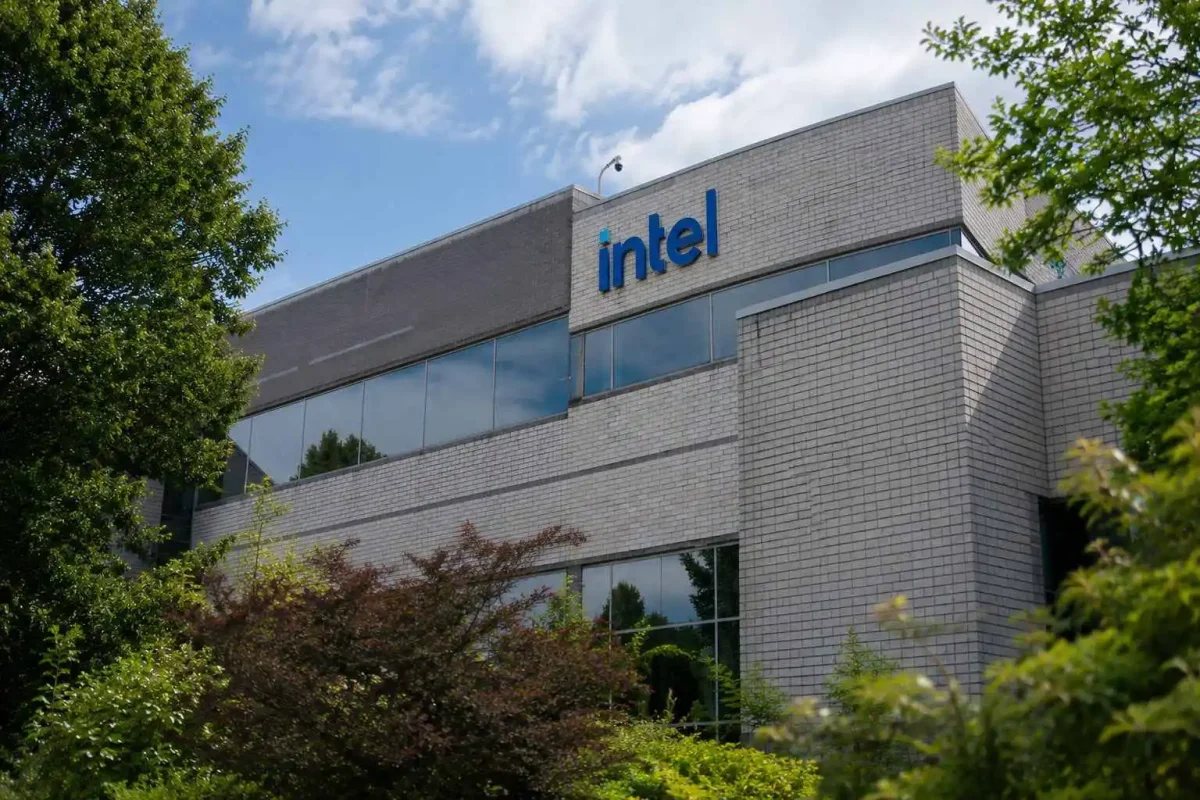
Intel Corporation (NASDAQ: INTC) saw its shares edge lower in premarket trading on Tuesday, as the chipmaker's ambitious artificial-intelligence showcase at Computex failed to sway investors who remain focused on concrete revenue progress. The stock closed Monday at $109.33, down 4.67%, and was quoted at $107.86 in premarket activity, a decline of 1.34%.
Computex Announcements Fail to Impress
At the Computex trade show, Intel unveiled a series of AI-focused products and partnerships designed to broaden its footprint beyond traditional data-center chips. The company introduced rack-scale AI systems—complete server-rack solutions built around Xeon processors and SambaNova RDUs—alongside new Vector Core Compute cloud services that integrate Intel Xeon chips, SambaNova units, and Nvidia Blackwell GPUs. Intel also announced Xeon 6+ processors built on its advanced Intel 18A manufacturing process, as well as partnerships with Foxconn, Siemens, Hitachi, Echo Neurotechnologies, and Greenstone Biosciences.
Chief Executive Lip-Bu Tan emphasized the company's strategy to bring AI "from the chip to systems level," aiming to capture demand in AI inference—the process of running trained models—where CPUs could play a larger role alongside graphics processing units (GPUs). Creative Strategies analyst Ben Bajarin noted that agentic inference could shift AI deployments toward "one-CPU-to-one-GPU" ratios, potentially benefiting Intel.
Market Skepticism Persists
Despite the announcements, investors remain cautious. The broader market backdrop is crowded with more direct AI beneficiaries, such as Nvidia and Marvell Technology. U.S. stock futures were subdued on Tuesday after the S&P 500 and Nasdaq closed at record highs, while Reuters reported that Hewlett Packard Enterprise surged after raising long-term targets and Alphabet sought to raise $80 billion for AI infrastructure.
"Every day it seems like a different company comes out with incredible signs that this wave of AI is alive and well," Ryan Detrick, chief market strategist at Carson Group, told Reuters. Nvidia remains the benchmark, with CEO Jensen Huang stating in Taipei that the company had secured supply for "very robust growth," though it remained supply constrained. Marvell provided another contrast, with its shares jumping more than 24% in premarket trading after Huang called it the next trillion-dollar company.
Intel's Thesis Faces Uphill Battle
Intel's argument that CPUs will regain importance as AI spreads into inference, agents, and edge devices has some merit, but investors are not yet willing to underwrite that thesis based on announcements alone. The risk is that customers continue to prioritize GPU-led systems where Nvidia sets the pace, while AMD and Arm-based designs pressure Intel in both servers and PCs. If Intel's 18A process, rack-scale products, or partner programs fail to show revenue traction soon, Tuesday's news may be viewed as another roadmap rather than a turning point.
The company's next test comes later Tuesday, when Intel is scheduled to appear at the BofA Global Technology Conference at 3:20 p.m. PDT. Investors are likely to press for details on demand, supply, pricing, and whether the Computex announcements can support the rebound already priced into the shares.