Intel Corporation (NASDAQ: INTC) saw its shares decline 2.9% on Friday, closing at $89.47, as investors weighed encouraging manufacturing progress against persistent financial losses in its foundry business. The stock traded on volume of approximately 86 million shares, reflecting heightened market attention following the company's recent $20 billion capital raise.
14A Defect Density Improves Faster Than Target
Chief Financial Officer David Zinsner revealed that defect density for the Intel 14A process node is falling more rapidly than the company's internal target curve. This metric, which measures imperfections per unit of wafer area, is a critical leading indicator for semiconductor manufacturing efficiency. A steeper decline suggests better potential yields, lower unit costs, and improved factory utilization in the future.
Zinsner noted that Intel has not seen comparable progress since its 22nm node, signaling that the 14A development is on a promising trajectory. However, he cautioned that defect density improvements do not automatically translate into profitable commercial production. The company plans to begin risk production of 14A in the second half of 2027, with high-volume manufacturing slated for 2028.
Foundry Losses Persist Despite Revenue Growth
Intel Foundry reported second-quarter revenue of $5.77 billion, a 31% year-over-year increase, but still recorded an operating loss of $2.09 billion. While this loss narrowed from $3.17 billion in the same period last year, it still represents a substantial 36.2% of the segment's quarterly revenue. The foundry business continues to rely on Intel's product divisions to fund its aggressive expansion and technology development.
The company's core product businesses are showing robust growth. Data Center and AI revenue surged 59% to $6.3 billion, while client revenue rose 13% to $8.9 billion. Companywide revenue grew 25% to $16.1 billion, and non-GAAP gross margin reached 41.8%. Operating cash flow totaled $7 billion for the quarter.
Customer Interest Intensifies
Zinsner indicated that external customer discussions have evolved from preliminary data reviews to concrete capacity inquiries. Potential clients are now asking how much 14A capacity Intel can provide, a positive sign for the foundry's long-term prospects. However, the company remains in the early stages of proving its manufacturing capabilities at scale.
Analyst Sentiment and Market Outlook
Wall Street remains cautious, with 50 analysts covering Intel, including 16 buy ratings, 31 holds, and three sells. The average price target stands at $107.46, implying a potential upside of about 20% from current levels. The stock has been under pressure since the company announced a $20 billion equity offering earlier this month, which has diluted existing shareholders.
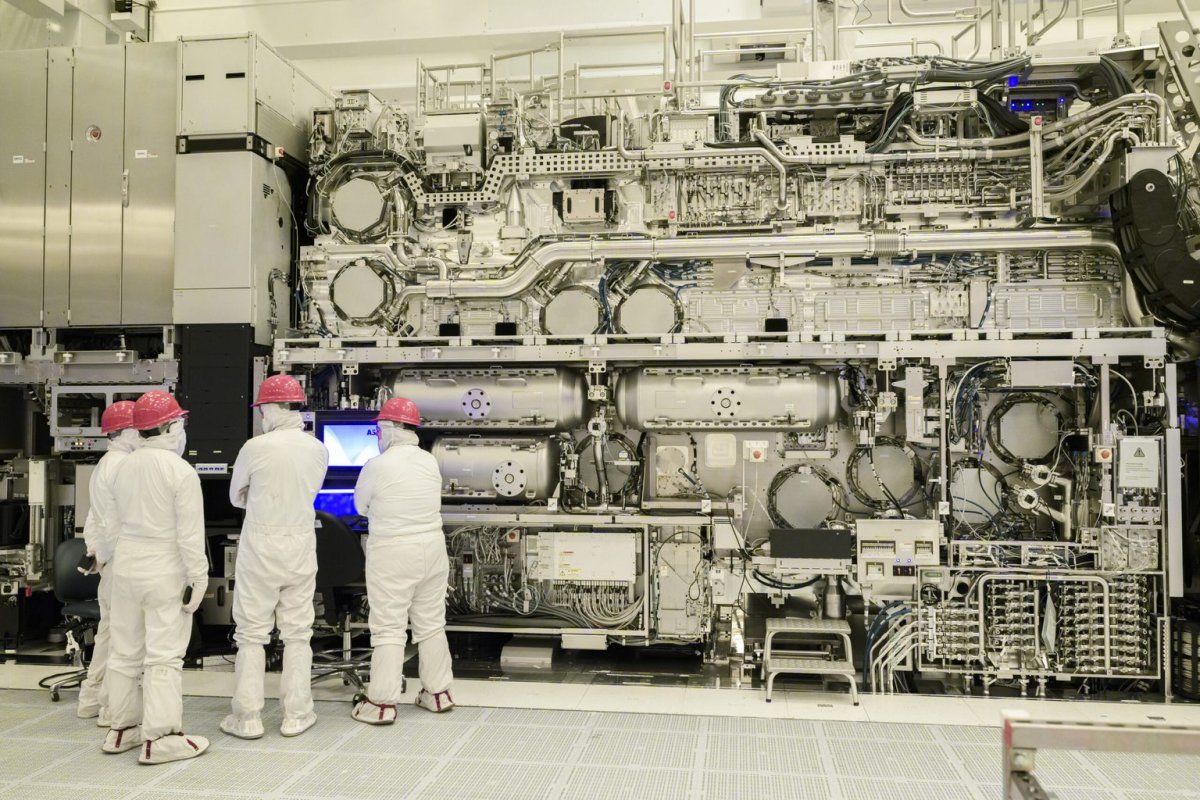
Key risks to Intel's turnaround include the possibility that defect density improvements may not translate directly into production yields, potential schedule delays, weak external demand, and the high cost of High-NA EUV lithography equipment. The company's heavy investment in leading-edge manufacturing capacity remains a significant financial burden, even as its technology roadmap shows promise.
Investors will be watching for further updates on 14A development and foundry customer wins in the coming quarters. The success of Intel's foundry strategy is crucial to its long-term competitiveness against rivals like TSMC and Samsung. For now, the market remains cautiously optimistic but unwilling to fully embrace the stock until profitability in the foundry segment becomes more tangible.