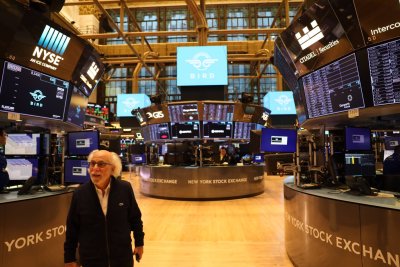
Intel (NASDAQ:INTC) shares continued their decline in pre-market trading on Tuesday, falling to $105.15 by 5:50 a.m. EDT, down 4.75% from the previous close. The stock had already dropped 9.66% to $110.39 in the prior session, as investors reassessed the chipmaker's balance between its promising AI business and the heavy costs of its foundry expansion.
The broader semiconductor sector also took a hit, with the PHLX Semiconductor Index (SOX) falling 4.7%. Advanced Micro Devices (NASDAQ:AMD) dropped 6.5%, and Micron Technology (NASDAQ:MU) declined 4.7%. Intel's decline was notably steeper than the sector average, dropping about twice as much as the SOX index on Tuesday.
Foundry Losses Weigh on Sentiment
Intel's business split is at the heart of the market's concern. While Intel Products generated $12.8 billion in revenue and $4.1 billion in operating income in Q1 2026, the Intel Foundry segment posted a $2.4 billion operating loss on $5.4 billion in revenue. External foundry sales were a mere $174 million, representing just about 3% of Foundry's total revenue.
Investors are questioning when the foundry business will become profitable enough to justify the massive capital expenditures. Intel ended Q1 with $32.8 billion in cash and short-term investments against $45.0 billion in total debt. The company recently bought back Apollo's 49% stake in Fab 34 Ireland for $14.2 billion, using cash and a $6.5 billion bridge loan, later refinanced with senior notes.
AI Hype vs. Reality
The sell-off comes as Samsung Electronics reported a 19-fold surge in Q2 operating profit, yet its stock lost over $80 billion in market cap as traders questioned whether AI demand can sustain current valuations. This trend is problematic for Intel, as even strong earnings from a key memory player failed to lift chip stocks.
Zachary Hill, head of portfolio management at Horizon Investments, told Reuters that the bar for chip makers is now "almost impossible to beat." Seaport Research analyst Jay Goldberg was blunt on Intel: "No company in history has ever fallen off the Moore's law curve and made it back on."
Looking Ahead to Q2 Earnings
Intel is set to report Q2 2026 earnings on July 23 after the close. The company forecast Q2 revenue between $13.8 billion and $14.8 billion. Key metrics to watch include external foundry revenue, comments on 18A yield, operating cash flow, and whether supplier prepayments or capex are draining cash faster than product margins can cover.
CFO Dave Zinsner said in April that "demand continues to outpace our growing supply," and expects Foundry losses to ease as 18A production scales up and yields improve. However, timing remains the critical issue—higher yields matter only if losses shrink, cash improves, or Intel lands more external customers.
Pre-market trading saw Intel hit $105.15, below Tuesday's low of $108.30, putting the stock about 26% below its 52-week high. Despite the recent decline, shares are still up over 450% from the 52-week low. Tuesday's volume was 140.41 million shares, or 104% of the 65-day average, indicating heavy trading activity.