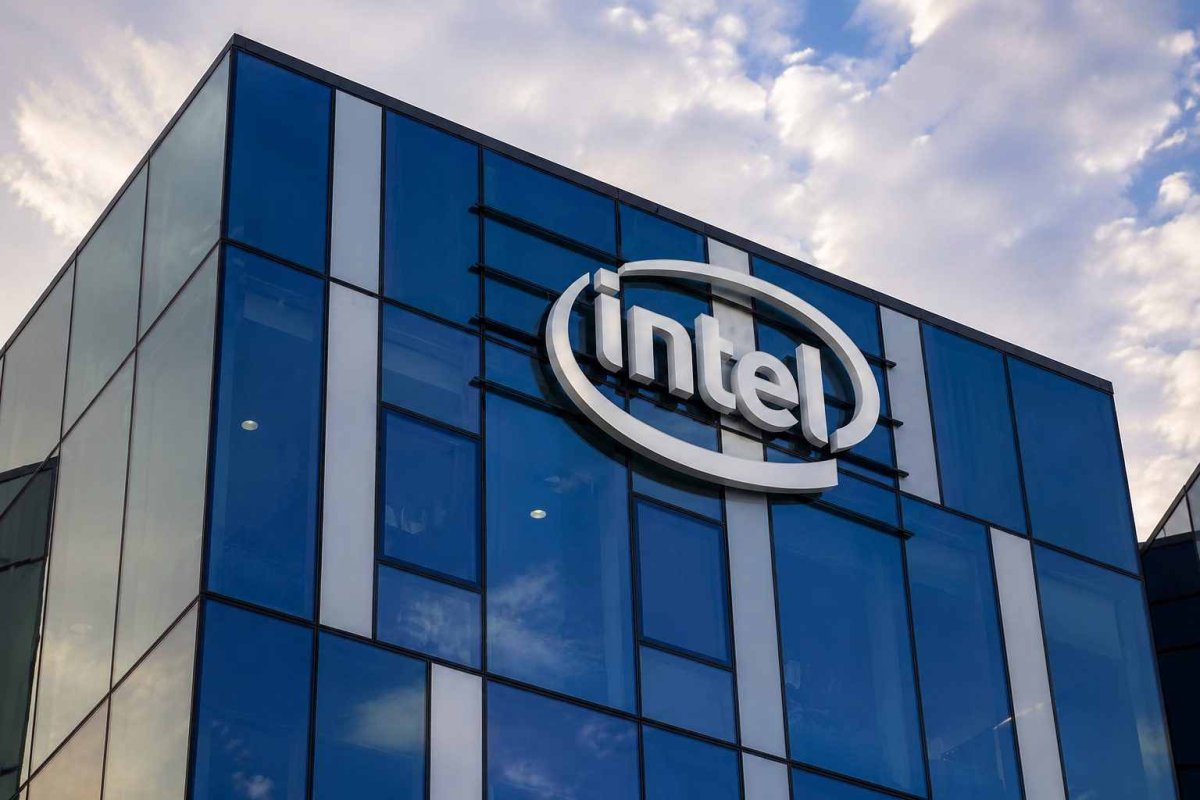
Intel Corporation (INTC) saw its shares jump 13.9% on Friday, closing at $124.92, after the Wall Street Journal reported that the company had reached a preliminary agreement to manufacture chips for Apple Inc. (AAPL). The news, which sent Apple shares up 2.0% to $293.32, marks a potential turning point for Intel's foundry business—but also raises the stakes as the unit faces its biggest test yet.
The reported deal, which followed over a year of discussions, would make Apple Intel Foundry's first major external client. Neither company has commented publicly, and details on which products Intel would produce remain unclear. The U.S. government—now Intel's largest shareholder after a 2025 deal with CEO Lip-Bu Tan—reportedly played a key role in facilitating the talks, reflecting the Trump administration's push to bring advanced chip manufacturing back to American soil.
Intel Foundry, the company's contract manufacturing arm, posted a $2.44 billion operating loss in the first quarter, despite generating $5.4 billion in revenue. The unit has been a financial drag as Intel invests heavily in building out its manufacturing capabilities to compete with Taiwan Semiconductor Manufacturing Co. (TSM), which currently dominates the leading-edge chipmaking market and supplies Apple's custom processors.
The potential partnership comes at a pivotal moment for Intel. The company has been repositioning itself as a foundry player, but skepticism remains about its ability to produce cutting-edge chips at scale and with the reliability that Apple demands. "Apple's agreement is still an early-stage deal—no details on products, no production timeline, nothing firm yet," noted earlier reports, which highlighted Apple's ongoing concerns about any alternative to TSMC.
Investors are also watching the broader AI narrative. Intel reported a 7% year-over-year revenue increase in Q1, to $13.6 billion, and guided Q2 sales between $13.8 billion and $14.8 billion, driven by stronger demand for CPUs—the standard chips powering most computing tasks. CEO Lip-Bu Tan pointed to the "next wave of AI" as a catalyst for both Intel's CPUs and its advanced packaging services. Analysts see CPU makers like Intel and Advanced Micro Devices (AMD) as potential beneficiaries as AI shifts from training to inference, a phase where traditional processors play a larger role.
However, the road ahead is steep. Michael Schulman, partner at Cerity Partners, described Intel's long-term strategy as a "high-stakes gamble"—betting it can transform from a legacy chip giant into a credible foundry competitor by 2030. Bob O'Donnell, head of TECHnalysis Research, told Reuters that the marker for Intel's comeback is simple: if the foundry business is pulling real weight by 2027, the turnaround is nearly there.
For now, the market is pricing in optimism: AI-related CPU demand is improving, Washington is backing Intel's manufacturing push, and a potential Apple deal could validate its foundry ambitions. But the real test lies in execution—orders, volumes, and specific product timelines. Until then, Friday's share surge may have gotten ahead of itself.