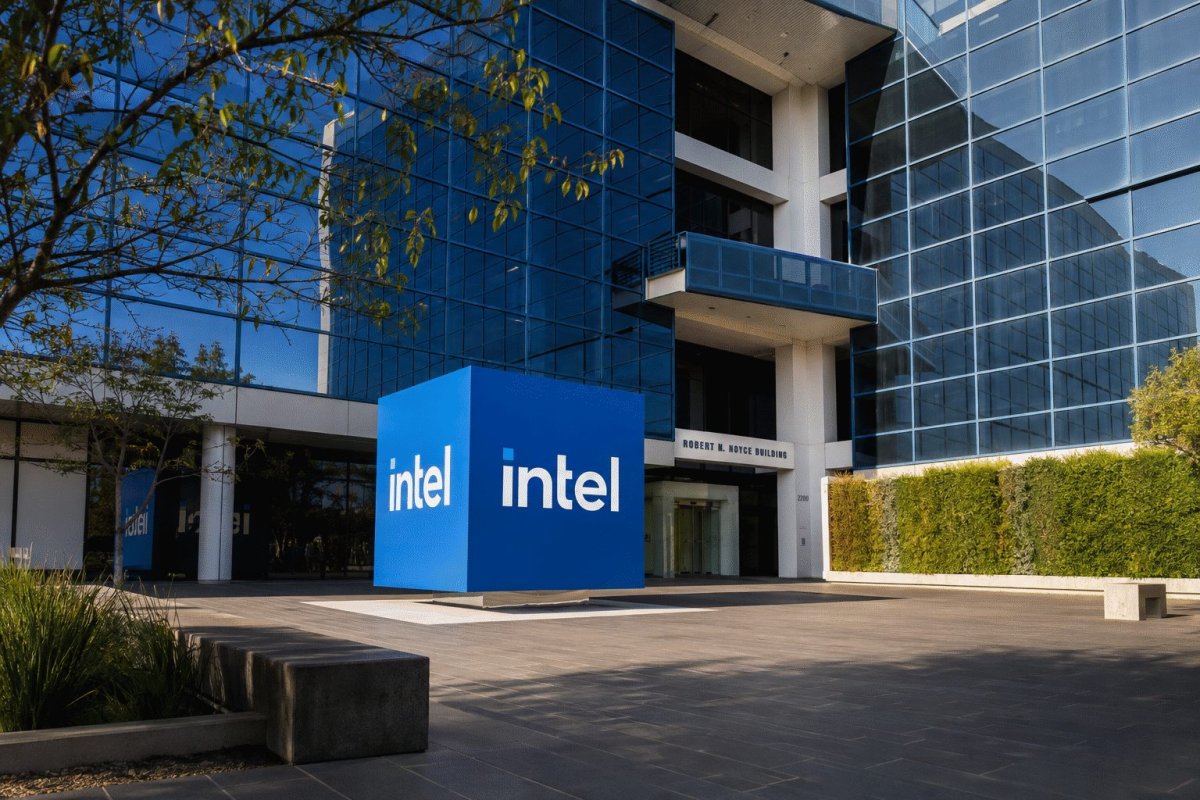
Intel Corporation (NASDAQ: INTC) saw its shares decline approximately 2% in Friday afternoon trading after the chipmaker completed a substantial equity offering. The transaction, which raised $22.62 billion in net proceeds, increased Intel's total share count by about 4.8%, a move that immediately diluted existing shareholders.
At 14:48 EDT, Intel shares were trading at $102.51, down 2.0% on the day. The offering priced at $95.00 per share, representing a 7.9% premium to the market price at the time of the transaction. Trading volume reached 70.7 million shares by mid-afternoon.
Offering Details
Intel issued 210.5 million shares at $95 each, and underwriters fully exercised their option to purchase an additional 31.6 million shares, bringing the total to 242.1 million shares. This represents 4.8% of Intel's shares outstanding as of June. For current holders, this translates to a 4.6% reduction in ownership percentage.
Chief Executive Lip-Bu Tan and a relative committed to purchasing $12 million worth of shares, approximately 126,316 shares at the offering price. While this represents a significant personal investment, it accounts for just 0.05% of the new stock issue.
Balance Sheet Impact
The infusion of capital significantly strengthens Intel's balance sheet. As of the end of June, Intel held $29.73 billion in cash and short-term investments against total debt of $50.54 billion. On a simple pro forma basis, the net debt position of $20.81 billion would flip to approximately $1.81 billion in net cash, assuming no expenditures from the raised funds.
This financial cushion is critical for Intel's ambitious foundry expansion plans. The company's capital expenditures exceed $20 billion annually, and the offering provides funding for over a year's worth of these investments, covering advanced fabs, packaging, and working capital needs.
Analyst Reactions
Wall Street analysts have responded with mixed views. UBS analyst Timothy Arcuri described the offering as lifting a financial 'overhang' on the stock, according to Barron's. Bank of America noted that foundry scale and customer confidence are likely to offset 'modest near-term EPS dilution.'
However, broader analyst sentiment remains cautious. According to MarketBeat, there are 17 buy ratings, 29 holds, and three sell recommendations on Intel, with an average price target of $107.93, roughly 5% above Friday's closing price. StockAnalysis shows a comparable Hold consensus from 49 analysts.
Operational Performance
Intel reported stronger operational results in its second quarter. Revenue increased 25% year-over-year to $16.13 billion, which CEO Lip-Bu Tan described as the company's 'strongest revenue growth in more than fifteen years.' Foundry revenue climbed 31% to $5.77 billion, and the segment's operating loss narrowed to $2.09 billion.
Despite these improvements, foundry economics remain challenging. The unit posted a loss of approximately 36 cents per dollar of revenue last quarter. Securing committed demand and improving utilization are essential for new capacity to generate returns. Without these, additional equity could end up covering losses rather than producing profits.
Market Context
Friday's price decline does not indicate a rejection of Intel's funding strategy. Instead, it reflects the cost of securing certainty. By selling shares, Intel reduces financing risk in the near term, shifting the focus of valuation discussions to foundry utilization and returns.
Investors are weighing the dilution against the potential long-term benefits of a well-funded foundry business. The offering provides Intel with the financial runway to execute its strategy, but the path to profitability remains uncertain. Rivalry from Taiwan Semiconductor Manufacturing (NYSE: TSM), Advanced Micro Devices (NASDAQ: AMD), and Nvidia (NASDAQ: NVDA) remains intense, and execution risks are substantial.
Intel's ability to convert its capital raise into sustainable growth will be closely watched in the coming quarters.