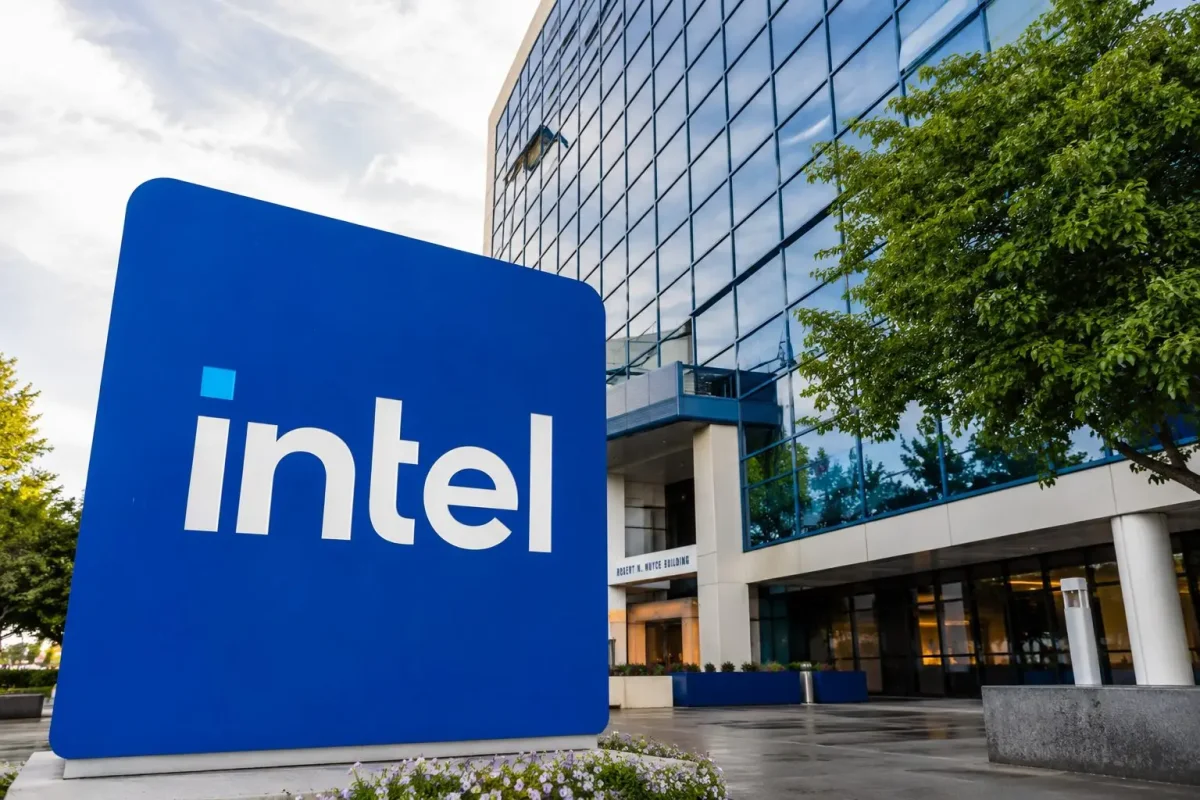
Intel Corporation (INTC) shares surged 10.6% to close at a record $133.99 on Thursday, dramatically outperforming rival Advanced Micro Devices (AMD) after President Donald Trump announced that Apple Inc. (AAPL) has agreed to collaborate with Intel on chip design and manufacturing within the United States. The Philadelphia Semiconductor Index gained 7.3% for the holiday-shortened week, far outpacing the Nasdaq Composite's 2.4% advance. US markets were closed Friday for Juneteenth.
Neither Apple nor Intel has officially confirmed the terms or timeline of any agreement. Trump did not specify which chips would be involved, production volumes, or when work would commence. A substantial order from Apple would significantly bolster Intel's foundry business, strengthening its competitive position against Taiwan Semiconductor Manufacturing Co. (TSM).
Analyst opinions are sharply divided on the strategic value of the Apple signal. Ivan Feinseth of Tigress Financial Partners characterized Intel as 'gaining real traction' in its turnaround efforts. Conversely, Bernstein analyst Stacy Rasgon cautioned that Apple's initial orders could be 'low-volume, less important parts,' and maintained a market-perform rating on Intel with a $100 price target—well below the stock's current trading level.
Meanwhile, AMD announced a separate partnership with Rackspace Technology to deploy 30 megawatts of AMD-powered computing capacity, scheduled for phased rollout from late 2026 through 2028. AMD CEO Lisa Su highlighted data center demand as the primary growth engine, with first-quarter revenue reaching $10.3 billion—a 38% year-over-year increase. Bernstein raised its AMD price target to $600 and maintained an outperform rating, citing a 'CPU renaissance' driven by agentic AI workloads that increase server CPU utilization.
Despite Intel's weekly gain of 7.6% versus AMD's 5.0% advance, the broader chip rally pushed the sector index to a record close. Investors appear to be making two distinct bets: AMD is viewed as the steady beneficiary of sustained AI chip demand, while Intel's move reflects optimism around its manufacturing overhaul and potential to secure major external clients.
Key economic data in the coming week will test these narratives. Micron Technology (MU) reports earnings on June 24, offering clues on AI server memory demand. The following day, the Federal Reserve's preferred inflation gauge—the personal consumption expenditures price index—will be released, potentially influencing interest rate expectations. Andy Pratt of Burney Company noted there's 'still a lot of juice' in the AI trade, while Steve Kolano of Integrated Partners observed that 'chip demand was just through the roof.'