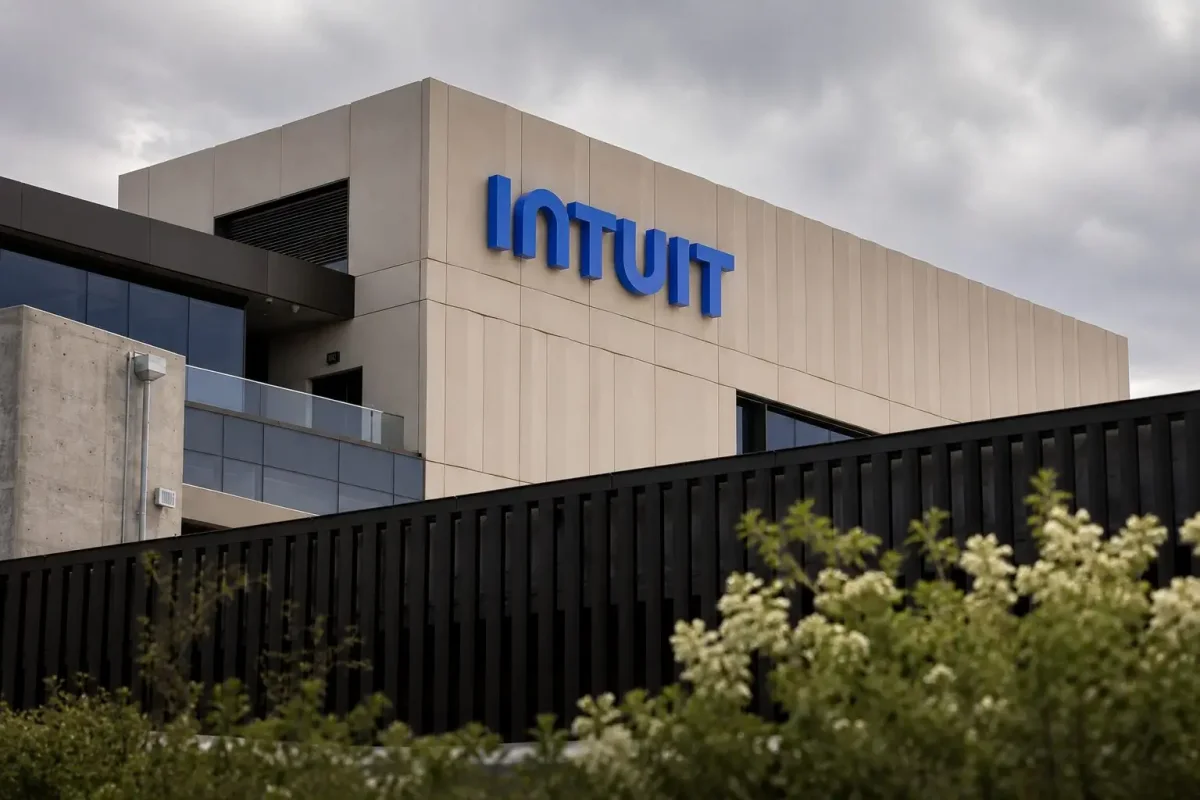
Intuit, the parent company of TurboTax, announced it will eliminate approximately 3,000 positions, representing 17% of its workforce, as part of a restructuring aimed at deepening its focus on artificial intelligence. The company also plans to close its offices in Reno, Nevada, and Woodland Hills, California.
The layoffs are expected to result in charges between $300 million and $340 million, with the majority recorded in the fiscal fourth quarter ending July 31. Most of the restructuring is anticipated to be completed by the end of the first quarter of fiscal 2027, subject to local legal and consultation requirements.
In a memo to employees, CEO Sasan Goodarzi cited excessive organizational layers and overlapping roles between TurboTax and Credit Karma as key reasons for the cuts. The company is also scaling back investment in Mailchimp, the email marketing platform it acquired in 2021. “We believe we can serve more customers and deliver breakthrough products by reducing complexity and simplifying our structure,” Goodarzi stated in a filing with regulators.
Despite the restructuring, Intuit reported strong quarterly results. Revenue for the period ended April 30 rose 10% year-over-year to $8.56 billion, with non-GAAP earnings per share of $12.80. The company raised its full-year fiscal 2026 revenue guidance to a range of $21.341 billion to $21.374 billion. Additionally, the board approved an $8 billion share buyback program.
However, Intuit lowered its TurboTax revenue outlook, acknowledging increased competition from low-cost AI-powered tax preparation tools. Goodarzi told analysts that the company lost price-sensitive customers, particularly DIY filers earning under $50,000. “We lost on price,” he admitted, adding that Intuit will adjust its product lineup and pricing for simpler tax returns.
TD Cowen analyst Jared Levine remarked that Intuit is “in the penalty box” after falling short of buy-side expectations for TurboTax sales. He noted that the results could amplify concerns about AI-related threats and rising competition, though he maintained a buy rating on the stock.
Goodarzi emphasized that the job cuts were not driven by AI, stating, “This was not about AI.” He reiterated that Intuit continues to integrate AI into its products and internal processes. CFO Sandeep Aujla indicated that most cost savings from the restructuring will flow to the bottom line, with some reinvested in growth areas.
Intuit joins a growing list of technology companies, including Block, Amazon, and Pinterest, that have announced layoffs this year to reallocate resources toward AI and streamline operations. The company cautioned that the restructuring benefits may take longer than expected and could face delays, competitive pressures, and challenges in AI deployment.
As Intuit navigates these changes, it must demonstrate to investors that it can sustain growth in its tax business while simultaneously cutting costs. The pressure on TurboTax margins from general AI tools that offer similar advisory capabilities adds urgency to the company’s strategic pivot.