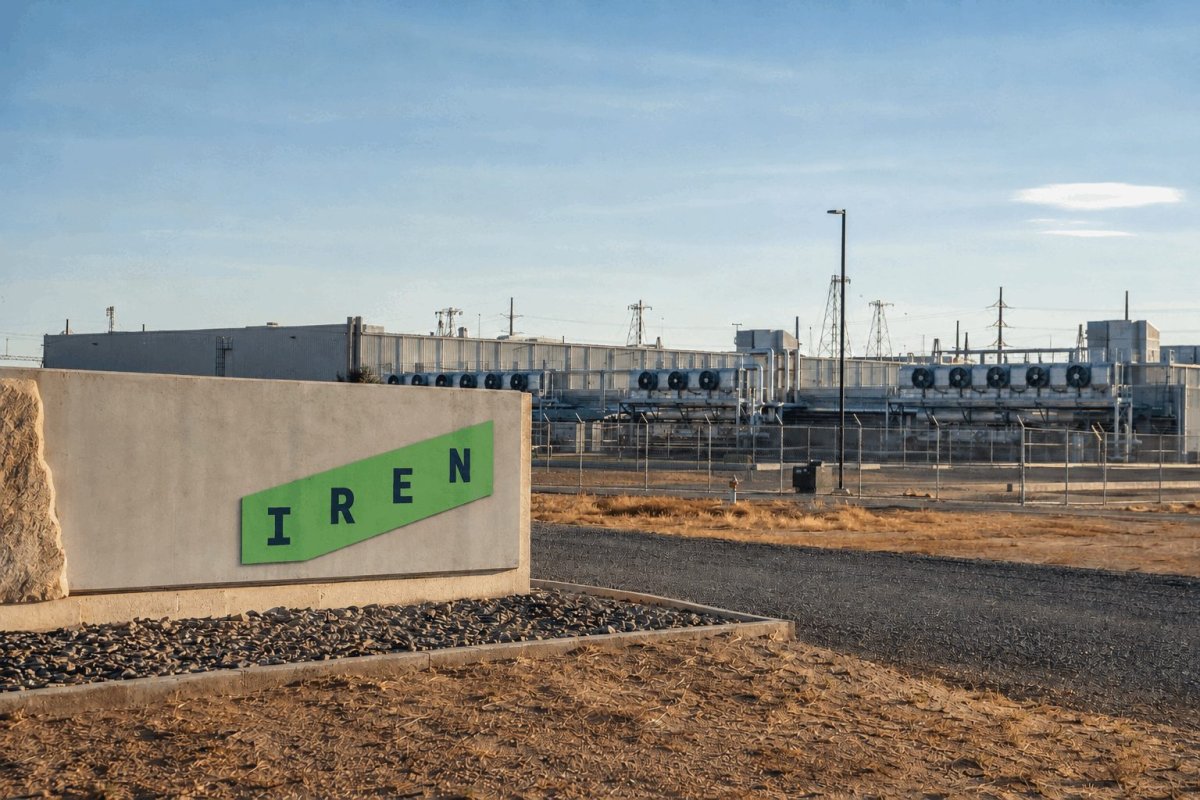
IREN Limited (NASDAQ: IREN) experienced a sharp selloff on Friday, with shares dropping 12.5% to close at $35.45. The decline came as the company announced a substantial $4 billion in AI-related contracts while simultaneously reporting a fiscal year net loss of $702.6 million. The market's reaction underscores the challenges of the company's pivot from bitcoin mining to high-performance computing and AI infrastructure.
The stock's decline erased approximately $1.8 billion from IREN's market capitalization, bringing its valuation to $12.67 billion. Trading volume spiked to 88.62 million shares, indicating heightened investor activity and concern. The selloff was more severe than that of peers like CoreWeave (NASDAQ: CRWV), which fell 2.94%, and MARA Holdings (NASDAQ: MARA), which dropped 10.15%, suggesting company-specific issues beyond sector weakness.
AI Cloud Revenue Growth
Despite the loss, IREN reported significant progress in its AI Cloud segment. Fourth-quarter AI Cloud revenue reached $70.5 million, a 110% increase from the previous quarter, surpassing bitcoin mining revenue for the first time. Bitcoin mining revenue declined 40% sequentially to $66.7 million, reflecting the company's strategic shift away from cryptocurrency mining.
However, the revenue crossover did little to cushion the bottom line. Adjusted EBITDA fell 68% sequentially to $19.2 million, as the company invested heavily in hiring and platform development ahead of anticipated revenue growth. The quarterly net loss of $684.0 million included a non-cash impairment of $450.4 million, primarily related to retired mining equipment. For the full year, impairments totaled $638.8 million.
Contracted Revenue and Financing
IREN disclosed contracted annualized run-rate revenue for 2026 capacity of $4 billion, with approximately $1 billion already operational. Management cautioned that this measure, often referred to as ARR, does not equate to GAAP revenue, and actual recognized sales may be significantly lower. The company's contracted ARR represents about one-third of its market capitalization, but investors are wary of the time required to build out the infrastructure and the associated financing costs.
To fund its expansion, IREN secured $3.6 billion in GPU financing for its Microsoft deployment at an interest rate of 6%, and an additional $2.8 billion facility at a fixed 9% rate. The company reported available cash, secured GPU financing, and prepaid customer funds totaling $14 billion, with customer prepayments covering 45% to 55% of related GPU capital spending.
Market Reaction and Analyst Views
The market's negative response highlights concerns about execution and the pace of revenue recognition. IREN's stock trades at nearly 18 times estimated 2026 revenue, a premium that may be difficult to justify if contracted revenue materializes slower than expected. The decline also reflects broader weakness in crypto-linked stocks, as investors reassess the viability of transition strategies.
Wall Street remains divided on the company's prospects. B. Riley analyst Nick Giles viewed the quarter as confirmation of IREN's commercial strategy, while H.C. Wainwright maintained a Buy rating and $90 price target. These optimistic views contrast with the market's skepticism, as evidenced by the sharp selloff.
Operational Milestones
Looking ahead, IREN has identified key operational milestones. Horizon 2 is in the commissioning phase, with Horizons 3 and 4 scheduled for delivery in the fourth quarter of 2026. Microsoft received the initial 50-megawatt liquid-cooled deployment in August. The company's development pipeline now exceeds 5 gigawatts of secured power, with 810 megawatts in operation and 2.1 gigawatts under construction.
Despite the growth potential, risks remain. Contracted ARR may take time to convert into recognized revenue, and cash flow could be pressured by concentrated customers, construction delays, financing costs between 6% and 9%, and potential additional mining write-downs. Accelerated commissioning or increased managed-services revenue could provide upside, but the near-term outlook is clouded by the significant capital expenditures and execution challenges inherent in such a large-scale transition.