Shares of IREN Ltd. (NASDAQ: IREN) were trading down approximately 4% in premarket action on Monday, even as JPMorgan issued a notably bullish upgrade. The stock was indicated at $42.08, down from Friday's close of $43.83, according to MarketBeat data. The decline comes despite JPMorgan analysts, led by Reginald Smith, raising their rating on the data-center operator to Overweight from Underweight and boosting their price target to $65 from $46.
The new target, however, is dated to December 2027, while the previous target was set for December 2026. This extended timeline accounts for part of the increase, implying that JPMorgan's revised outlook is not solely based on a more optimistic view of the same period but also on an additional year of expected growth.
AI-Cloud Transformation Drives Bullish Case
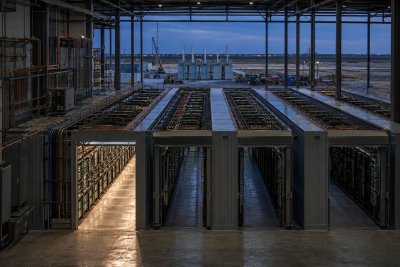
JPMorgan's upgrade is grounded in IREN's strategic pivot from a pure-play bitcoin miner to a large-scale AI-cloud provider. The bank highlighted stronger pricing for “neocloud” contracts, customer prepayments that help finance graphics processing units (GPUs), and the delivery schedule for IREN's Microsoft-backed Horizon data-center buildings. These factors collectively suggest a more robust revenue trajectory than previously anticipated.
IREN has reported that contracted annual recurring revenue (ARR) has reached $4 billion, a figure that represents a run rate rather than current revenue. As of August, only $1 billion of that ARR was operational, with Horizon 1 already delivered and Horizons 2 through 4 slated for the fourth quarter of 2026. This gap between contracted and operating revenue is both the opportunity and the risk embedded in the stock.
Financials and Cash Flow Considerations
In its fiscal-2026 full-year results, IREN recorded $707 million in revenue, with $128.8 million from AI cloud services and $578.2 million from bitcoin mining. The company also posted a net loss of $702.6 million, largely due to asset impairments. Investors are essentially underwriting the construction, customer acceptance, and utilization of these contracts, which have yet to fully materialize on the income statement.
Cash flow presents a mixed picture. The company reported $1.81 billion in operating cash flow for the June quarter, but $1.72 billion of that came from deferred revenue. Investing outflows totaled $2.11 billion during the same period. IREN financed its expansion through customer cash, $2.11 billion in share issuance, and $3 billion in convertible notes. The company ended June with $5.90 billion in cash and cash equivalents, plus an additional $1.67 billion in restricted cash, providing ample liquidity but not yet a self-sustaining operating model.
Contract Structure and Power Access
On the positive side, IREN's contract structure appears to reduce funding pressure. Recent deals have generated more than $20 million of revenue per megawatt, with current discussions around $25 million. Customer prepayments have covered between 45% and 55% of GPU capital costs, indicating strong demand and willingness to commit cash upfront. These metrics are more concrete evidence of pricing power than mere capacity targets.
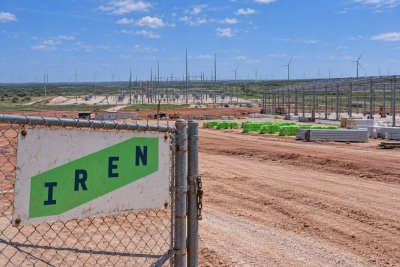
Power access remains a critical constraint. IREN's 2-gigawatt Sweetwater hub was conditionally included in ERCOT's Batch Zero process, but this is not a final approval. The first 300 megawatts at that site are targeted for the fourth quarter of 2027, adding another layer of execution risk.
Market Reaction and What to Watch
Monday's premarket decline serves as a cautionary note that rating changes alone are not catalysts. JPMorgan has shifted from a skeptical stance to a bullish one, but IREN still must close the gap between its $1 billion of operating ARR and $4 billion in contracted revenue. Key milestones to monitor include the timely delivery of Horizons 2-4, the pricing of 2027 contracts, and the outcome of ERCOT's audit process. Each of these developments will provide more clarity on the distance between current performance and the lofty expectations embedded in the $65 price target.