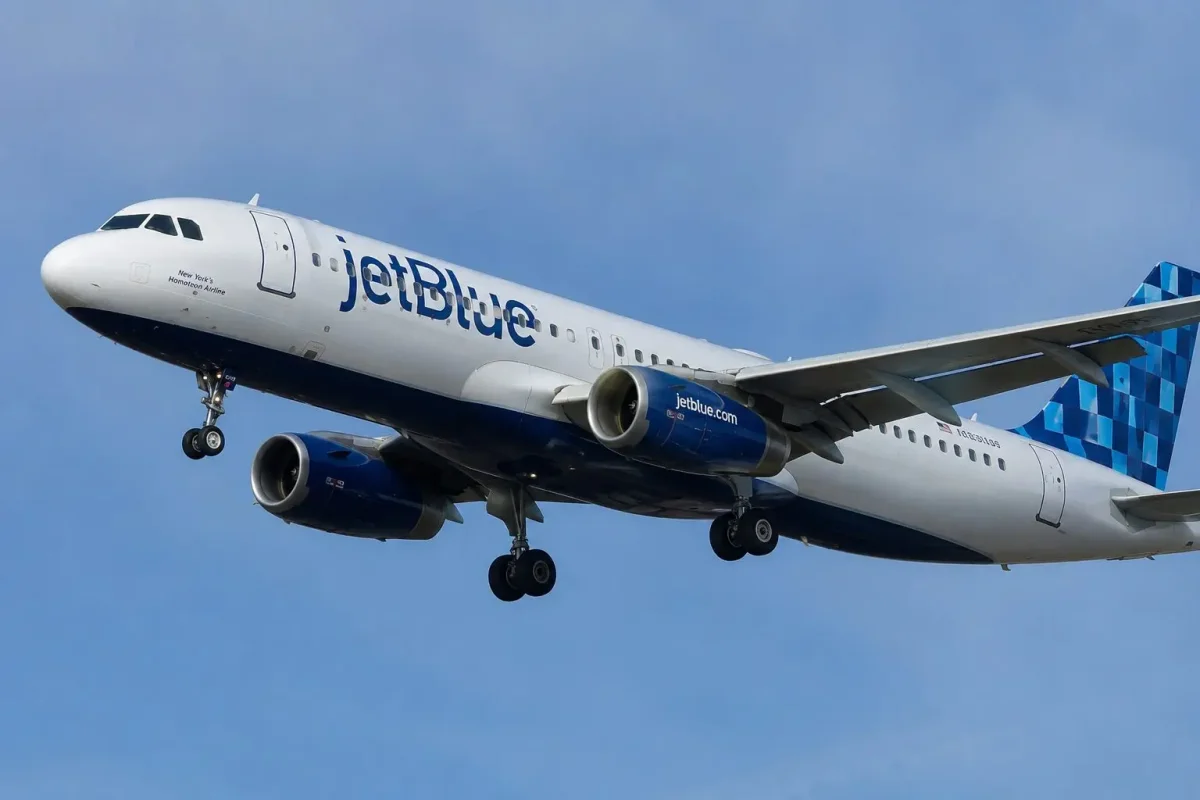
JetBlue Airways Corporation (NASDAQ: JBLU) shares advanced 6.2% on Thursday, closing at $6.07, as the carrier's second-quarter results showed that aggressive fare increases were able to partially offset an 80.7% surge in fuel costs. The stock has now gained 15.2% since July 24, outperforming major rivals such as American Airlines (AAL), United Airlines (UAL), and Delta Air Lines (DAL), which posted more modest gains.
The New York-based airline reported second-quarter revenue of $2.697 billion, a 14.5% increase from the prior year, driven largely by an 8.6% rise in average fares to $237.38. Revenue per available seat mile (RASM) climbed 10.9% to 15.71 cents, while capacity expanded by only 3.2%. However, fuel expenses ballooned to $911 million from $504 million, and net loss widened to $247 million from $74 million a year ago.
“Pricing will provide an offset if recent fuel price increases stick,” said Chief Financial Officer Ursula Hurley. The company's adjusted loss per share of 66 cents came in better than the consensus estimate of a 71-cent loss, according to Reuters. Nonetheless, the revenue gain of $341 million was more than consumed by the $407 million increase in fuel costs and an additional $81 million in non-fuel operating expenses.
JetBlue's premium cabin and loyalty programs provided additional support. Premium revenue per seat mile advanced 13%, main cabin RASM rose 11%, and loyalty revenue also grew 13%. New premium credit card sign-ups jumped nearly 40%, underscoring the carrier's efforts to boost higher-margin revenue streams.
Valuation and Debt Considerations
At $6.07, JetBlue shares trade at roughly 6.1 times management's projected minimum 2028 earnings per share of $1.00. However, that earnings target assumes jet fuel averaging $3 per gallon, well below the second-quarter cost of $4.23. The company's balance sheet shows total reported debt of $8.478 billion against $2.168 billion in cash and investments, resulting in basic net debt of $6.310 billion—about 2.8 times the current market capitalization of $2.29 billion.
Raymond James analyst Savanthi Syth described the 2028 goal as “ambitious,” calculating that pretax earnings would need to rise by over $1.3 billion from 2026 levels, with reduced fuel costs accounting for roughly $400 million of that gap. JetBlue has $5.47 billion in commitments for future aircraft purchases, though an additional $250 million in aircraft-secured financing remains available.
Outlook and Risks
For the third quarter of 2026, JetBlue expects capacity growth of 3% to 6% and RASM growth of 12.5% to 16.5%. Unit costs excluding fuel are forecast to rise 2.5% to 4.5%. The company projects an adjusted operating margin of negative 2% to negative 5% for the full year, with capital spending of roughly $850 million. The next key fuel price checkpoint is August 5, when the U.S. Energy Information Administration releases its weekly update; Gulf Coast jet-fuel spot prices recently eased to $3.582 per gallon.
Key risks include a potential rebound in fuel costs and subdued demand that could limit further fare increases. The $1 earnings per share target remains a 2028 goal, not a current run rate, and the stock's rally reflects anticipated improvements rather than finalized outcomes. JetBlue must deliver on its third-quarter revenue forecasts and keep non-fuel expenses in check to sustain investor confidence.