Australia's benchmark equity index ended Monday essentially unchanged, failing to sustain an early rebound despite a mildly positive futures signal. The S&P/ASX 200 slipped 1.5 points, or 0.02%, to 8,739.7 by 12:58 p.m. AEST, after briefly touching an intraday high of 8,768.
The market's trajectory was telling: it opened slightly lower, climbed as much as 0.3% by late morning, and then surrendered those gains as the session progressed. While the SPI 200 futures market had pointed to a 0.2% advance ahead of the open, the cash market failed to follow through, underscoring the limitations of futures as a predictor of the day's final outcome.
Divergent Sector Performance
The index's flat surface masked a clear divergence beneath. Defensive and consumer-oriented stocks provided support, with supermarket giants Coles, Woolworths, and Metcash each rising more than 1% by mid-morning. Healthcare heavyweights CSL, Cochlear, and ResMed also traded in positive territory, while fuel retailer Ampol climbed approximately 3% on the back of stronger refining margins.
Energy producers benefited from a sharp rise in oil prices, with Brent crude jumping 2.4% to US$107.20 a barrel and West Texas Intermediate advancing 2.4% to US$102.48. Oil and gas producers added around 1% on the day.
Mining and Commodities Weigh
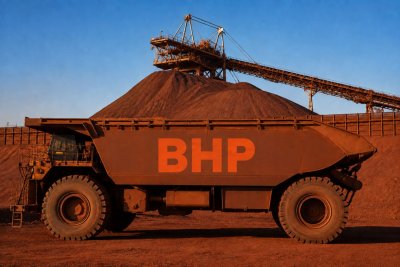
Mining shares were the primary drag on the benchmark. BHP Group fell 1.2%, and most large-cap miners traded lower as iron ore prices weakened. The spot iron ore price dropped 1.5% to US$96.70 a tonne on Friday, adding pressure to the sector. Gold miners Newmont and Northern Star gained roughly 1.4%, but that strength was insufficient to offset broader losses.
Uranium names were particularly weak, with Paladin Energy plunging more than 8% in late-morning trading.
Macro Backdrop: Yields, Oil, and the Dollar
The macro environment remained a key headwind. Australia's 10-year government bond yield stood at 5.35%, while the U.S. 10-year Treasury yield was 4.97%. Elevated yields raise the discount rate for future earnings, pressuring rate-sensitive sectors. The Australian dollar slipped 0.2% to 71.56 U.S. cents, reflecting a softer risk appetite.
The combination of rising oil prices and higher bond yields presents a stagflationary risk, as energy costs feed into inflation while higher rates curtail growth. This dynamic weighed on the local market despite the favorable lead from Wall Street on Friday.
Futures Signal: A Guide, Not a Prediction
The SPI 200 futures contract, tied directly to the S&P/ASX 200, is a leveraged instrument with a contract value of A$25 per index point. A 10-point move equates to A$250 per contract before fees and margin. While the pre-open futures indication offers a useful gauge of sentiment, it is not a guarantee of the cash close.
Monday provided a textbook example: a positive futures lead was quickly overwhelmed by commodity movements, bond yield shifts, and stock-specific news once trading began. The index's heavy weighting in banks and miners means any adverse move in those sectors can quickly erase a small futures advantage.
Outlook: Breadth and Commodities in Focus
The bullish interpretation is that the index absorbed last week's 2.9% decline and another oil spike without extending the selloff. The resilience of retailers, healthcare, and parts of energy suggests underlying demand for Australian equities remains intact. If miners stabilize, the early gains could be reclaimed.
However, the bearish case is that the headline index understates the pressure. By late morning, gains in defensive names were masking weakness in materials and uranium, while oil and yields remained elevated. Unless market breadth improves, a positive futures print alone offers little protection against another weak close.
Investors will be watching commodity prices, bond yields, and the trajectory of the Australian dollar for further directional cues in the coming sessions.