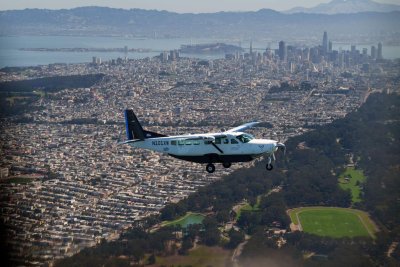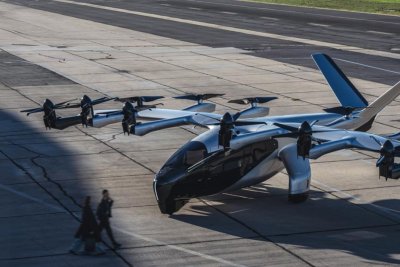
Joby Aviation (NYSE: JOBY) achieved a significant milestone on Monday by completing New York City's first point-to-point electric vertical takeoff and landing (eVTOL) flights. The company's battery-powered aircraft flew from John F. Kennedy International Airport to the Downtown Skyport, then onward to the West 30th Street and East 34th Street heliports. The seven-minute airborne journey starkly contrasts with the typical 60- to 120-minute car ride on congested roadways.
This demonstration marks a pivotal moment for Joby as it seeks to shift investor focus from prototype milestones to operational readiness, including route viability, noise levels, and passenger bookings. Shares traded at $8.50 ahead of Monday's opening, still approximately 58% below the all-time closing high of $20.39 recorded on August 4, 2025, according to The Motley Fool.
Strategic Expansion and Federal Support
Joby CEO JoeBen Bevirt described the flights as a preview of operations under the White House-backed eVTOL Integration Pilot Program (eIPP). The company's New York presence has been bolstered by its 2025 acquisition of Blade Air Mobility's passenger business, a deal valued at up to $125 million. This acquisition provided Joby with Blade's customer base, airport-city logistics expertise, and lounge access at key locations including JFK, Newark, and Manhattan heliports.
The eIPP program, which includes projects across 26 states, features a Port Authority of New York and New Jersey initiative involving Joby, Archer (NYSE: ACHR), BETA, and Electra. The Federal Aviation Administration will use data from these projects to inform rulemaking for scaling advanced air mobility.
Financial Outlook and Competitive Landscape
Joby has projected 2026 as a commercial inflection point, with plans to launch passenger flights in Dubai later this year and initiate U.S. eIPP operations. The company reported a projected cash and short-term investment balance of $1.4 billion at the end of 2025, supplemented by an additional $1.2 billion raised in February.
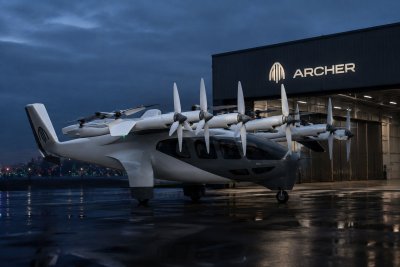
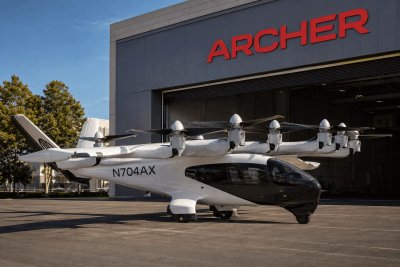
Archer Aviation remains Joby's closest publicly traded U.S. rival. Archer announced in March its intention to launch passenger flights in 2026, having received full FAA acceptance for all its Means of Compliance. The company ended 2025 with approximately $2 billion in liquidity but projected a first-quarter adjusted EBITDA loss between $160 million and $180 million.
Market Sentiment and Strategic Divergence
Investor sentiment has shifted in recent months. While a 24/7 Wall St. column previously favored Archer over Joby, Joby has gained more credit from investors due to revenue visibility from the Blade acquisition. Archer, meanwhile, continues to work through certification without corresponding commercial momentum.
MarketBeat highlights a strategic divergence among eVTOL players: Joby aims to control the entire ecosystem—aircraft, service, and customer touchpoints—while Archer partners with major players like Stellantis and United Airlines. Vertical Aerospace is pursuing a more traditional manufacturer model.
Risks and Challenges
Despite the progress, significant risks remain. Joby has not yet secured FAA type certification for commercial eVTOL flights, and the Dubai launch date is not locked in. Share dilution, high operating expenses, and changing market preferences for growth stocks pose additional headwinds. The Motley Fool cautioned that further setbacks could prompt analysts to lower short-term forecasts.
Monday's demonstration underscores the next challenge for Joby and its rivals: transforming a high-profile flight into a certified, reliable, and profitable commercial operation.