Keel Infrastructure Corp. saw its shares climb 4.7% to $5.035 in Tuesday afternoon trading on the Cboe BZX exchange, extending its year-to-date rally to more than 115%. The surge reflects a broader market shift toward companies that provide the physical infrastructure needed for artificial intelligence and high-performance computing (HPC).
The move comes as investors increasingly look beyond AI chips and software to focus on what is being called "delivered compute"—actual computing capacity that is online and connected. Keel, which rebranded from Bitfarms and redomiciled to New York, now positions itself as a North American digital infrastructure and energy company. It trades on both the Nasdaq and Toronto Stock Exchange under the ticker KEEL.
Keel’s pipeline totals 2.2 gigawatts across sites in Pennsylvania, Washington, and Quebec. One gigawatt equals 1,000 megawatts, a scale that makes the company relevant in the data-center business. The company reports it has completed zoning and is moving ahead with site work at Panther Creek, Sharon, and Moses Lake. CEO Ben Gagnon has stated the goal is to secure leases at these locations by 2026, calling it a "clear strategic vision."
Investor enthusiasm is tempered by the need for tangible results. The company must convert its power-secured sites into signed leases, a process that involves permitting, power hookups, construction, financing, and securing long-term tenants. Keel’s first-quarter results show the challenges: revenue dropped 23% to $37 million, operating loss widened to $98 million, and adjusted EBITDA was negative $17 million.
Despite these numbers, analysts remain broadly constructive. According to MarketScreener, nine analysts rate Keel an average "Buy," with a target price of $5.40—about 12% above Tuesday’s close. The stock is being grouped with other physical infrastructure plays for AI, making it simpler to understand than when it was tied solely to bitcoin mining, but also raising expectations.
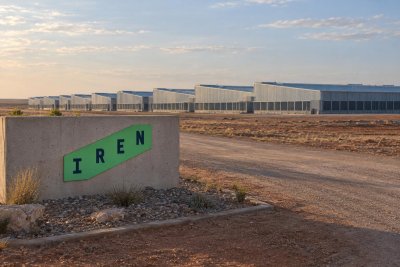
Keel is not alone in this trend. TeraWulf gained after announcing a new AI and HPC site in Kentucky. Hut 8, Keel, and IREN also advanced as former bitcoin miners linked to the AI infrastructure trade saw renewed demand. TeraWulf Chairman and CEO Paul Prager highlighted "power, transmission infrastructure, and execution certainty" as the main bottlenecks—the same pitch Keel is making to prospective tenants.
Keel’s liquidity position is strong. As of May 8, the company held $533 million in liquidity, comprising $336 million in unrestricted cash and $197 million in unencumbered bitcoin. CFO Jonathan Mir stated that this funding "fully funds" the capital needed to push near-term sites to lease execution.
The broader market backdrop is supportive. The S&P 500 and Nasdaq hovered near record highs on Tuesday, lifted by AI excitement and semiconductor stocks. Chris Zaccarelli, chief investment officer at Northlight Asset Management, compared the tech surge to "the boom at the end of the 1990s."
However, risks remain. Keel must navigate potential delays, cost overruns, reliance on steady power, competition from larger data-center operators, and the possibility of needing additional capital. If lease negotiations drag out, the stock’s impressive rally this year could prove premature.