Kioxia Holdings Corporation (TYO:285A) saw its shares surge 9.23% on Friday, closing at ¥83,300 after trading between ¥67,190 and ¥84,390. The stock's move added approximately 165 points to the Nikkei 225, accounting for roughly 16% of the index's 1,010.92-point gain. This performance underscores Kioxia's growing influence on Japan's benchmark index, especially as high-priced technology names increasingly drive price-weighted indexes.
The surge was supported by strong trading volume of 56.82 million shares, about 50% above the average on Google Finance. The intraday range of ¥17,200 represented a 22.6% swing from the previous close. Kioxia has been a component of the Nikkei 225 since April 1, and its recent price action reflects heightened investor interest in memory stocks tied to artificial intelligence and data center demand.
Production Milestones and Technology Leadership
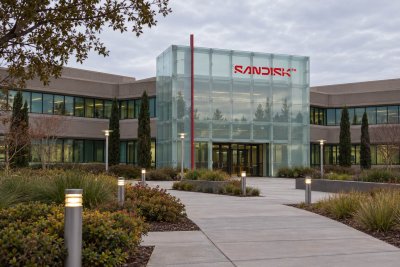
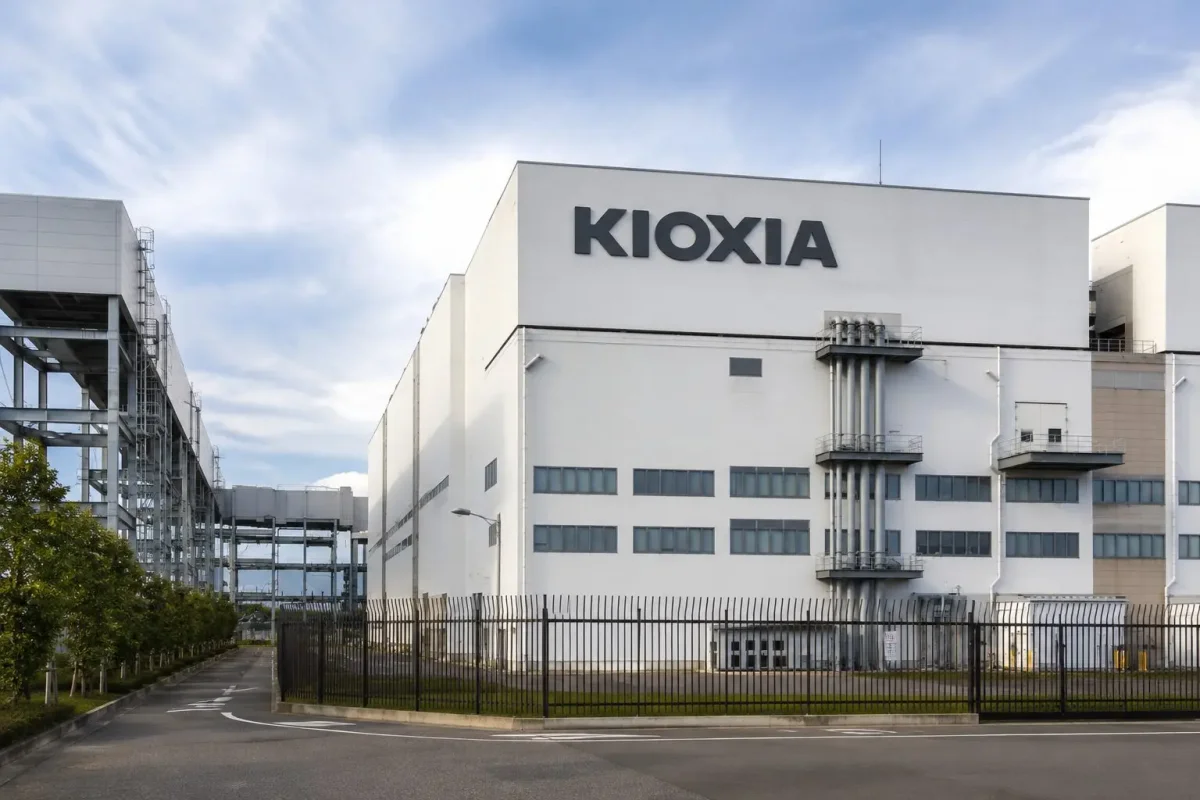
Kioxia and Sandisk Corporation (NASDAQ:SNDK) announced the start of production for their 10th-generation 3D flash memory at the Kitakami Fab2 plant in Iwate Prefecture. This new BiCS Flash technology boasts a NAND interface speed of 4.8 Gb/s, 33% higher than the 8th generation, and a bit density increase of 59%, now at 332 layers. Power efficiency has improved by 18% for write operations and 30% for read operations, making it particularly attractive for enterprise and data-center SSDs targeting AI workloads.
Kioxia has also begun sampling 1Tb triple-level-cell (TLC) memory devices, aimed at enterprise and data-center applications. These advancements position Kioxia as a leader in NAND performance and power efficiency, with analysts noting that the company leads rivals by two to four years in these metrics.
Market Implications and Valuation
Kioxia's market capitalization surged to ¥45.59 trillion on Friday, surpassing Tokyo Electron's ¥34.26 trillion and breaking above $250 billion. This valuation leap has made Kioxia more valuable than even Toyota Motor (TYO:7203), reflecting the market's appetite for memory plays in the AI era. However, supply dynamics remain a concern. SK Hynix (KRX:000660) announced plans to invest 80 trillion won in a new NAND plant, which could eventually ease supply constraints and pressure prices.
Investors are closely watching whether Kioxia can sustain production ramp-up without eroding NAND pricing. If the company maintains pricing discipline, the stock could continue to attract both passive index flows and active bets on the memory cycle. Conversely, oversupply could turn the recent gains into headwinds.
Industry Expert Views
Satoru Oyama, a consultant and former Tokyo Electron employee, told Reuters that NAND investment has been pushed to the "back burner" for most chipmakers, with current demand focused primarily on Kioxia. Kazuyoshi Saito, an analyst at IwaiCosmo Securities, highlighted that Kioxia's performance and power efficiency advantages give it a two-to-four-year lead over competitors.
Kioxia Iwate President and CEO Koichiro Shibayama confirmed the start of production of "advanced 10th-generation flash memory" at the Kitakami plant, while Sandisk CTO Alper Ilkbahar called it an "important milestone." These statements underscore the strategic importance of the new technology for both companies.
Outlook and Catalysts
Kioxia has notified investors that it is exploring a U.S. listing of American depositary shares, though no timeline or exchange has been set. The company is also considering lowering investment units. Kioxia's first-quarter FY2026 results are scheduled for release on July 31 at 15:30 JST, which will provide further clarity on earnings and guidance.
The stock's recent rally highlights the market's focus on AI-driven storage demand, but investors remain wary of potential supply increases. Kioxia's ability to balance production growth with pricing power will be key to sustaining its upward trajectory.