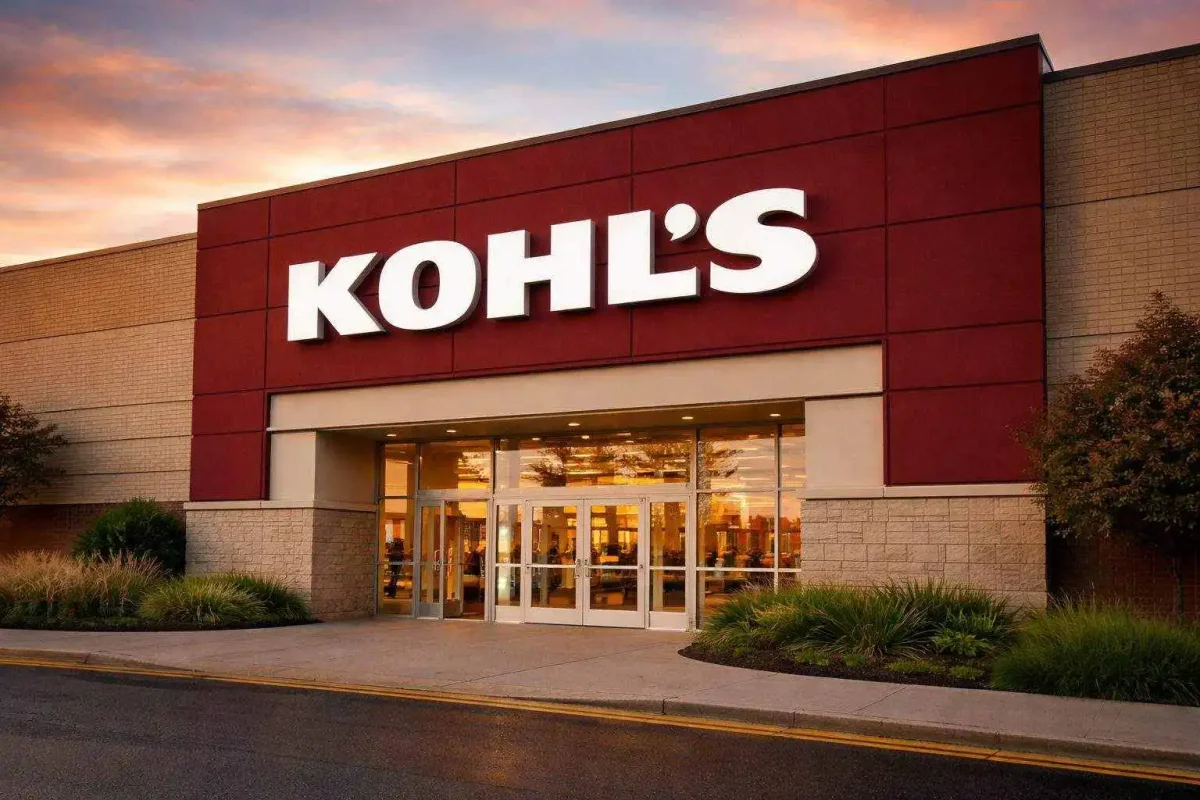
Kohl's Corporation has announced it does not intend to conduct a widespread closure of stores in the coming year, aiming to stabilize its physical footprint after shuttering 27 underperforming locations in 2025. Chief Executive Michael Bender conveyed the decision, seeking to reassure investors about the retailer's strategic direction. Despite this operational pause, the company's financial results reveal persistent challenges, with its stock closing down 2.7% at $12.69 following the update.
Financial Performance Under Pressure
The department store chain reported a 3.9% decline in fourth-quarter net sales, which totaled $5.0 billion. A critical gauge of retail health, comparable sales—which measures revenue from stores open at least a year—fell 2.8% during the period. For the full 2026 fiscal year, Kohl's provided cautious guidance, projecting net and comparable sales to range from a 2% decline to flat performance. Adjusted earnings per share are forecasted between $1.00 and $1.60, excluding certain items.
Management highlighted that over 90% of its roughly 1,150 stores are currently profitable, a stronger position than in 2025 following the closure of weaker locations. Bender emphasized there is no "grand plan" for significant store network changes, with the immediate focus being on improving productivity at existing locations. The company will continue an annual review process that could involve relocating some sites but not a major chain-wide reduction or expansion.
Traffic and Consumer Spending Challenges
Executive leadership identified weak in-store traffic as a primary ongoing issue. Chief Financial Officer Jill Timm explicitly stated, "Our issue continues to be traffic," acknowledging a hurdle that has persisted despite other operational improvements. Bender noted that the retailer's core low- to middle-income customer base remains financially pressured and highly focused on value, which continues to impact spending patterns.
The company experienced notable softness during key holiday shopping periods, including Black Friday, Cyber Monday, and the post-Christmas stretch. This comes amid intense competitive pressure from e-commerce giant Amazon and off-price rivals like Ross Stores, which sells branded merchandise at lower price points.
Strategic Initiatives and Market Context
In response to these headwinds, Kohl's is intensifying efforts to refine its pricing strategy and in-store experience. Initiatives include expanding its private-label assortment, lowering entry price points, and adding more impulse items priced under $10. Concurrently, the retailer is removing slow-moving styles and working to simplify the shopping experience within its stores.
The broader department store sector remains in flux, with competitor Macy's continuing its own closure program through 2026 as part of a turnaround push. This context makes Kohl's decision to hold its store count steady a distinct strategic choice, though analysts debate its long-term wisdom.
Analyst Perspectives on the Turnaround
Analyst opinions on Kohl's trajectory are mixed. David Silverman of Fitch Ratings credited the company with achieving stronger profits through leaner inventory management and stricter cost control. However, he flagged market share erosion as the crucial challenge the retailer must now overcome.
In a more critical assessment, Neil Saunders of GlobalData described Kohl's as being "in general disarray" while competitors continue to elevate their offerings. This contrast underscores the significant uphill battle the company faces in a rapidly evolving retail landscape.
Path Forward for 2026
As Kohl's enters 2026, it claims a foundation of improved operational strength and is continuing efforts to modernize stores and operations. Bender cautioned, however, that any recovery will likely be uneven and encounter bumps along the way. The decision to halt closures may represent only a temporary respite rather than definitive proof that a successful turnaround is firmly locked in. Investors and analysts will be closely watching the company's ability to translate its operational focus into sustained sales growth and improved traffic in the months ahead.