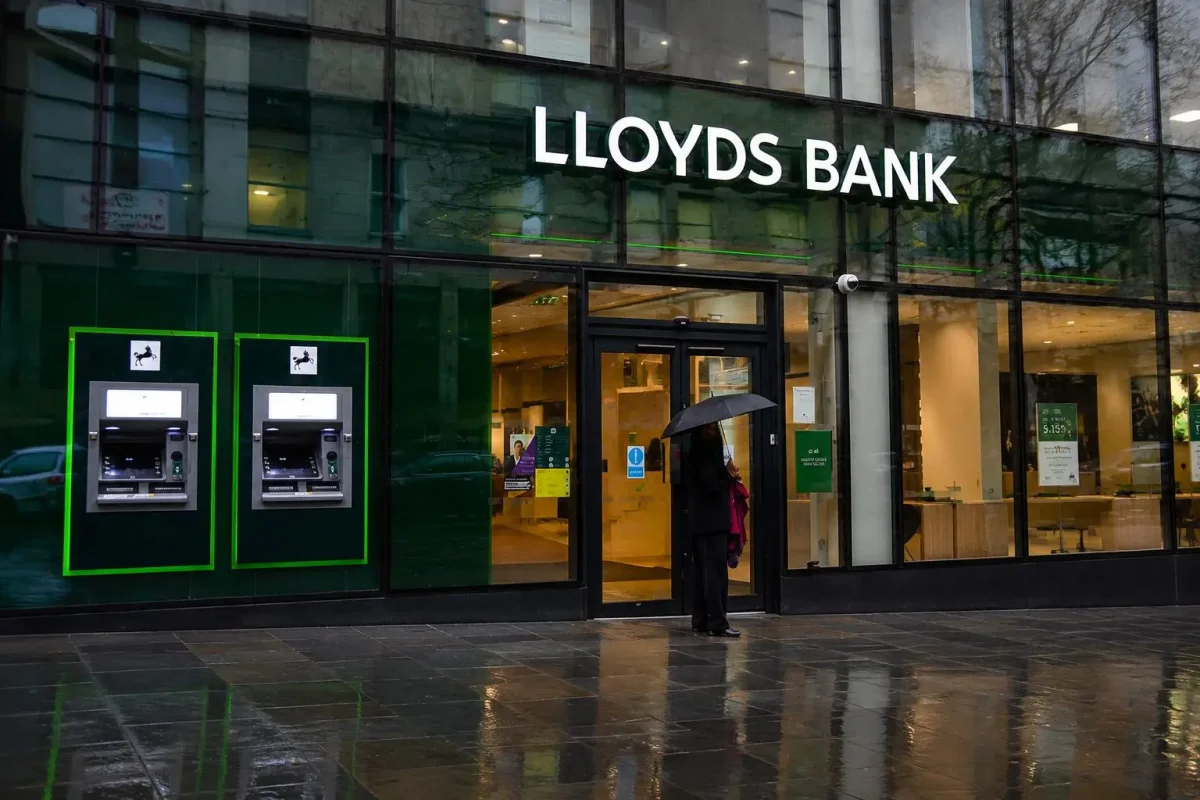
Lloyds Banking Group shares ended lower on Wednesday, underperforming a stronger FTSE 100, as investors absorbed a regulatory update that pushes motor-finance compensation payments beyond 2027. The stock closed at 97.08p, down 0.96p or 0.98% from the open of 98.54p. The FTSE 100 rose 0.3% to 10,254.8, according to Reuters.
The decline was not driven by earnings disappointment but by renewed uncertainty over the cost and timing of motor-finance redress. The Financial Conduct Authority (FCA) informed Parliament’s Treasury Committee that compensation payments under its redress plan are unlikely to begin before 2027 due to legal challenges. FCA chief Nikhil Rathi stated that payments originally planned for this year are delayed by a legal case, which is not expected until October 2026. If the scheme proceeds as designed, payouts may start in 2027; if the court orders modifications, compensation could shift to late 2027 or early 2028.
The FCA’s proposed scheme is substantial, covering approximately 12.1 million agreements with consumer redress estimated at £7.5 billion and total industry costs of £9.1 billion. The controversy centers on discretionary commission arrangements (DCAs), where brokers could inflate car loan interest rates to earn higher commissions. Lloyds is not among the parties challenging the FCA plan; Volkswagen Financial Services UK, Mercedes-Benz Financial Services UK, Crédit Agricole Auto Finance, and Consumer Voice are pursuing legal action. Other lenders, including Barclays, Santander UK, and Close Brothers, have also stayed out of the legal fight.
Rathi noted that some firms have expressed interest in resolving liabilities outside the official process, leaving the door open to earlier settlement proposals. However, he cautioned that a complaints-driven approach could add over £6 billion in costs and extend the process by three more years. The FCA has instructed lenders to continue preparations, including data collection, capital holding, and provisioning.
In its first-quarter results, Lloyds maintained its provision for motor-finance commission but highlighted ongoing uncertainties regarding response rates, running costs, lawsuits, and the impact of other parties’ challenges. The bank’s operating performance remains solid: statutory profit before tax reached £2.0 billion in Q1, return on tangible equity was 17.0%, and the common equity tier 1 capital ratio stood at 13.4%. CEO Charlie Nunn expressed confidence in the bank’s delivery for the year ahead and reiterated 2026 guidance.
Lloyds continued its share buyback program, purchasing 5 million ordinary shares on June 10 through Goldman Sachs at prices between 96.58p and 98.22p (volume-weighted average 97.4734p). The shares are to be cancelled, reducing the share count. However, the prolonged motor-finance uncertainty raises questions about future capital returns. Investors will look for clarity on capital return plans when Lloyds reports half-year results on July 30.
The legal challenges and regulatory timeline mean that the main risk from motor-finance redress will likely persist into 2026, keeping pressure on Lloyds’ ability to return capital to shareholders in the near term.