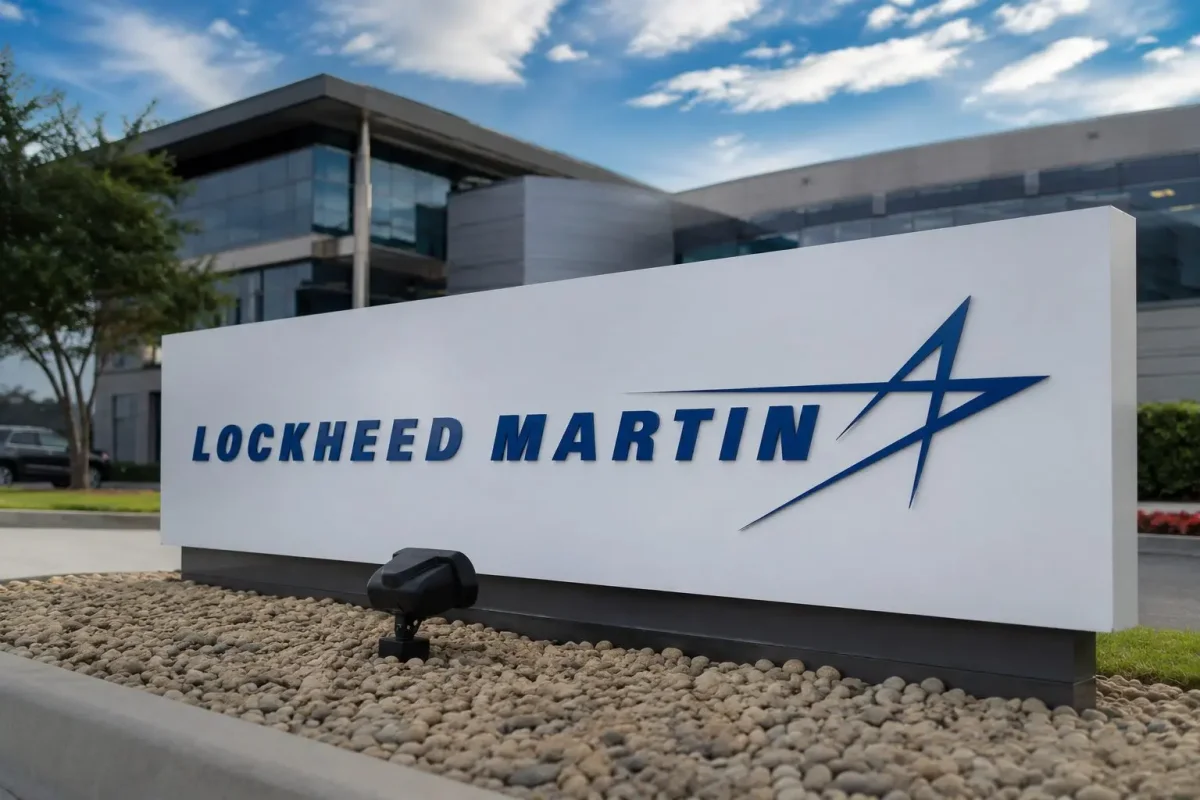
Lockheed Martin Corporation (NYSE: LMT) closed Friday's trading session at $587.95, marking a modest weekly gain of 0.9%. In contrast, the S&P 500 advanced by 3.6% over the same period, underscoring the defense contractor's underperformance despite a backdrop of robust demand for its missile systems.
The company's order book continues to swell, with second-quarter orders reaching $65 billion, translating to a book-to-bill ratio of 3.24 times quarterly sales. The total backlog now stands at $230.4 billion, a 38.3% increase year-over-year, and represents 2.85 times the midpoint of projected 2026 sales. These figures highlight the strong demand for Lockheed's products, particularly its Patriot Advanced Capability-3 (PAC-3) missile interceptors, which are in high demand amid global geopolitical tensions.
Production Bottlenecks and Supply Chain Challenges
Despite the robust order pipeline, Lockheed's ability to convert these orders into revenue remains a key concern. The company's Missiles and Fire Control division, which accounted for approximately 20% of quarterly revenue and 27% of segment operating profit, saw revenue grow 19% year-over-year to $4.10 billion, with operating margin expanding to 14.5% from 14.0%. However, production capacity remains a bottleneck, as highlighted by Rheinmetall AG (OTCPK: RNMBY) CEO Armin Papperger, who noted that reestablishing German ATACMS production would take several years, with initial revenue not expected until 2028.
The United States has reportedly used roughly 65% of its Patriot interceptor stockpile between February and July, leaving fewer than 850 units compared to about 2,330 previously. This acute shortage underscores the urgency of ramping up production, but physical capacity expansion is a time-consuming process. Lockheed has secured a seven-year PAC-3 MSE contract worth up to $58.62 billion and plans to triple its production capacity by the end of 2030, with a 50% increase in employment at its Camden, Arkansas facility.
Market Performance and Analyst Sentiment
Lockheed's stock performance last week was notably weaker than its peers. Northrop Grumman (NYSE: NOC) gained 5.4%, RTX (NYSE: RTX) rose 3.6%, and General Dynamics (NYSE: GD) advanced 2.3%. Trading volume for Lockheed was subdued, with approximately 749,000 shares changing hands, just 59% of the 65-day average, suggesting investors are hesitant to make new commitments.
Analyst sentiment remains cautiously optimistic. The consensus rating is "Overweight," with an average price target of $633.21, implying a 7.7% upside from Friday's close. However, 15 of 25 analysts rate the stock at Hold or below, and the wide range of price targets—from $503 to $756—reflects divergent views on execution and long-term margins.
Financial Outlook and Upcoming Catalysts
Lockheed's 2026 free cash flow midpoint has been raised to $7.10 billion, up from $6.65 billion previously, a 6.8% increase. The company is not scheduled to report earnings next week, but investors will be watching for July CPI data on Wednesday, August 12, which is expected to show annual inflation of 3.4%, and core inflation at 2.5%. These figures could influence interest rate expectations and, consequently, valuation multiples.
Upcoming events include the release of July PPI data on Thursday and retail sales figures on Friday, which will provide further clues on economic momentum. Lockheed's next earnings report is slated for October 27, but in the interim, market sentiment will hinge on supplier agreements, contract closures, and tangible progress in missile production.
Risks and Considerations
Investors should remain mindful of several risks. Major missile awards are exposed to supplier limitations and pending contract definitization, which could delay revenue recognition. Additionally, program charges remain an ongoing execution risk, and rising inflation could pressure yields and dampen valuation multiples.
While Lockheed's demand outlook appears stronger than its recent stock performance suggests, a single contract announcement is unlikely to shift sentiment. A sustained re-rating will require demonstrable improvements in production speed and cash generation.