Lucid Group (LCID) shares tumbled 9.6% to $6.25 on Thursday, touching an intraday low of $6.22, after Uber Technologies revealed it now holds an 11.52% stake in the electric vehicle maker. The decline came despite a series of positive announcements this week, including a new funding round and a broader robotaxi partnership with Uber.
According to a Schedule 13G filing, Uber owns 37,753,583 Lucid Class A shares through a subsidiary, crossing the 10% threshold on April 14 following a transaction. The disclosure initially appeared bullish, but the market reaction suggests investors remain skeptical about Lucid's financial health and near-term prospects.
Capital Raise Fails to Soothe Concerns
The selling pressure follows Lucid's recent $1.05 billion capital raise, which included $500 million from Uber and $550 million from Saudi Arabia's Public Investment Fund affiliate Ayar Third Investment Co. The PIF investment is structured as convertible preferred stock, which can be converted into common shares in the future. Lucid also priced a separate $300 million share offering as part of the total package.
Interim CEO Marc Winterhoff hailed the funding as evidence of the 'growing strength' between Lucid, Uber, and the PIF. Uber CEO Dara Khosrowshahi praised the partnership, noting that teams are executing 'extremely well' as they prepare to launch a robotaxi service in the San Francisco Bay Area later this year.
Production and Delivery Misses
Lucid's first-quarter results disappointed the market. The company produced 5,500 vehicles and delivered just 3,093, falling short of Visible Alpha's estimates. A 29-day supplier disruption halted deliveries of the Gravity SUV, compounding the miss. Additionally, Lucid recalled 4,476 Gravity SUVs due to faulty seatbelt anchor welds that failed safety checks.
Analysts remain cautious. RBC Capital Markets' Tom Narayan had flagged liquidity as his top concern following Lucid's March investor day, anticipating the company would need additional funding. BNP Paribas analysts warned after the April 14 capital raise that further dilutive share offerings might still be on the horizon, which would cut into existing shareholders' stakes.
Robotaxi Ambitions Face Competition
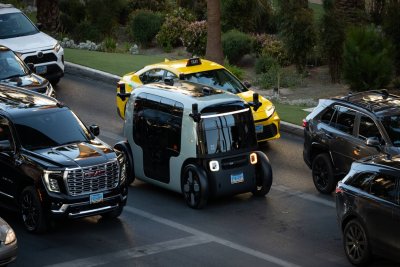
Lucid's pivot toward autonomous driving and robotaxis is aimed at carving out new growth avenues, but competition is intensifying. In March, Uber signed a deal to invest up to $1.25 billion in Rivian for autonomous R2 SUVs, according to Reuters. Lucid's autonomy strategy positions it against both Tesla's Cybercab and Rivian's driver-assistance technology.
Uber has invested over $10 billion in robotaxis and stakes in autonomous tech firms, targeting a rollout across at least 28 cities by 2028, per the Financial Times. For Lucid, the immediate challenge is convincing investors on its May 5 earnings call that its fresh capital can stabilize deliveries, improve margins, and shore up liquidity.
The market's reaction underscores the high stakes for Lucid as it navigates a capital-intensive transition from a luxury EV niche to a broader vehicle and autonomy operation. With production issues, a recall, and ongoing funding needs, the company faces a steep road ahead.