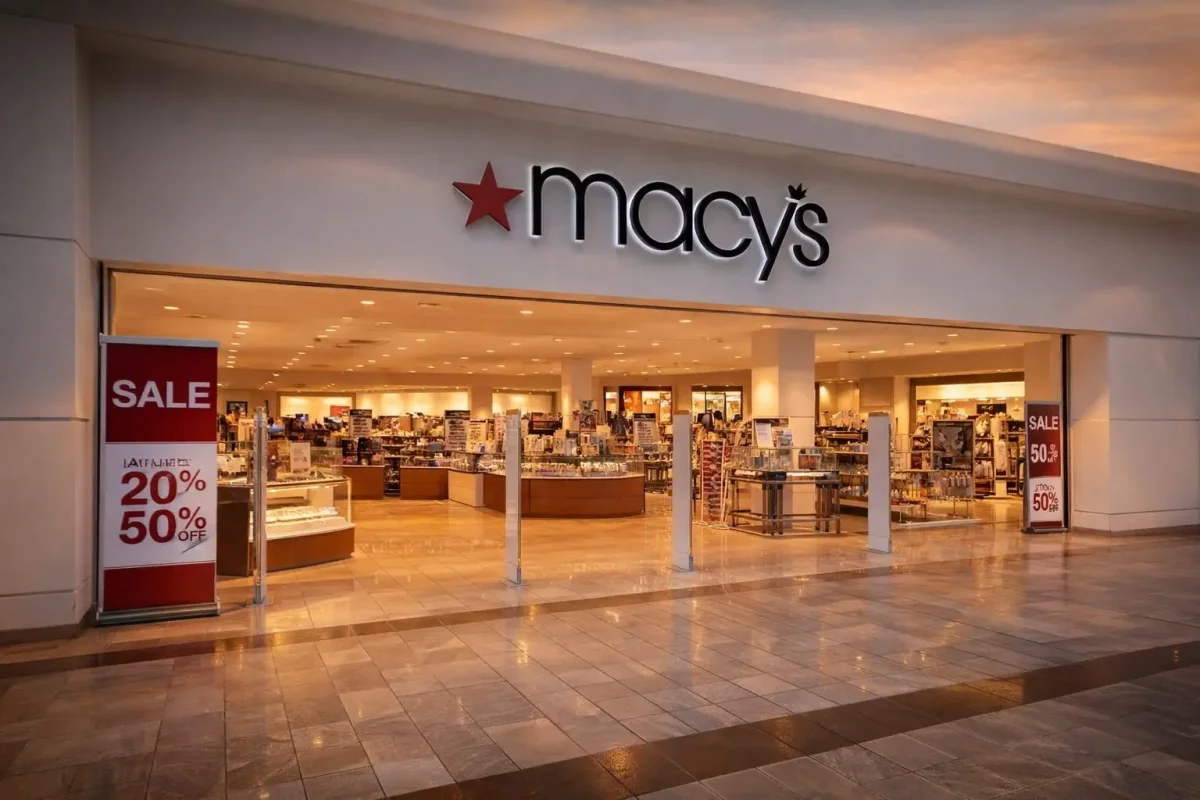
Shares of Macy's Inc. advanced 4.8% to close at $17.72 on Wednesday, March 18, 2026, as the retailer reported fourth-quarter financial performance that exceeded analyst forecasts. The positive market reaction came despite a broader sell-off in the consumer discretionary sector, highlighting investor focus on the company's near-term operational improvements.
Fourth-Quarter Financial Performance
For the quarter ended January 31, 2026, Macy's generated net sales of $7.6 billion, representing a 1.8% increase in comparable sales—a key retail metric that measures sales at established stores and digital channels. The company's "go-forward" operations, consisting of locations it plans to retain plus its digital business, posted a stronger 2.0% comparable sales gain. However, management noted that the closure of 64 stores late in fiscal 2024 reduced fourth-quarter sales by approximately $200 million.
Performance varied significantly across Macy's brand portfolio. The Bloomingdale's division delivered standout results with comparable sales surging 9.9%, while the Bluemercury beauty chain managed a modest 1.3% gain. The core Macy's brand stores recorded a slight 0.4% increase in comparable sales, even as net sales for the flagship chain declined 3.2%.
Leadership Commentary and Strategic Initiatives
In the earnings release, Macy's CEO Tony Spring emphasized the company's progress in introducing "more relevant brands" to its merchandise assortment. He specifically highlighted Bloomingdale's success in meeting consumer demand across both premium and luxury market segments. Looking ahead, the retailer plans to remodel an additional 75 locations through its "Reimagine 200" store modernization program during the current fiscal year.
Spring offered candid remarks in discussions with media, acknowledging significant uncertainty surrounding tariff policies, shipping expenses, and geopolitical developments including the situation in Iran. He characterized the company's 2026 financial guidance as a "prudent approach" given these external challenges.
Forward Guidance and Margin Pressures
Management projected 2026 net sales in the range of $21.4 billion to $21.65 billion, with adjusted earnings per share expected between $1.90 and $2.10. The company specifically warned that tariffs would negatively impact profitability, estimating a gross margin reduction of 0.20 to 0.30 percentage points for the year. According to Chief Financial Officer Tom Edwards, existing import duties have already been incorporated into current inventory costs, suggesting further tariff increases could create additional pressure.
For the full fiscal year 2025, Macy's reported a 1.5% increase in company-wide comparable sales, generated $1.4 billion in operating cash flow, and returned $448 million to shareholders through dividends and share repurchases.
Analyst Perspectives and Market Context
Dana Telsey of Telsey Advisory Group noted that "rightsizing the store base should improve long-term profitability," while her firm identified sluggish store traffic, tariff uncertainty, and a highly promotional retail environment as immediate challenges. The analyst commentary aligns with broader concerns about discretionary consumer spending amid macroeconomic and geopolitical risks that management highlighted.
Macy's stock performance contrasted sharply with sector peers on Wednesday. Kohl's Corporation shares declined 5.2%, Walmart Inc. fell 2.5%, and the S&P 500 Consumer Discretionary Index dropped 2.32% as traders reacted to the Federal Reserve's interest rate outlook and rising oil prices.
The quarterly results demonstrate continued momentum in Macy's turnaround efforts, particularly within its higher-end Bloomingdale's division. However, the cautious 2026 outlook reflects persistent headwinds from tariff policies, competitive pressures, and ongoing store portfolio optimization. Investors will monitor whether the company's brand refresh initiatives and store remodeling program can offset these challenges while maintaining recent sales momentum.