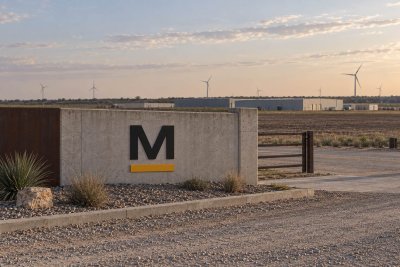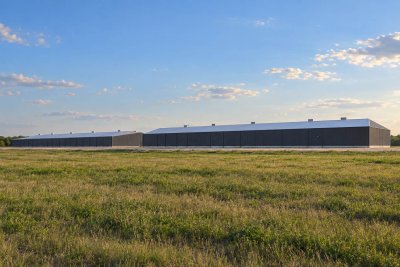
MARA Holdings (NASDAQ:MARA) surged 12.8% to $16.04 in early trading Monday, dramatically outperforming bitcoin's 2.1% rise to near $65,380. The move came as U.S. markets reopened after the Juneteenth holiday, giving traders their first chance to price bitcoin miners in regular cash sessions following a period when only crypto markets were active.
MARA's rally far exceeded gains among its peers: Riot Platforms rose 7.5%, CleanSpark gained 8.2%, and IREN added 1.6%. This broad but mixed rally highlights a shifting dynamic in the mining sector, where investors are increasingly valuing assets beyond just bitcoin holdings.
Timing was a key factor. The Nasdaq was closed Friday for Juneteenth, and Monday marked the first full trading day back. While bitcoin moved during the holiday, miners' stocks needed regular trading sessions to reflect the change. Bitcoin ETF flows remained soft last week, with Farside Investors reporting $96.7 million in net outflows on June 18, the last available data before Monday.
The "bitcoin up, miner up" narrative doesn't fully explain MARA's surge. The company added approximately $686 million in market capitalization, but a rally in bitcoin would only increase the value of its 35,303 BTC holdings by roughly $47 million—just 7% of Monday's stock-market gain. This suggests traders are pricing in potential upside from future mining margins and MARA's strategic position in power and data centers.
Miners often function as leveraged plays on bitcoin because when bitcoin rises, revenue from mined coins increases while near-term power and equipment costs remain largely fixed. For MARA, there is an additional angle: its equity also provides exposure to power assets it owns or controls. That power could be redirected to artificial intelligence (AI) or high-performance computing (HPC) workloads, which require heavy data-center processing.
MARA's first-quarter results underscore why shares are sensitive to these dynamics. Revenue dropped 18% to $174.6 million, while the company mined 2,247 bitcoin. Energized hashrate rose 33% to 72.2 EH/s, and purchased energy cost per bitcoin at owned sites was $40,047. These numbers highlight the operational leverage that can amplify bitcoin price moves.
The company has taken steps to reduce its reliance on bitcoin price swings. In April, Reuters reported that MARA would acquire Long Ridge Energy & Power from FTAI Infrastructure for $1.5 billion including debt, picking up a 505-megawatt gas power plant in Ohio and over 1,600 acres. The company plans to use the land for a new data-center campus. CEO Fred Thiel told Reuters the location had "all the key components" for that and noted interest from hyperscaler tenants.
MARA echoed this in its shareholder letter, calling control over power "the next phase" for digital infrastructure value and flagging connected energy as a constraint on AI compute growth. It retired around 30% of its convertible debt and sold about $1.5 billion worth of bitcoin in the quarter to buy back notes and reduce a credit line.
Monday's rally signals a shift in investor focus toward miners with exposure to power scarcity, AI demand, and data-center leasing—a break from pure crypto moves. MARA's performance against Riot and CleanSpark remains relevant, but the widening gap in the share move shows the market is asking if MARA's energy assets should command a higher multiple.
The trade can reverse quickly. If bitcoin loses momentum, ETFs continue to see outflows, or Long Ridge approvals and tenant deals are delayed, MARA's valuation could fall back to mining economics. The first-quarter net loss included a $1.0 billion mark-to-market hit on digital assets, an accounting adjustment to market prices, showing that balance-sheet bitcoin still drives reported results when prices decline.