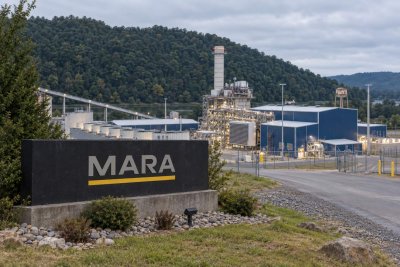
MARA Holdings (MARA) saw its shares slip in premarket trading on Tuesday, September 15, as investors weighed a fresh downgrade from JPMorgan that casts a shadow over the company's ambitious pivot into AI data centers. The stock was trading around $11.40 at 8:53 a.m. Eastern, down 4.8% from Monday's close of $11.98, placing it just 40 cents above the bank's new price target of $11.
JPMorgan analysts moved MARA from Overweight to Underweight and slashed their December 2027 price target from $13 to $11, according to MarketBeat and Benzinga. The downgrade underscores a growing debate about how much value the Bitcoin miner's capital-light AI data center strategy will actually deliver to shareholders.
The crux of JPMorgan's concern lies in the structure of MARA's joint venture with Starwood Digital Ventures, announced in February. Under the agreement, Starwood handles the heavy lifting—due diligence, permitting, power procurement, and securing a hyperscale tenant—while MARA contributes powered sites and bears capped pre-development costs. MARA can elect an ownership interest between 10% and 50% in each project, with Starwood acting as managing member and controlling capital calls.
This flexible structure means the economics are far from a simple 50-50 split. MARA's share of value creation is limited by its ownership election, and the company has no guaranteed AI lease revenue until a tenant is secured and both parties approve a site. That uncertainty is a key driver of the analyst downgrade.
However, MARA's June-quarter filing highlights protections for the company. The contributed site receives a predetermined value before MARA must invest incremental cash, requiring Starwood to contribute capital against that value first. Project borrowing is expected to be non-recourse and backstopped by Starwood, not guaranteed by MARA. As of June 30, MARA had spent approximately $11 million on pre-development costs.
Proponents of the strategy argue that owning less of a completed data center could yield better returns on MARA's capital than funding full construction, tenant acquisition, and operations alone. It also transfers execution risk to a partner with specialized data center expertise. The trade-off is dependence on Starwood's ability to deliver tenants and the potential for limited upside if MARA elects a low ownership stake.
Meanwhile, MARA's core Bitcoin mining business remains the primary driver of its financials. The company reported second-quarter revenue of $174.9 million, down 27% year-over-year, and held 35,577 bitcoin valued at $2.08 billion as of June 30. It also had $421.3 million in cash. After the quarter, MARA secured $600 million in bitcoin-backed loans, initially pledging 18,750 bitcoin, providing liquidity but adding collateral exposure if Bitcoin's price declines.
The $11 price target does not resolve whether MARA's powered land is more valuable inside a joint venture than as a mining asset. A signed hyperscale lease would provide clarity. The first key disclosure will pair tenant economics with the site value credited to MARA, its chosen ownership percentage, and the cash it must contribute. Until then, the 10%-to-50% range remains the valuation gap behind the $11 debate.