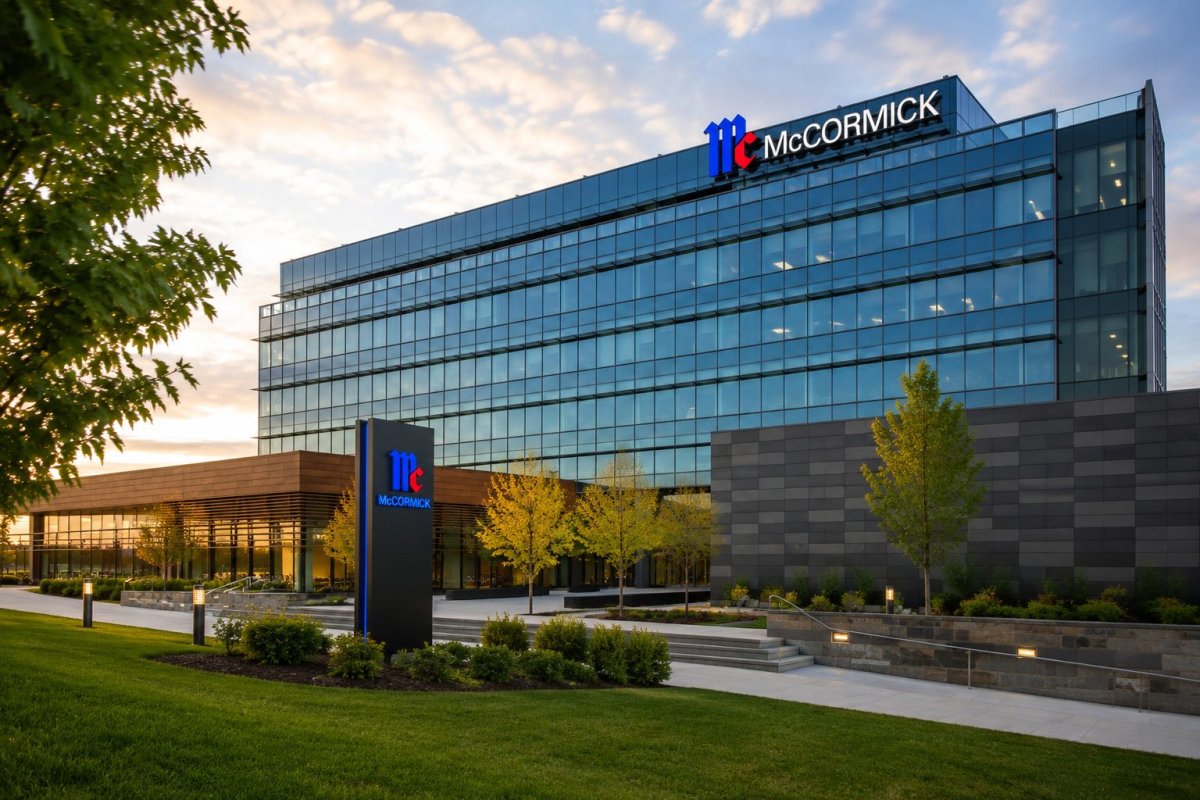
McCormick & Company (NYSE: MKC) saw its shares climb 3.24% in premarket trading Thursday following a second-quarter earnings and revenue beat. However, a closer look reveals that the outperformance was heavily influenced by a one-time tariff refund, raising questions about the underlying strength of the business.
The company reported adjusted earnings of $0.80 per share, surpassing the LSEG consensus estimate of $0.69. Revenue came in at $1.94 billion, ahead of the $1.91 billion forecast. The tariff refund contributed approximately $0.07 to EPS, accounting for roughly 64% of the $0.11 beat. Additionally, the refund drove 140 basis points of the total 270-basis-point gross margin expansion, leaving core margin growth at 130 basis points.
Organic sales, which strip out the impact of acquisitions, divestitures, and currency, rose only 1.7%. Reported sales growth of 16.7% was significantly boosted by the McCormick de Mexico acquisition, which added 12.3 percentage points. Volume and mix declined 0.5%, while pricing contributed 2.2 percentage points. On a constant-currency basis, sales grew 14.0%.
The company maintained its full-year fiscal 2026 outlook, projecting reported sales growth of 13% to 17%, organic sales growth of 1% to 3%, adjusted operating income growth of 16% to 20%, and adjusted EPS in the range of $3.05 to $3.13. The unchanged guidance suggests that management sees the tariff refund as a non-recurring benefit that does not alter the underlying earnings trajectory.
Segment performance was mixed. Consumer sales rose 22.8%, but volume and mix in that segment fell 1.9%, with Americas volume declining 3.6%. Flavor Solutions posted 8.9% sales growth, with organic sales up 2.9% and volume and mix improving 1.4%, indicating stronger demand in the foodservice and flavor categories.
CEO Brendan Foley noted that U.S. spices and seasonings growth has moderated as consumers use pantry stockpiles, with price gaps and private-label competition continuing to weigh on core shelf categories. He emphasized plans to boost investment in the Consumer segment to improve volume trends while maintaining momentum in Flavor Solutions.
The company is also progressing on its acquisition of Unilever PLC's (NYSE: UL) Foods business, announced in March, which carries a total enterprise value of approximately $44.8 billion. McCormick expects the combined entity to generate around $20 billion in 2025 revenue with a 21% operating margin and $600 million in annual cost synergies. A European secondary listing location is expected to be announced by the end of July.
Cash flow improved, with first-half operating cash flow rising to $431 million from $161 million a year earlier. The company paid $258 million in dividends and $75 million in capital expenditures. Quarter-end leverage stood at approximately 2.9 times. McCormick plans to allocate $1.5 billion to $2.0 billion toward debt reduction in the first two years following the Unilever Foods deal closure.