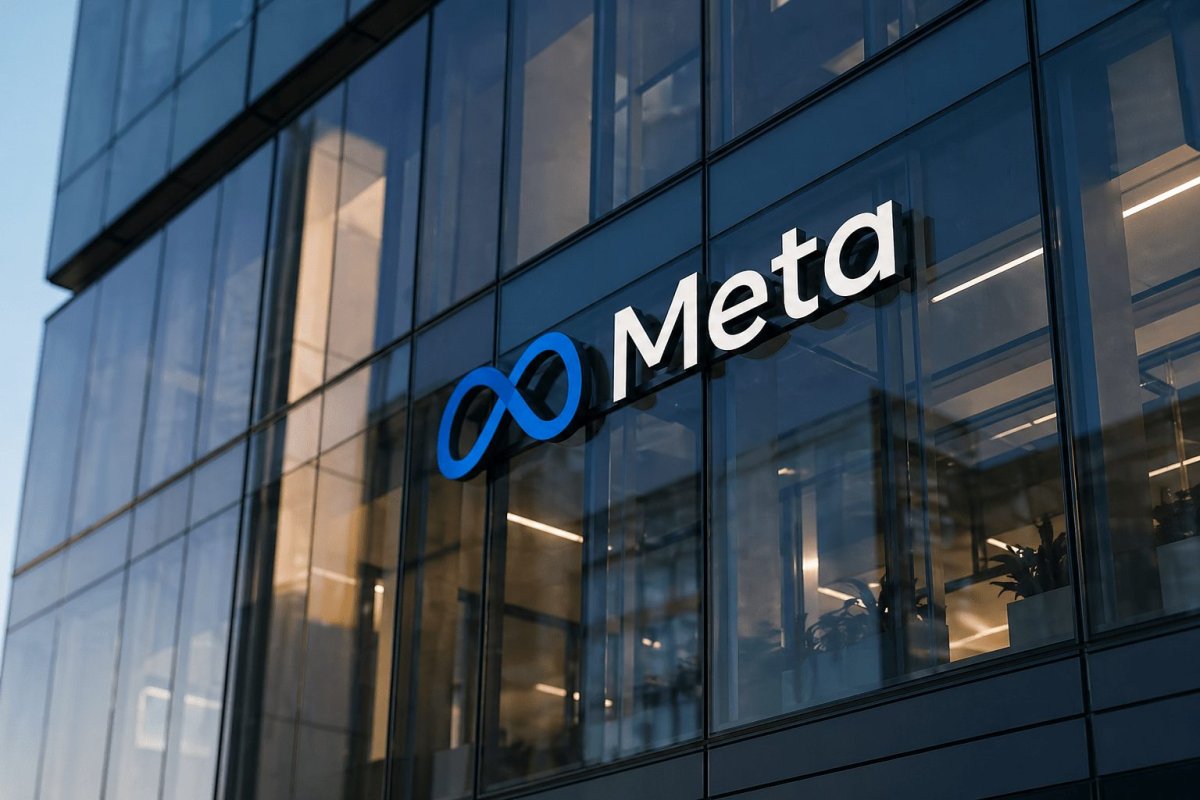
Meta Platforms (META) saw its shares tumble more than 6% in after-hours trading on Wednesday, as the company's aggressive artificial intelligence spending plans for 2026 overshadowed a robust first-quarter earnings report. The social media giant raised its capital expenditure forecast for 2026 to a range of $125 billion to $145 billion, significantly exceeding analysts' expectations and fueling investor concerns about the near-term return on such massive investments.
Q1 Earnings Beat
For the first quarter ended March 31, 2026, Meta reported revenue of $56.31 billion, a 33% year-over-year increase. Net income surged 61% to $26.77 billion, with diluted earnings per share reaching $10.44, boosted by a sizable $8.03 billion tax benefit. The company's operating margin held steady at 41%, even as total costs and expenses climbed 35% to $33.44 billion. Meta ended the quarter with 77,986 employees.
AI Investment Raises Stakes
The hefty 2026 capex plan—which includes spending on data centers, servers, and chips—reflects Meta's deepening commitment to AI infrastructure. Chief Financial Officer Susan Li acknowledged that the company has "continued to underestimate our compute needs," referring to the processing power required for AI workloads. The strategy is to maintain flexibility: ramping up capacity when demand surges and scaling back if conditions cool. However, investors are increasingly focused on whether the massive spending will translate into tangible revenue growth, especially as Meta relies on its own AI system that some analysts say still trails frontier lab peers.
Advertising and User Growth
Advertising remained Meta's primary revenue driver. Ad impressions across its family of apps rose 19% year-over-year, while the average price per ad climbed 12%. In March, the company's family daily active people—measuring users who access any Meta app at least once a day—reached 3.56 billion, up 4% from a year earlier, though slightly down from December due to internet disruptions in Iran and WhatsApp restrictions in Russia.
CEO Comments and Outlook
CEO Mark Zuckerberg described the quarter as a "milestone," highlighting the initial rollout of Meta Superintelligence Labs' debut AI model. He said the company is "on track" to deliver personal superintelligence to billions of users. Meta maintained its full-year 2026 expense forecast of $162 billion to $169 billion and guided second-quarter revenue in the range of $58 billion to $61 billion.
Regulatory and Competitive Pressures
Beyond capex, Meta faces ongoing legal and regulatory risks in both the European Union and the United States, including youth-focused probes and several U.S. court cases that could result in significant losses. Additionally, any prolonged stagnation in user growth or engagement could undermine the rationale for the company's heavy AI investments. The broader tech landscape shows similar spending trends: Alphabet raised its 2026 capex target to $180-$190 billion after a 63% jump in Google Cloud revenue, while Amazon reaffirmed its $200 billion AI investment goal as AWS revenue grew 28%. These moves drew mixed reactions, with faster cloud growth at Alphabet and Amazon sharpening their immediate AI revenue pitch to investors—a gap Meta must now close.