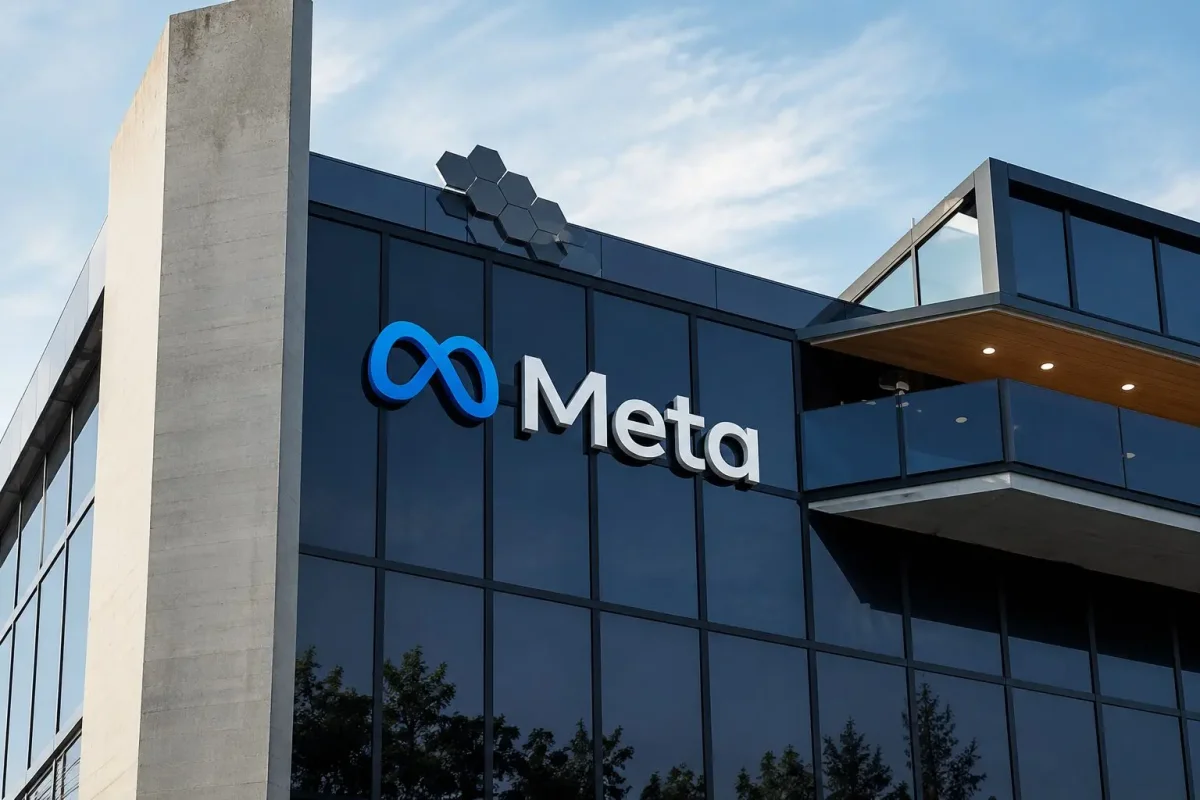
Meta Platforms, Inc. (NASDAQ:META) closed at $669.21 on Friday, July 12, 2026, marking a 6.0% gain for the day and capping a 14.8% weekly advance — its strongest performance since early 2024. The rally added approximately $221 billion to the company's market capitalization, pushing it to roughly $1.72 trillion.
The weekly gain is notable as it represents about 1.5 times Meta's planned capital expenditure range of $125 billion to $145 billion for 2026. Rather than reflecting cash on hand, the move signals a shift in investor sentiment: Meta's expensive AI infrastructure is increasingly seen as a potential revenue stream rather than a pure cost burden.
According to an internal memo reviewed by Reuters, Meta is accelerating its AI ambitions with plans to deploy 7 gigawatts of computing infrastructure in 2026 and scale to 14 gigawatts by 2027. For context, one gigawatt can power approximately 800,000 homes. The company also intends to begin production of its proprietary Iris AI chip in September, with Broadcom Inc. (NASDAQ:AVGO) collaborating on the design. "You can't become an AI titan if you are dependent on another company for chips," said Mike Gualtieri, an analyst at Forrester Research (NASDAQ:FORR).
Meta has also made its Muse Spark 1.1 AI model available to U.S. developers through an API, priced at $1.25 per million input tokens and $4.25 per million output tokens. "Meta may finally have a much clearer monetization bridge from AI models to paid developer tools," noted Shay Boloor, chief market strategist at Futurum Equities.
Wall Street debate has shifted from whether Meta can fund its buildout to how it will monetize it. Bank of America (NYSE:BAC) analyst Justin Post observed that investors currently value Meta at about $4 billion per gigawatt of AI capacity, compared to $59 billion for Amazon.com, Inc. (NASDAQ:AMZN) and $110 billion for Alphabet Inc. (NASDAQ:GOOGL). Post's own estimate for Meta is $12 billion per gigawatt, though he cautioned that comparisons are imperfect because Amazon and Alphabet already operate large cloud businesses for external clients.
Gil Luria, analyst at D.A. Davidson, argued that Meta has not received full credit for AI-driven ad growth, as spending is rising even faster. "If Meta slows down capex and starts monetizing it, we see significant upside to revenue and cash flow," he said.
Meta's ad business remains robust. First-quarter revenue jumped 33% year-over-year to $56.31 billion, with operating margin steady at 41%. Free cash flow reached $12.39 billion, while capital expenditure rose to $19.84 billion. The company guided second-quarter revenue between $58 billion and $61 billion.
However, the re-rating depends on cloud revenue and chip savings that Meta has yet to detail. On Friday, the company pulled its new Muse Image feature after backlash over using public Instagram accounts. Separately, European Union regulators preliminarily found that Facebook and Instagram likely violated the Digital Services Act over issues like autoplay and infinite scroll. Meta has pushed back, but a negative final ruling could require design changes and a fine of up to 6% of global annual turnover, potentially impacting engagement and ad inventory.
Meta has not yet announced a date for its second-quarter earnings release. Key economic data this week includes the June U.S. consumer price index on Tuesday and producer prices on Wednesday. Hot inflation readings could lift bond yields and pressure valuations. Any news on cloud customers, developer adoption, or Iris chip milestones will test the sustainability of last week's $221 billion surge.