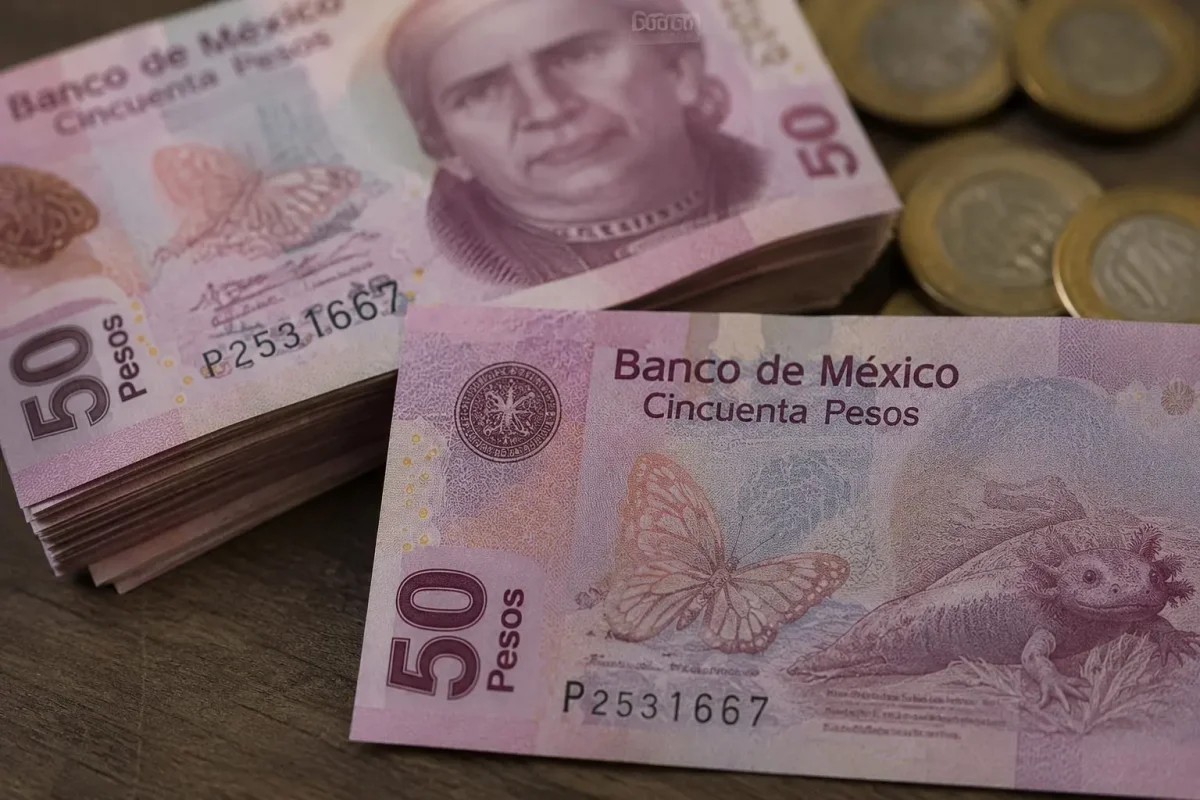
Mexico City — The Mexican peso opened the Wednesday session near 17.42 against the US dollar, as foreign exchange markets resumed trading while domestic equity markets remained closed. The USD/MXN pair was quoted at 17.4211 early on July 22, 2026, after moving within a range of 17.3914 to 17.4375.
The peso's appeal as a carry trade instrument remains a central theme for investors, supported by Banxico's policy rate of 6.50%, which maintains a spread of 275 to 300 basis points over the Federal Reserve's target range. This differential has historically attracted capital flows seeking higher yields, but a year-end forecast of 17.90 per dollar from a Citigroup survey poses a significant challenge.
According to the Citigroup poll, the projected depreciation to 17.90 would represent a 2.75% rise in the USD/MXN pair from current levels. For dollar-based investors holding long peso positions, this would translate to an approximate 2.68% spot loss—more than double the remaining carry cushion of 1.22% to 1.33% expected through December 31, excluding costs and policy shifts.
The one-year median forecast from the same survey stands at 17.78, implying a spot depreciation of roughly 2.02% from present values. This longer-term view suggests that a full year's nominal rate differential could offset the depreciation, but the near-term outlook remains clouded by trade policy uncertainties.
The peso posted a 0.18% gain on Tuesday, closing near 17.39 and marking its second consecutive advance. However, early Wednesday trading saw the currency's range narrow to just 4.6 centavos, indicating cautious positioning ahead of key events.
Trade policy is currently the most probable source of momentum for the peso. Negotiators from the United States and Mexico began a third round of discussions on Tuesday, scheduled to last three days. The talks focus on automobiles, steel, aluminum, agriculture, and labor matters, all critical components of the USMCA framework that underpins approximately $1.6 trillion in annual North American trade. The agreement faces yearly evaluations until either renewal or expiration in 2036.
“The local backdrop interacts directly with geopolitical and international trade fronts,” said Felipe Mendoza, an analyst at EBC Financial Group, in comments to Grupo Milenio. He highlighted the initial yearly USMCA review as a pivotal factor for the peso's trajectory.
Mexico's weakened growth prospects add to the pressure. A survey of 32 economists lowered the 2026 growth forecast to 1.1% from 1.5%, while the median estimate for 2027 slipped to 1.8%, down from 1.9%. Despite this, Banxico held its rate steady at 6.50% in June with unanimous support, stating that maintaining the current rate remained appropriate.
The US outlook may also remain unchanged. A July poll of 104 economists found that all predicted the Fed would maintain rates at its July 28–29 meeting, with 78 expecting no adjustment for the rest of the year. This stability supports the rate differential, but risks remain elevated.
Key downside risks for the peso include a collapse of the USMCA, new US tariffs, or a Fed rate hike. Additionally, expectations of further Banxico rate cuts would erode the carry trade benefit. The immediate milestone is the conclusion of trade negotiations on Thursday, which could provide direction for the currency.
Until then, the peso's carry retains value, though not without limitations. Investors are closely watching for any signals from the talks that could shift the balance between yield and risk.