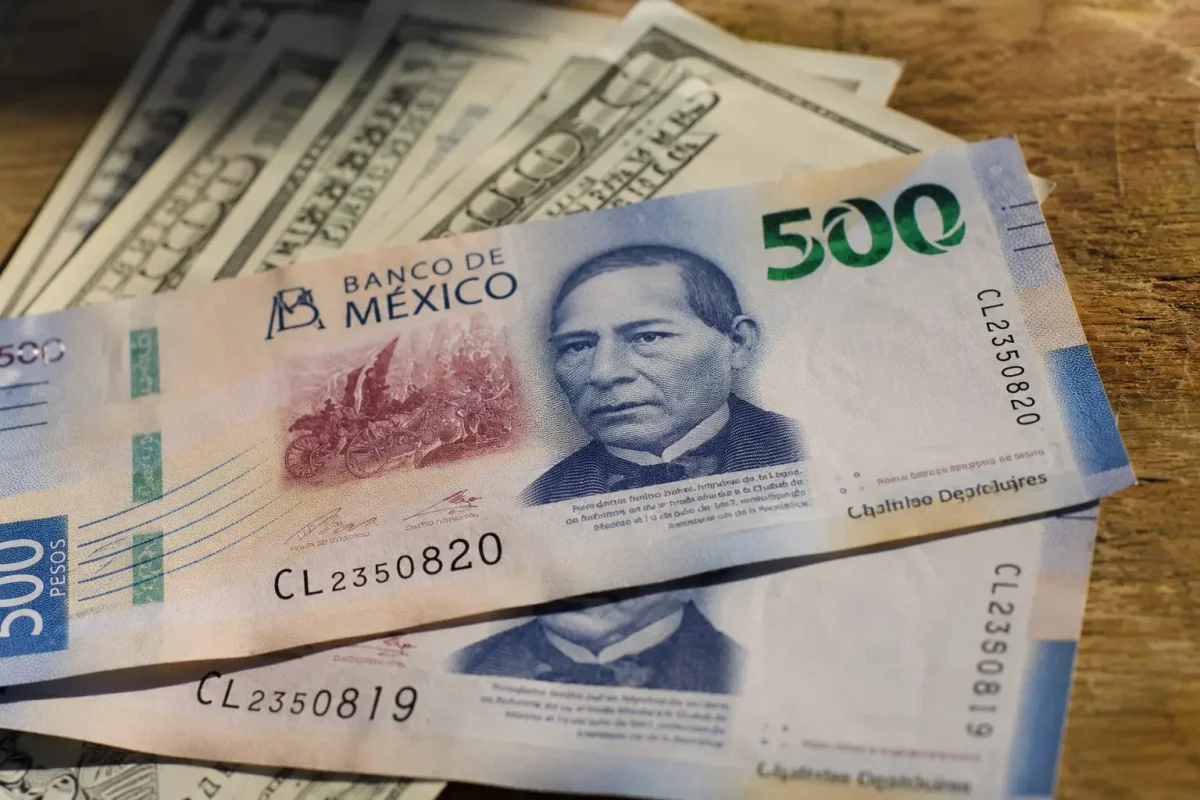
The Mexican peso advanced against the US dollar on Thursday, recovering from the previous session's losses, after a softer-than-expected US jobs report weighed on the greenback. However, traders remain cautious as trade negotiations under the USMCA continue to focus on contentious auto rules of origin.
The peso traded around 17.47 per dollar in early afternoon trading in Mexico City, up 0.42% from the previous day's close near 17.55. The currency had fallen 0.42% on Wednesday after comments from Federal Reserve Chair Kevin Warsh and weaker US economic data fueled safe-haven demand for the dollar.
US Jobs Data Misses Expectations
Non-farm payrolls in the United States increased by only 57,000 in June, according to the Bureau of Labor Statistics, falling short of market forecasts. The unemployment rate stood at 4.2%. Revisions to April and May data subtracted a combined 74,000 jobs from earlier estimates. The labor force participation rate edged down to 61.5%.
The disappointing jobs report led to a decline in the US dollar index, which fell 0.52%—its largest daily drop since May 6, according to Banco Base economist Gabriela Siller. Market expectations for Federal Reserve rate hikes shifted, with the next 25-basis-point increase now priced in for December 9 instead of October 28, and expectations for two rate hikes this year have been abandoned.
USMCA Auto Rules Remain Key Risk
Trade tensions under the USMCA continue to weigh on the outlook for the peso. US Trade Representative Jamieson Greer stated that the United States "did not agree to renew the USMCA in its current form," though the agreement remains in effect while the three countries continue discussions. A third round of US-Mexico negotiations is scheduled for the week of July 20.
Mexico's Economy Minister Marcelo Ebrard highlighted that talks are stalled over stricter auto rules of origin. "We wouldn't allow our auto industry to be at a disadvantage," Ebrard told Reuters, underscoring the importance of the automotive sector to Mexico's economy.
Mexico Auto Sales Show Strength
Domestic auto demand in Mexico remains robust. INEGI reported that light-vehicle sales in June reached 126,778 units, up 7.6% year-over-year. For the first half of 2026, total sales hit 754,394 units, a 5.3% increase from the same period last year and the highest first-half figure since INEGI began tracking in 2016.
The top five automakers by market share in Mexico during the first half were Nissan (16.85%), General Motors (12.85%), Volkswagen (8.69%), Toyota (8.24%), and Kia (7.27%), according to Banco Base. A stronger peso can reduce the value of dollar-denominated revenue for exporters and suppliers with peso-denominated costs.
Analyst Views and Hedging Costs
A Reuters poll of 24 forex analysts forecast the peso at 17.78 per dollar in 12 months, implying a 1.7% depreciation from Tuesday's level. Among 11 analysts who answered an additional question, six expected the peso to weaken over the next year.
Michael Pfister at Commerzbank noted that the peso's recent strength stems from optimism about the US economy, from which Mexico should benefit. Conversely, analysts at Deutsche Bank said Banxico's policy stance has reduced the peso's carry trade appeal, and they now prefer the Brazilian real over the Mexican peso.
Hedging costs reflect cautious sentiment. Banco Base quoted the one-month forward rate at 17.5087, six-month at 17.7229, and one-year at 17.9806. A one-month call option protecting against the peso falling past 19.50 carried a 0.62% premium. The bank set the USD/MXN range for Thursday between 17.39 and 17.58, noting that lower US liquidity due to the holiday could amplify currency volatility.