Micron Technology (NASDAQ:MU) experienced a sharp sell-off on Wednesday, with shares tumbling 9.94% to close at $739.00, marking a significant reversal from recent highs. The stock continued to slide in premarket trading on Thursday, falling an additional 1.27% to $729.65. The decline wiped out approximately $92.1 billion in market capitalization, a figure roughly five times the company's most recent quarterly adjusted free cash flow.
The downturn comes as investors increasingly question the longevity of the memory chip rally that has propelled stocks like Micron, SK Hynix, and Samsung Electronics to record levels. While robust earnings from peers underscore ongoing demand, the market is now focusing on margin sustainability, contract stability, and the potential threat from Chinese production capacity expansion.
Record Earnings, Yet Stocks Tumble
Micron's most recent quarter delivered outstanding performance, with revenue soaring to $41.46 billion, an increase of roughly 346% compared to the same period last year. The GAAP operating margin stood at an impressive 80.4%. The company guided fiscal fourth-quarter revenue at $50 billion, with a potential variation of $1 billion, and anticipates gross margins around 86%. High-bandwidth memory HBM4 was reported as shipping in high volumes.
Similarly, SK Hynix (KRX:000660) reported preliminary revenue surging 257% and operating profit climbing 557%. However, its stock dropped 10% on Wednesday. Samsung Electronics (KRX:005930) posted a surge in chip profit exceeding 250 times, with semiconductor margins climbing to 70%, yet shares finished down 0.7% on Thursday. "Investors are questioning how long their record-high margins will be sustainable," said Mirae Asset analyst Kim Seok-hwan, as reported by Reuters.
Contract Structure Emerges as Key Variable
Contract structure has emerged as a critical investor variable. Micron expects that multi-year customer deals will enhance financial visibility. SK Hynix has secured agreements with roughly 10 customers. Samsung plans to secure multi-year contracts for about two-thirds of its memory production, with agreements lasting at least five years and featuring minimum price guarantees. Executive Jaejune Kim stated, "Almost all customers are requesting multi-year supply contracts."
These terms may transform peak pricing into more consistent cash flow, but analysts caution that this is an assumption rather than a proven effect. New supply could continue to challenge future contract renewals, potentially pressuring margins.
Valuation and Cash Flow Perspective
Micron's trailing P/E of 16.73 is comparable to Samsung Electronics (16.59) and above SK Hynix (12.52), but significantly lower than U.S.-listed storage firms Western Digital (27.63) and Sandisk (35.32). The cash-flow argument appears more compelling, though it involves higher risk. Micron's market value of $834.62 billion represents 11.4 times its annualized adjusted free cash flow for the third quarter. This pace is not a projection; it presumes the record quarter continues as is.
China Threat Looms Large
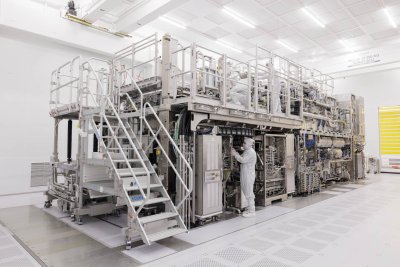
China continues to represent the most prominent long-term threat to the memory industry. According to reports, domestic manufacturers aim to produce five immersion lithography systems in the current year, increasing to 20 in 2027. In comparison, ASML Holding (NASDAQ:ASML) delivered 131 similar systems in 2025. Analysts at JPMorgan described the medium-term impact as contained while cautioning over mounting long-term risks.
Upcoming Catalysts and Risks
Kioxia Holdings (TYO:285A) is set to report first-quarter results on July 31, offering a gauge of NAND prices and sector supply discipline. Sandisk's fiscal-year results are due the following week on August 5. Memory continues to show significant cyclicality. Reduced AI investment, rapid growth by Chinese competitors, or less favorable contract agreements might pressure margins. Ongoing supply shortages and the possibility of enforceable minimum prices, however, could mean Wednesday's drop proves overdone.