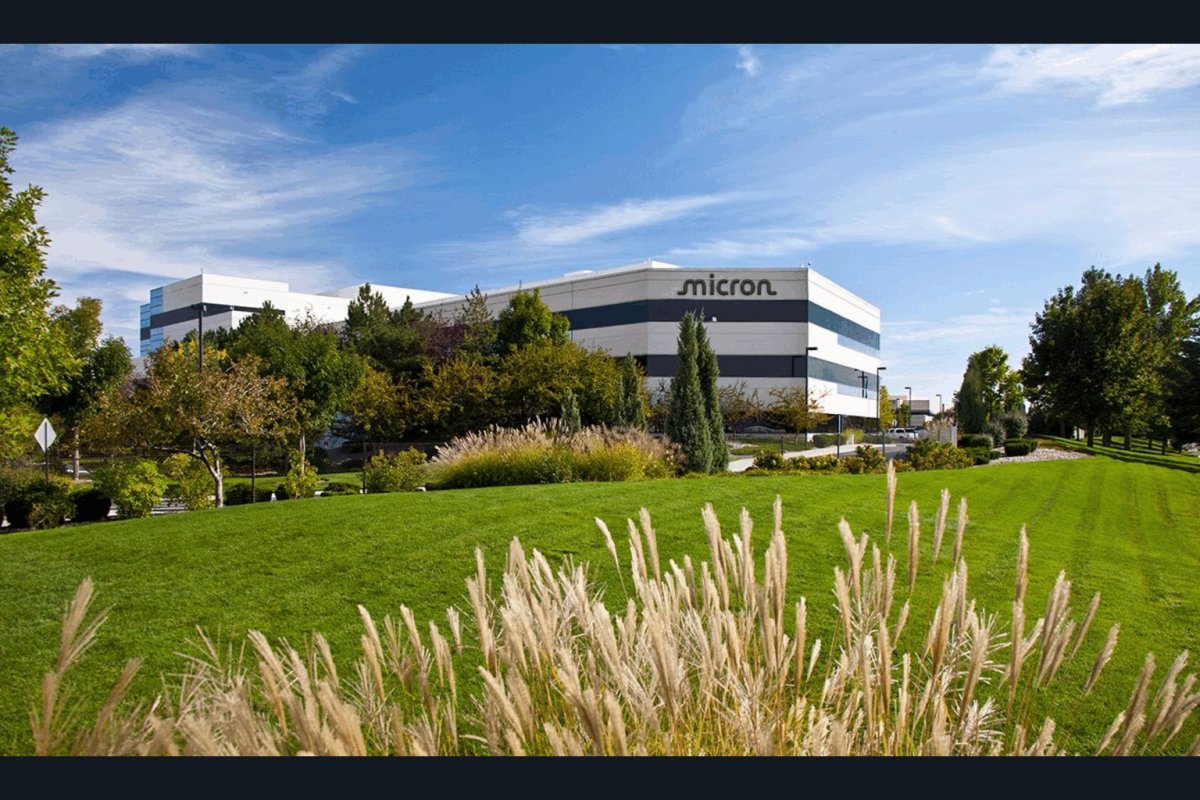
Micron Technology Inc. (NASDAQ: MU) experienced a modest pullback in Friday's trading session, with shares slipping 0.25% to $932.86. This slight decline brings the company's market capitalization to approximately $1.07 trillion, as investors weigh the stock's valuation against its robust growth trajectory and ambitious forecasts.
The semiconductor giant's fiscal third-quarter results, reported earlier this month, showcased exceptional performance. Revenue surged to $41.46 billion, a dramatic increase from $9.30 billion in the same period last year. GAAP net income reached $28.24 billion, while operating cash flow totaled $25.39 billion. Adjusted free cash flow came in at $18.3 billion, following $7.1 billion in capital expenditures. These figures reflect the company's successful execution in the AI memory market, a point emphasized by CEO Sanjay Mehrotra, who highlighted the 'strategic value of memory in the AI era.'
Looking ahead, Micron has set an ambitious target for the fiscal fourth quarter, projecting revenue of $50 billion (with a possible variance of $1 billion either way) and a GAAP gross margin of approximately 86%. This forecast builds on the already impressive 84.6% gross margin achieved in Q3, underscoring the company's pricing power and operational efficiency in a high-demand environment.
The company's product roadmap remains on track, with HBM4 memory chips now shipping in high volume for its primary customer's platform. HBM4E, the next-generation product, is scheduled for manufacturing in calendar 2027. This continued innovation is critical as AI workloads demand ever-increasing memory bandwidth and capacity.
Wall Street sentiment remains largely positive, though not without divergence. The consensus price target from 44 analysts stands at $1,513.41, implying a potential upside of 62.2% from current levels. However, individual estimates range widely, from a bearish $361 to a bullish $2,200, highlighting the uncertainty surrounding memory pricing and demand sustainability.
At current valuation, Micron trades at approximately 6.4 times its annualized Q3 revenue and 14.6 times annualized adjusted free cash flow. Should the company meet its Q4 guidance, these multiples would appear more reasonable, but they also underscore the premium investors are paying for growth in the AI memory sector.
Investors are now looking ahead to Micron's fiscal fourth-quarter earnings release, scheduled for September 30. Key focus areas include whether the company can maintain its 86% gross margin forecast and deliver on the $50 billion revenue midpoint. Any deviation from these targets could significantly impact the stock's trajectory.
Despite the slight pullback, Micron's earnings momentum remains intact. However, the company faces several risks, including cyclical memory pricing, heavy reliance on a few key customers, substantial capital expenditure requirements, and potential capacity expansion by competitors. These factors, combined with the wide range of analyst targets, underscore the sensitivity of Micron's valuation to various assumptions about the AI memory market's future.
As the AI revolution continues to drive demand for high-performance memory, Micron's ability to execute on its product roadmap and maintain its impressive margins will be crucial. The company's position as a leading supplier of HBM memory for AI accelerators positions it well for sustained growth, but investors should remain mindful of the cyclical nature of the semiconductor industry.