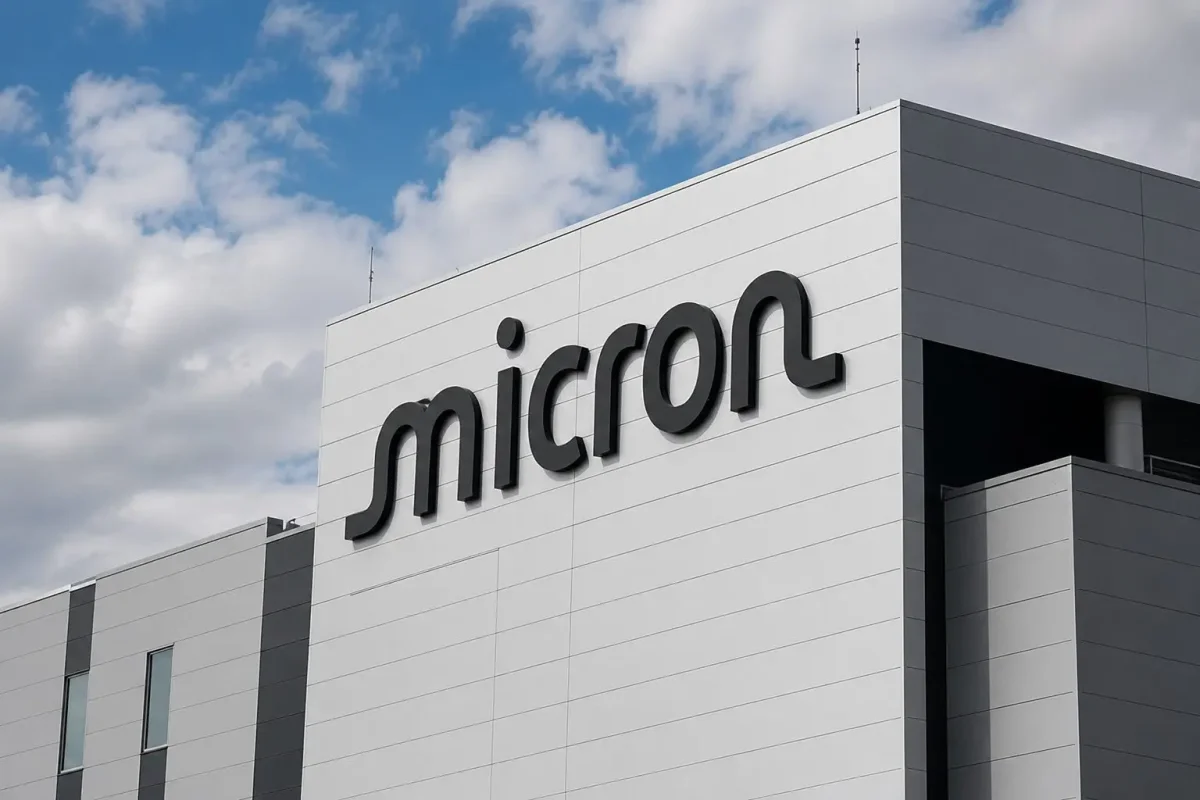
Micron Technology shares edged lower on Friday, closing at $751.00, down 1.46%, after the company announced the start of 1-alpha DRAM production at its Manassas, Virginia facility. The stock traded in a range of $747.20 to $780.20, pulling back from a 4.1% gain on Thursday that had pushed shares to $762.10. The move comes during a turbulent week for memory-chip stocks, with AI-driven demand and labor developments at Samsung influencing market sentiment.
Production Milestone
Micron's 1-alpha DRAM is the most advanced memory technology manufactured in the United States, according to the company. CEO Sanjay Mehrotra described the achievement as an "important step" in the company's $200 billion U.S. investment plan. The new node is expected to quadruple DDR4 wafer output at the Manassas plant, with volume production qualified by the end of calendar 2026. The memory will support long-lifecycle products in automotive, aerospace, defense, networking, industrial, and medical sectors.
Market Context
The broader semiconductor sector showed mixed performance. The Philadelphia Semiconductor Index edged higher, while the Nasdaq Composite rose 0.19% to 26,343.97. U.S. stocks finished mostly higher on Friday, with markets set to close Monday for Memorial Day. Policy developments also drew attention, as U.S. Trade Representative Jamieson Greer stated at the Micron site that there are "not an immediate tariff coming" on semiconductors, though tariffs remain a potential tool to support domestic production.
Memory-Chip Volatility
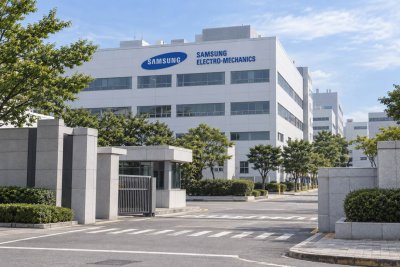
Memory stocks experienced significant swings throughout the week. Seagate Technology CEO Dave Mosley noted that new fabrication plants would not come online quickly enough to meet demand, triggering selling pressure earlier in the week. However, Brad Gastwirth of Circular Technologies argued in a research note that the market's reaction "appears disconnected" from actual supply-chain fundamentals. Meanwhile, Samsung Electronics remained in focus after management and union leaders paused a planned strike, reaching a bonus-pay agreement that union members will vote on from May 22 to May 27.
AI Demand and Supply Dynamics
Micron is widely viewed as a key beneficiary of the current memory shortage driven by artificial intelligence. DRAM, or dynamic random-access memory, serves as short-term memory in computers, servers, and AI systems. Tighter supply conditions enhance pricing power for major players like Micron, Samsung, and SK Hynix. However, Reuters Breakingviews cautioned that additional capacity from top chipmakers and Chinese competitors could weaken supply discipline down the line, while demand remains heavily dependent on substantial AI spending by big technology firms.
Outlook
Micron's production update provides investors with a tangible milestone rather than another forecast. The key question is whether the company can capitalize on tight supply and U.S. incentives to deliver earnings growth, or if it will fall victim to the typical memory-chip cycle, where extra capacity emerges after prices have peaked. As the stock heads into the weekend, it remains sensitive to supply news that can sharply move the sector.