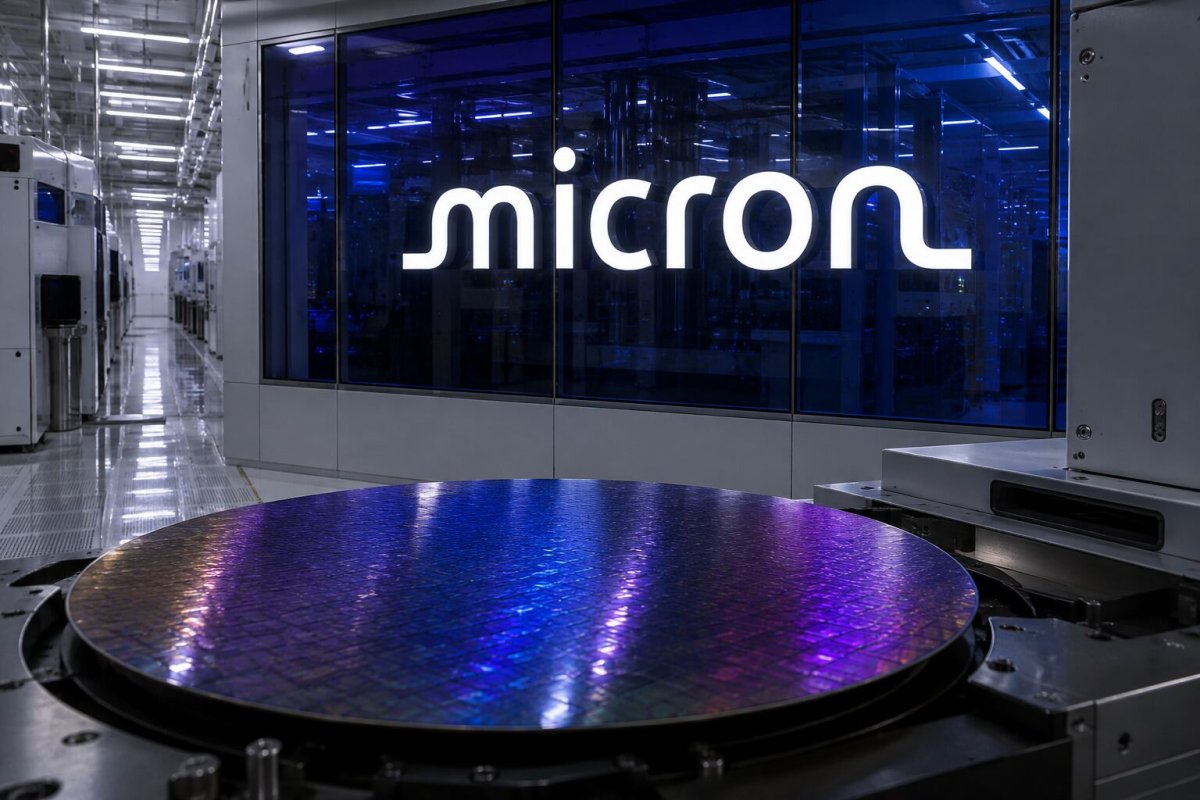
Micron Technology (NASDAQ: MU) shares rallied 6.1% on Friday, closing at $1,016.59, after an analyst at Lynx Equity Research issued a bullish $1,325 price target. The surge added approximately $66 billion to the memory-chip maker's market capitalization, which now stands at roughly $1.148 trillion. After-hours trading saw shares ease slightly to $1,013, but the bulk of the session gain held, according to Yahoo Finance data.
The $1,325 target represents a 30.3% upside from Friday's close and would value Micron at nearly $1.5 trillion. However, the assumptions under the hood are even more striking. Micron has guided to fiscal fourth-quarter revenue of $50 billion (plus or minus $1 billion) and a non-GAAP gross margin of approximately 86%—levels once considered unattainable in the cyclical memory business.
Friday's move pushed Micron back above the $1,000 psychological level, a threshold it had reclaimed after a volatile month. The stock had retreated 45% from its peak in late July, but has since clawed back much of that decline. At $1,016.59, shares remain 19% below their 52-week high of $1,255, but the Lynx target implies a move just 5.6% above that high.
Lynx's stance is notable because the firm had called Micron "uninvestible" in June, citing limited upside above $1,200. The subsequent pullback changed the risk-reward calculus, and Friday's call reflects renewed confidence in the company's earnings trajectory. Micron's fiscal third-quarter results, reported in July, showed revenue of $41.46 billion, up 74% sequentially and 346% year-over-year, with non-GAAP gross margin at 84.9% and adjusted free cash flow of $18.3 billion.
Investors are now focused on the September 30 earnings report, which will test whether Micron can deliver on its aggressive guidance. The midpoint of $50 billion in revenue would require a 20.6% sequential increase, while the projected 86% gross margin and $31.00 adjusted EPS (up 23.5% from Q3) are equally ambitious. At Friday's close, annualizing that EPS implies a price-to-earnings multiple of about 8.2, which looks cheap relative to many AI peers—but it may also reflect skepticism about margin sustainability.
The current demand environment is robust. Cloud Memory and Core Data Center revenue hit $25.29 billion in Q3, representing 61% of total revenue, and Micron announced that HBM4 is already shipping at high volume for its lead customer. Pricing remains a key catalyst: Susquehanna expects DRAM contract prices to rise more than 50% this quarter and NAND prices about 60%, which would support the revenue guide.
However, the stock's valuation hinges on whether peak margins can persist. Memory prices have historically attracted new supply when profits surge, and an 86% gross margin leaves little room for disappointment. Investors should watch three things: revenue around $50 billion with gross margin near 86%, cash conversion (free cash flow exceeded net capex by $11.2 billion last quarter), and fiscal Q1 guidance, which will signal whether contract price gains extend past September.
Risks include an earlier-than-expected pricing downturn, delayed AI infrastructure spending, and customer concentration. Capacity growth that outruns consumption could also erode pricing power. With shares up 629% over the past 12 months, the stock trades with unusually wide valuation swings. Friday's rally suggests investors are betting on another leg higher, but the September 30 earnings report will determine whether the earnings curve justifies the optimism.