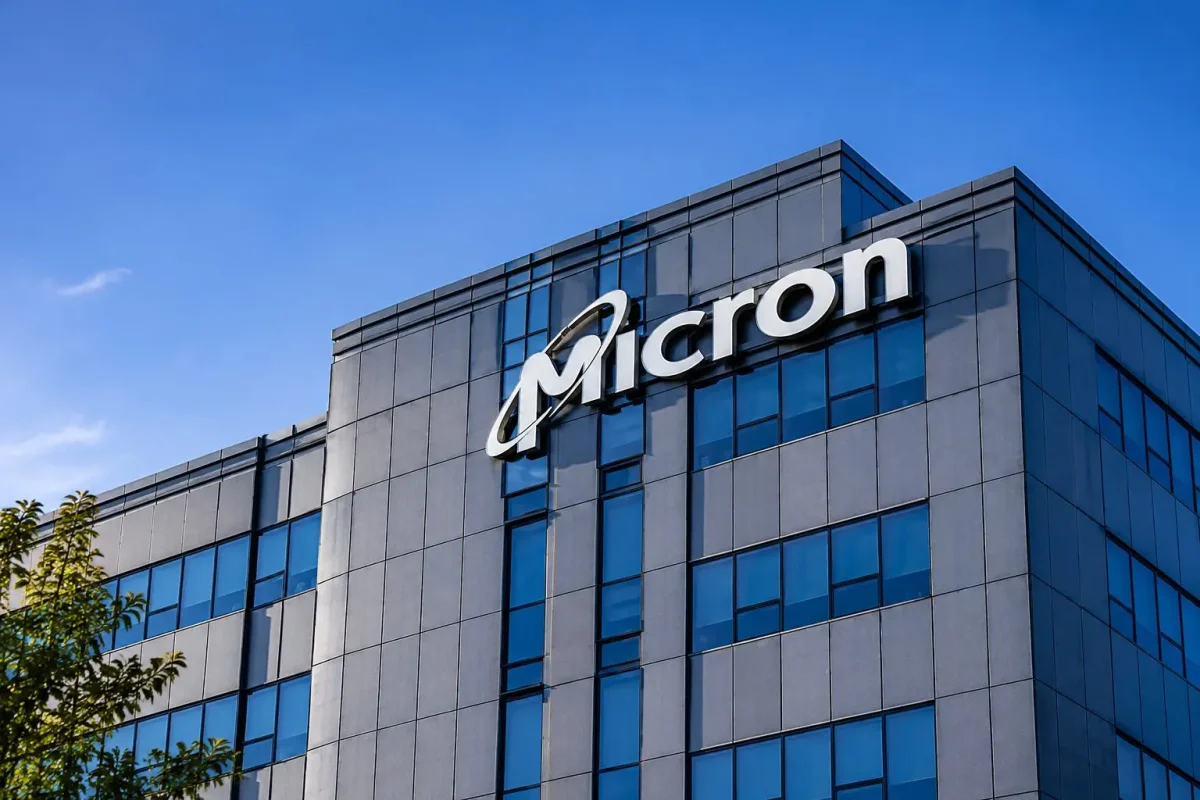
Micron Technology (MU) shares climbed 4.6% to $966.24 in Friday morning trading, propelling the chipmaker's market valuation above $1.1 trillion. The rally reflects surging demand for high-bandwidth memory (HBM) used in artificial intelligence data centers, alongside a wave of analyst price-target upgrades.
Investors increasingly view memory as a critical infrastructure component for AI, rather than a cyclical commodity. HBM, which stacks memory chips close to AI processors for fast data transfer, has become a key bottleneck in large-scale AI system deployments. This shift in perception has driven a sustained rally in memory stocks, with Micron joining SK Hynix and Samsung Electronics in crossing the $1 trillion market cap threshold this week.
Analysts have responded with bullish revisions. UBS raised its price target on Micron to $1,625, the highest among 46 brokerages tracked by LSEG. Mizuho's Vijay Rakesh lifted his target to $1,150, while D.A. Davidson's Gil Luria increased his to $1,500, and Barclays' Tom O'Malley now sees the stock at $1,175. These upgrades underscore strong demand for memory driven by AI workloads.
Micron's financial performance has bolstered optimism. In its fiscal second quarter ended March, the company reported revenue of $23.86 billion, nearly tripling from $8.05 billion a year earlier. CEO Sanjay Mehrotra highlighted record revenue, gross margin, earnings per share, and free cash flow, stating, "In the AI era, memory has become a strategic asset for our customers."
However, the landscape is becoming more competitive. Samsung announced it has shipped samples of its 12-layer HBM4E chips, claiming they are over 20% faster than earlier HBM4 products. This move could help Samsung regain market share from SK Hynix and Micron. Jeff Kim, head of research at KB Securities-Jefferies, noted that early movers in HBM typically capture the majority of orders, raising the stakes for Micron.
Analysts caution that if Samsung's HBM4E passes qualification with major AI buyers soon, Micron could face pricing pressure and market share erosion precisely when expectations are elevated. Broader risks include a potential pause in AI capital spending or a faster ramp-up in DRAM supply, which could challenge the narrative that the current cycle is different from past memory booms.
Despite these headwinds, the broader market environment remains supportive. All three major U.S. stock indexes closed at new highs on Thursday, and Friday's trading opened higher. The Nasdaq operates from 9:30 a.m. to 4:00 p.m. Eastern time.
Micron's ability to maintain its growth trajectory will depend on sustaining AI-driven demand while navigating intensified competition from Samsung. For now, the stock's rally reflects a market betting that memory's strategic role in AI will outweigh near-term competitive pressures.