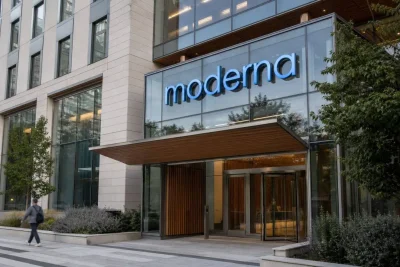
Moderna (NASDAQ: MRNA) experienced a sharp pullback in Thursday trading after announcing a significant convertible debt offering. The biotech giant's shares dropped 5.0% to $142.20, wiping out approximately $3.0 billion in equity value as investors digested the implications of the new financing. The decline comes on the heels of a remarkable eight-day rally fueled by promising cancer-vaccine data.
Convertible Notes Offering Details
The company unveiled plans to sell $2.0 billion in convertible senior notes due 2032, with an additional $300 million option granted to initial purchasers. This base offering represents a substantial 28.9% of Moderna's cash and investment holdings as of June 30, which stood at $6.9 billion. The move is designed to bolster the company's balance sheet and fund its expanding oncology pipeline.
The notes are unsecured senior obligations that will not pay periodic interest nor accrue principal increases. Conversion terms will be finalized at pricing, with the company retaining the flexibility to settle conversions in cash, shares, or a combination thereof. This structure could lead to dilution if Moderna's stock appreciates and the company opts for share settlement.
Market Reaction and Valuation Impact
Thursday's decline brought Moderna's market capitalization down to approximately $56.54 billion, a reduction of nearly $3.0 billion from Wednesday's close. The trading range for the day spanned $137.95 to $150.70, with over 7.3 million shares changing hands by mid-morning. The drop represents about 1.48 times the initial offering size, highlighting the market's sensitivity to potential dilution.
The timing of the offering is notable, coming just days after Moderna and Merck announced positive Phase 3 results for their melanoma vaccine candidate on August 19. That news had triggered a massive rally in cancer-vaccine stocks, with Moderna's shares surging over 70% in a single week. The financing appears aimed at capitalizing on this renewed market enthusiasm to secure additional operational flexibility.
Balance Sheet Considerations
Moderna's decision to raise capital comes against the backdrop of its current financial position. As of June 30, the company held $6.9 billion in cash, cash equivalents, and investments. However, in July, it paid $950 million related to a litigation settlement, reducing its available liquidity. The company reported second-quarter revenue of $145 million, essentially flat year-over-year, while recording a net loss of $782 million, or $1.97 per share. Operating cash outflow totaled $526 million during the quarter.
The base offering amount is equivalent to 3.8 quarters of cash consumption at the most recent quarterly burn rate. This metric underscores the importance of the capital raise in extending the company's runway, particularly as it continues to invest heavily in its oncology and other late-stage programs.
Analyst Sentiment and Risks
Wall Street remains cautious following the recent rally. The consensus rating among 23 analysts is Hold, with an average price target of $104.53, which sits roughly 26.5% below Thursday's trading price. This suggests that many analysts believe the stock has moved ahead of fundamentals.
Several risks could impact the offering's success and the company's future prospects. The deal is subject to market conditions, and a lower conversion premium or higher share settlement could result in greater dilution. Additionally, any delays or failures in oncology trials, regulatory approvals, or commercialization efforts would undermine the rationale for raising funds at this juncture.
Forward Outlook
Investors are now awaiting pricing details, including the conversion rate, capped-call transaction terms, and net proceeds. These figures will provide clarity on the cost of capital relative to potential dilution. Moderna plans to use the proceeds for expanding oncology efforts, debt repayment, and general corporate purposes.
The capped-call transactions, designed to reduce dilution, will have a ceiling set at no less than 150% above the pricing reference. This hedging strategy aims to mitigate the impact on existing shareholders if the stock appreciates significantly.
As the market processes this development, the focus will shift to how effectively Moderna can deploy these funds to advance its pipeline and whether the cancer-vaccine momentum can be sustained. The offering represents a strategic move to strengthen the company's financial position while capitalizing on recent positive news flow.