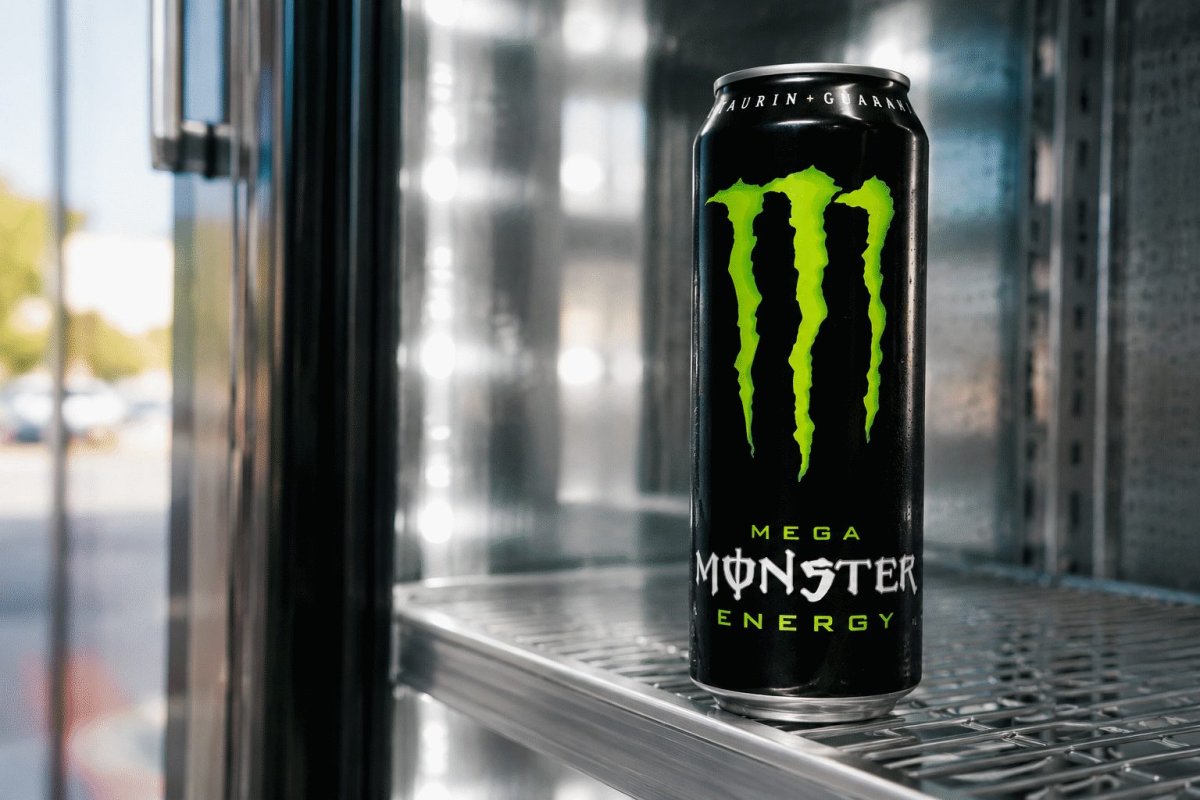
Monster Beverage Corporation (NASDAQ:MNST) closed the trading week on a positive note, with shares advancing 3.6% on a split-adjusted basis. The stock finished Friday at $46.82, up from the prior week's adjusted close of $45.18. The gain came despite a backdrop of rising costs and a valuation that some market participants view as stretched.
The rally follows the company's two-for-one stock split, which took effect on Tuesday after the dividend was issued Monday evening. While the split itself does not change the company's market capitalization, it has altered the arithmetic of valuation metrics. Based on Friday's closing price, the stock trades at approximately 39.7 times annualized second-quarter earnings. This figure is derived by adjusting the reported quarterly EPS of $0.59 to $0.295 on a split-adjusted basis, yielding a mechanical price-to-earnings ratio that is not a forward-looking estimate.
Margin Pressure Emerges
Despite the headline share price gain, underlying financials reveal a concerning trend: selling expenses surged 36.7% year-over-year in the second quarter, far outpacing the 20.2% increase in net sales. This spending acceleration led to a contraction in operating margin, which fell to 29.2% from 29.9% in the same period last year. Operating expenses rose 24.7% to $679.2 million, while operating income grew a more modest 17.2% to $740.4 million.
Management attributed the higher spending to increased investments in social, digital, and other media, as well as sponsorships and endorsements. Distribution costs also jumped 44.9%. While these are planned expenditures aimed at driving long-term growth, they have temporarily eroded short-term operating leverage.
International Strength Offsets Weakness
On a positive note, international operations delivered a "meaningful contribution" to overall growth, as CEO Hilton H. Schlosberg noted. Sales outside the United States climbed 34.6% to $1.16 billion, accounting for approximately 46% of total revenue. When adjusted for currency fluctuations, international growth stood at 29.0%. Foreign currency movements contributed $48.5 million to total sales, which rose 20.2% to $2.54 billion.
The flagship Monster Energy Drinks segment remained the primary growth driver, with sales up 21.6% to $2.36 billion, representing 92.9% of total revenue. Strategic Brands grew 10.6% to $143.7 million, while Alcohol Brands and Other segments saw declines of 15.2% and 15.3%, respectively.
Analyst Outlook and Valuation
Following the split, analysts have adjusted their price targets to reflect the new share count. The consensus rating among 22 analysts is Moderate Buy, with 13 Buy ratings and 9 Hold ratings. The average price target stands at $50.33, suggesting roughly 7.5% upside from Friday's close. However, historical targets require normalization; for instance, Deutsche Bank's pre-split target of $100 translates to $50 on a split-adjusted basis.
Notably, Monster did not repurchase any shares during the second quarter, despite having $900 million remaining in its buyback authorization as of August 5. Without buyback support, investors are looking to earnings growth to sustain the stock's valuation.
Market Context and Risks
Monster's weekly performance outpaced the broader consumer staples sector, as the Consumer Staples Select Sector SPDR Fund (NYSEARCA:XLP) rose 1.1%. However, it lagged Celsius Holdings (NASDAQ:CELH), which gained 4.8% during the same period. PepsiCo (NASDAQ:PEP) and Coca-Cola (NYSE:KO) also posted gains of 1.3% and 0.8%, respectively.
Looking ahead, the sustainability of the post-split rally will depend on whether revenue growth can continue to outpace the increased marketing spend. Risks include potential declines in energy drink demand, elevated costs for aluminum, freight, and marketing, and the possibility that recent currency tailwinds could reverse. Additionally, regulatory scrutiny on caffeine, sugar, or other ingredients could pose challenges.
With markets reopening Monday, investors will be watching for any analyst updates to pre-split forecasts and whether the stock can maintain its momentum. For now, the combination of robust international growth and aggressive spending presents a mixed picture for the energy drink giant.