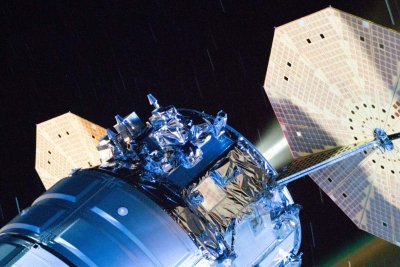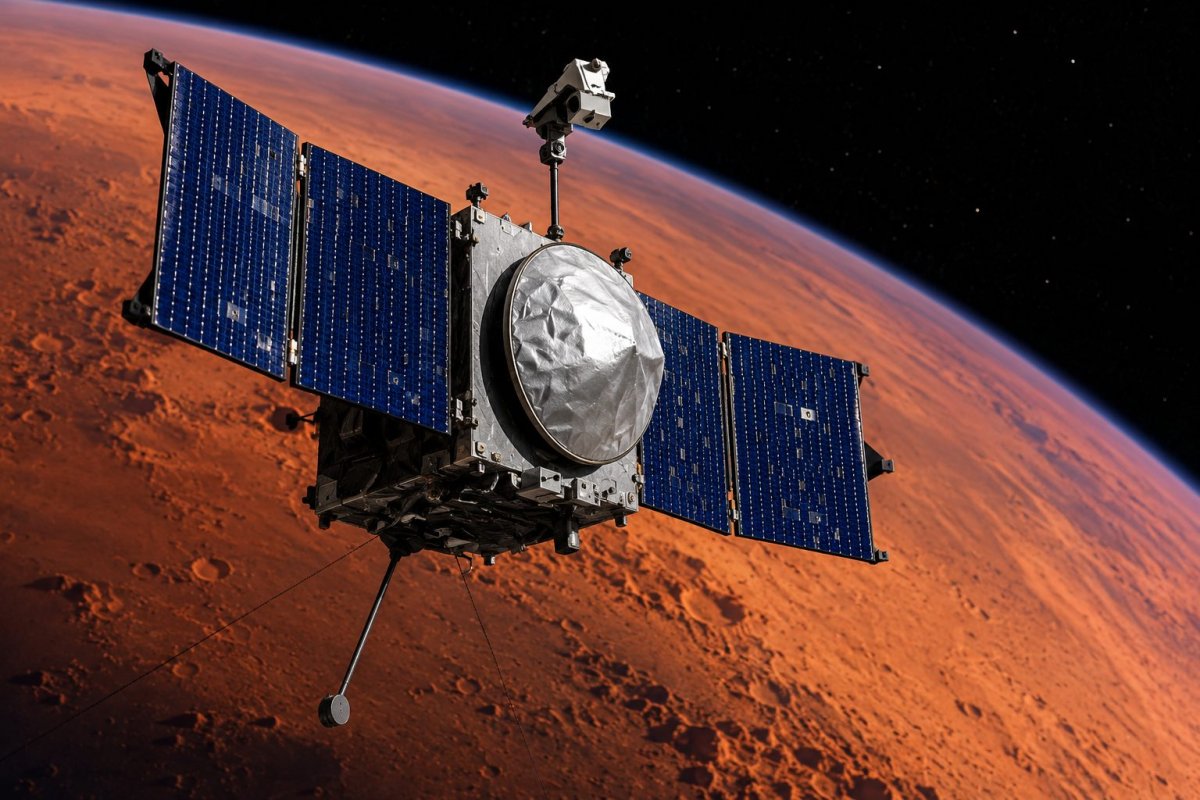
NASA has greenlit a groundbreaking satellite rescue mission, awarding Katalyst Space a $30 million contract to extend the life of the Neil Gehrels Swift Observatory. The mission, set to launch from Kwajalein Atoll on June 30, 2026, at 10:23 p.m. local time, will use a Northrop Grumman (NYSE:NOC) Pegasus XL rocket carried by the Stargazer aircraft. Katalyst's LINK servicer will rendezvous with Swift, currently orbiting at about 224 miles, and boost it to 373 miles—a 149-mile lift that could keep the telescope operational for years.
Cost-Effective Alternative to Replacement
The $30 million award represents just 6% of Swift's $500 million valuation reported by Reuters, and 12% of its original $250 million build-and-launch cost. This dramatic cost difference underscores NASA's shift toward satellite servicing as a viable alternative to building new spacecraft. "We don't currently have the budget to build another one to replace that," said Nicky Fox, NASA's science chief, in an AP News report. For investors, the key metric is the price per mile of orbital lift, which works out to roughly $201,000 based on the planned 149-mile boost.
High-Risk, High-Reward Mission
Swift, launched in 2004 to study gamma-ray bursts, has no propulsion system and has been losing altitude due to increased solar activity. NASA ceased operations in February to slow its descent. The LINK vehicle will take about a month to reach Swift, dock, and then spend two more months raising its orbit. If successful, Swift could resume science operations by September 2026. NASA astrophysics chief Shawn Domagal-Goldman described the mission as "high-risk, high-reward." Katalyst CEO Ghonhee Lee noted that "Swift wasn't designed to be serviced," adding that this could be a "new play in the playbook" for satellite life extension.
Market Implications and Scalability
For the broader space industry, the mission tests whether a startup can deliver a repeatable, low-cost servicing model. Katalyst aims for routine robotic spacecraft costs in the "high-single-digit millions, or low-double-digit millions," per Reuters. One-off rescues won't attract buyers unless missions can be replicated at that price point without designing new hardware each time. Northrop Grumman, with a market cap near $71.3 billion, provides launch hardware but sees little direct impact from this contract, which is about 0.04% of its value.
Context and Future Outlook
NASA's Phase III SBIR award to Katalyst came after determining that a propulsion boost would be cheaper than building a replacement. The startup had less than a year to design, build, test, and launch the servicing spacecraft. Success could open a new market for satellite life extension, potentially saving billions for government and commercial operators. As Lee told AP, this mission could become a "new play in the playbook" for managing aging assets in space.